




MIT Professor Kripa Varanasi and Vishnu Jayaprakash Honored with UN WIPO Global Award for Agricultural Innovation

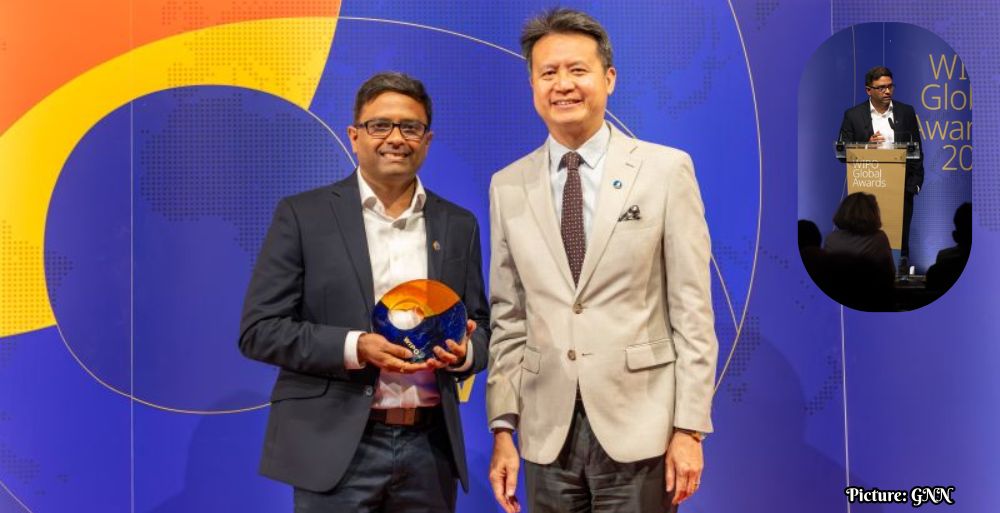
MIT Professor Kripa K. Varanasi received the 2026 United Nations World Intellectual Property Organization (WIPO) Global Award for his startup AgZen, which focuses on innovative agrochemical spraying technology.
CAMBRIDGE, Mass. — In a significant recognition of agricultural technology innovation, Massachusetts Institute of Technology (MIT) Professor Kripa K. Varanasi has been awarded the 2026 United Nations World Intellectual Property Organization (WIPO) Global Award. This accolade is in acknowledgment of the pioneering patent portfolio developed by his startup, AgZen, which specializes in efficient agrochemical spraying technology. The award was presented by WIPO Director General Daren Tang during a ceremony held last week, highlighting the critical role of intellectual property in fostering innovation to tackle global challenges.
The WIPO Global Award is a prestigious honor that celebrates innovative startups and small enterprises leveraging intellectual property to create solutions for pressing issues worldwide. Varanasi’s receipt of this award underscores not just his individual contributions but also the broader impact of AgZen’s technology on the agricultural sector, which has faced longstanding inefficiencies.
The Genesis of AgZen
The inception of AgZen can be traced back to a pivotal moment in 2009 when Varanasi delivered a presentation at the U.S. Department of Agriculture (USDA). It was during this talk that he was confronted with the stark reality of inefficiencies in agricultural spraying practices, a problem that has persisted for nearly a century.
Despite an estimated annual expenditure of over $75 billion on pesticides to safeguard crops valued between $2 trillion and $3 trillion globally, farmers continue to experience crop yield losses ranging from 20 to 40 percent due to pests. Varanasi reflected on this issue, noting, “More than a billion drops are sprayed per acre, but until now, no one truly knew where those droplets end up.” This revelation ignited years of dedicated research at MIT, leading to innovative solutions that would later become the foundation for AgZen.
“I was curious to understand why drops are not retained by leaves even when they are loaded with surfactants,” Varanasi explained. This curiosity was the catalyst for a decade of research that ultimately showcased the potential for translating laboratory discoveries into practical applications for the agricultural industry.
Transforming Agricultural Practices with RealCoverage
AgZen’s flagship product, RealCoverage, represents a significant advancement in agricultural spraying technology. This innovative system utilizes a combination of interfacial science, fluid dynamics, computer vision, physics-informed artificial intelligence, and real-time sensing to enhance the measurement of spray droplet interactions with plant leaves.
“Our flagship product, RealCoverage, removes this century-old blindfold from agricultural spraying,” Varanasi stated. The technology enables farmers to transition from traditional measures of pesticide application, often quantified in gallons per acre, to precise metrics such as droplets per leaf and micro-ounces per square millimeter of leaf. This data-driven approach not only optimizes pesticide use but also supports effective crop protection.
RealCoverage continuously monitors spray performance, adapting to changing field conditions, thereby allowing growers to maximize efficiency and minimize waste. Varanasi emphasized the transformative nature of the technology: “We are making every drop count to drive measurable yield gains while lowering costs for farmers without compromising pest control.”
Rapid Adoption and Impact
Since its introduction, AgZen’s technology has experienced rapid uptake within the agricultural sector. Varanasi reported that RealCoverage is currently deployed across more than one million acres of farmland, reflecting a remarkable 15-fold increase in usage within a single growing season. The platform serves a diverse array of stakeholders, including crop protection companies, original equipment manufacturers, and individual growers.
Farmers utilizing AgZen’s technology have reported chemical savings ranging from 30 to 50 percent, alongside improvements in crop yields. Varanasi highlighted the economic implications of these savings, stating, “Just for reference, 6 percent savings is about a $1 billion savings for farmers.” The overwhelming demand for RealCoverage has led to the company being “completely sold out for next year,” illustrating the technology’s pivotal role in modern agriculture.
A Legacy of Innovation
The WIPO Global Award is the latest in a series of accolades recognizing Varanasi’s extensive contributions to science, engineering, and entrepreneurship. A professor of mechanical engineering at MIT since 2009, he leads the Varanasi Research Group, which focuses on diverse fields, including interfacial science, advanced materials, thermal fluids, and decarbonization.
Varanasi, an alumnus of IIT Madras, earned both his master’s and doctoral degrees from MIT. He has co-founded six technology companies, including LiquiGlide and Infinite Cooling, successfully bridging the gap between academic research and commercial innovation. In 2025, he was elected a Fellow of the National Academy of Inventors, a prestigious honor acknowledging the real-world impact of his work on economic development and quality of life.




No Comment! Be the first one.