





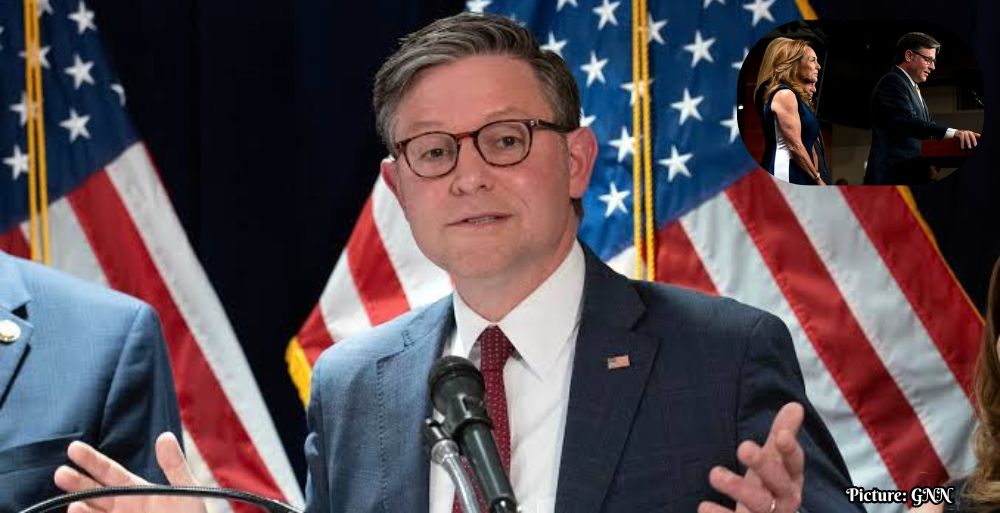
House Republicans are grappling with internal dissent as they attempt to advance a $95 billion budget framework amid pressure from leadership and an impending August recess.
Washington, D.C. — House Republicans are encountering significant challenges as they strive to advance a $95 billion budget framework, with key members expressing reservations about the proposal ahead of a committee markup scheduled for Thursday morning. This effort comes as the party aims to solidify its legislative priorities before the upcoming August recess.
Leading the charge for the proposed budget framework is Speaker Mike Johnson, who is under pressure to unify the caucus and push through this critical piece of legislation. The urgency of the situation is underscored by the approaching August recess, which has prompted Republicans to expedite the legislative process.
Divisions Among GOP Lawmakers
Despite this urgency, a faction of fiscally conservative Republicans has yet to commit their support for the budget framework. Notable among these dissenters is Representative Chip Roy, who voiced his concerns about rushing the proposal through committee, stating, “I think the stupidest thing to do would be to try to jam it through committee when you’ve got bigger problem[s] on the House floor.” Roy emphasized that “there’s more work to do” on the bill, highlighting the fractious nature of the current GOP conference.
Other Republicans, including Representatives Andrew Clyde, Josh Brecheen, Erin Houchin, Ben Cline, and Ralph Norman, are also pivotal to the success of the budget resolution. Clyde remarked on the uncertainty surrounding his support, indicating that negotiations are ongoing. “We don’t know yet. There’s still some negotiation going on,” he said on Wednesday.
Political Pressure Ahead of Midterms
The push for passage of the budget framework is compounded by the looming midterm elections, which have intensified the urgency for House Republicans to present a unified front on key issues. Pressure is expected to escalate further on Thursday evening, as former President Donald Trump plans to deliver a prime-time speech focused on election security. Trump has been a vocal advocate for the passage of his SAVE America Act, which seeks to address various election-related concerns.
The budget framework under consideration includes elements from Trump’s election security bill; however, it does not include provisions for offsetting new spending with budget cuts or specific member priorities, such as tax reforms or initiatives aimed at combating fraud.
Challenges in the Senate
While House Republicans are navigating these internal divisions, the Senate presents its own set of challenges. Incoming Senate Budget Chair Ron Johnson has expressed concerns regarding the absence of spending offsets in the House proposal, indicating that he is not alone in this sentiment among his colleagues. “I’ve got other members on the committee that also insist on offsets,” Johnson stated, underscoring the skepticism that exists within the upper chamber regarding the House’s approach.
In response to these concerns, House GOP leaders have attempted to reassure their members by suggesting that unresolved issues can be addressed in a future reconciliation bill. Majority Leader Steve Scalise remarked, “We’re right now looking at a reconciliation 4.0 to do the things that are left out of this one,” indicating a strategy to defer contentious provisions for later consideration.
Democratic Strategy Targeting Todd Blanche
As Republicans grapple with their budgetary disputes, Democrats are intensifying their political strategy against Todd Blanche, President Trump’s nominee for Attorney General. During a second round of hearings, Democrats are set to highlight testimonies from individuals affected by Blanche’s previous oversight of the release of Jeffrey Epstein’s files. Victims such as Dani Bensky, who had her identity exposed in the release, and Elizabeth Oyer, a former Justice Department attorney who alleges she was retaliated against by Blanche, are slated to testify. This move is seen as a strategic effort to make Blanche’s confirmation process politically challenging for Republican senators, particularly targeting Senator John Cornyn, who has expressed dissatisfaction with Blanche’s previous answers regarding the “Anti-Weaponization Fund” he helped establish.
Anticipation for Trump’s Address
Lawmakers from both parties are bracing for Trump’s address on Thursday night, where he has teased “really big news” related to election security. This speech comes amid ongoing calls from Trump’s inner circle for him to shift his focus to economic issues as the midterms approach. However, there are concerns within the Republican Party that Trump may continue to discuss 2020 election claims that many consider unfounded, which could further complicate the party’s messaging as it heads into the elections.
As the House prepares for the budget markup and the Senate contemplates its response, the coming days will be critical in determining the trajectory of Republican legislative goals and the political landscape as the midterm elections draw nearer.





No Comment! Be the first one.