





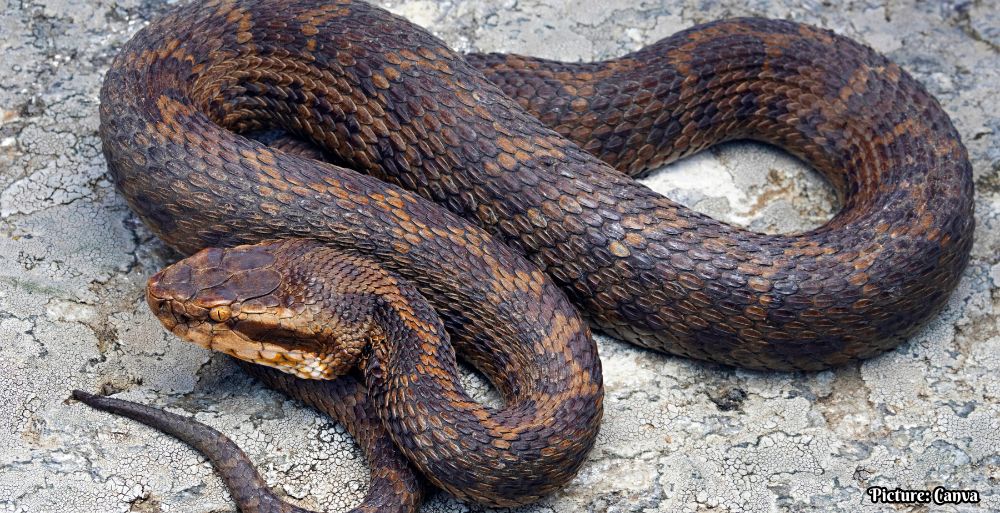
Researchers have identified a new species of venomous pit viper, Ovophis medogensis, in Medog County, China, shedding light on the biodiversity of the eastern Himalayas and emphasizing the need for further exploration of the region’s reptilian fauna.
A collaborative research team has announced the discovery of a new species of venomous pit viper, named Ovophis medogensis, located in the mountainous forests of Medog County in the Xizang Autonomous Region of China. This significant finding was published online on May 9, 2026, in the journal Asian Herpetological Research (DOI: 10.3724/ahr.2095-0357.2025.0067) and highlights the continuous exploration of one of the world’s most biodiverse yet under-studied regions.
The research team comprised scientists from the Chengdu Institute of Biology, Chinese Academy of Sciences, Jianghan University, China West Normal University, the University of Chinese Academy of Sciences, and Nepal’s Prithvi Narayan Campus. This multi-institutional effort underscores the significance of integrating genetic analysis alongside traditional morphological examination in clarifying the complex taxonomy of the Ovophis genus, which has long presented challenges to herpetologists.
Complexities of the Ovophis Genus
The Ovophis genus, primarily consisting of medium-sized venomous snakes, is distributed across a wide geographic range in Asia, spanning from Japan and southern China to the Indochina Peninsula and Nepal. For decades, scientists believed that a single species, Ovophis monticola, occupied much of this extensive range. However, advancements in genetic research have begun to unravel this assumption, suggesting that what was once considered one widespread species is actually a complex of multiple distinct species.
Historical records have often conflated at least two different Ovophis species within the Xizang region, highlighting the pressing need for a comprehensive reassessment of the genus. Such a reevaluation is crucial not only for taxonomic accuracy but also for understanding the ecological roles these snakes play in their respective habitats.
Discovering Ovophis medogensis
The identification of Ovophis medogensis emerged from extensive fieldwork conducted in Medog County, characterized by elevations ranging from approximately 700 to 1,800 meters. Researchers noted that the physical attributes of this snake did not align with those of O. monticola, prompting further investigation. Detailed morphological assessments revealed several distinguishing features: a dorsal scale arrangement of 23(25)-23-19, a count of 132 to 138 ventral scales, and 39 to 49 paired subcaudal scales.
The coloration of O. medogensis also plays a significant role in its identification. The species exhibits a dark brown dorsal surface adorned with irregular butterfly-shaped blotches, complemented by brownish-orange stripes behind each eye. Its iris displays a notable transition from cream to orange-red, marked by a vertical black bar across the pupil. A particularly distinguishing characteristic is the presence of white spots along the tail that extend to its tip—traits absent in closely related species.
Genetic analysis utilizing mitochondrial cytochrome b (Cyt b) gene sequencing revealed a genetic divergence of 5.5% from O. monticola, well above the commonly accepted threshold for defining distinct snake species. Phylogenetic analyses, supported by a Bayesian posterior probability (BPP) of 1.00 and an ultrafast bootstrap (UFB) value of 100, further confirm the distinctiveness of Ovophis medogensis.
Implications for Conservation and Future Research
The discovery of O. medogensis increases the documented species count of the Ovophis genus in Xizang to three, alongside O. monticola and O. zayuenis. However, the researchers caution that the true diversity within the genus is likely still underestimated. The identification of this new species underscores the critical need for further exploration and documentation of reptile diversity in the eastern Himalayas, an area that has continually yielded unexpected discoveries.
Moreover, the findings have significant implications for snakebite management in the region. Accurate species identification is essential for understanding venom composition and developing effective antivenoms, a crucial public health concern considering the region’s biodiversity and potential for human-snake interactions. With deforestation and habitat loss increasingly impacting South Asia, targeted surveys are urgently needed to ascertain the full distribution of O. medogensis and assess its conservation status.
The authors expressed optimism about future explorations in the eastern Himalayas, a region they describe as one of the least explored for reptile diversity. “Every time we go out into the field, we find something unexpected. Medog is turning out to be a real hotspot for cryptic species,” they emphasized. This statement highlights the potential for discovering more undocumented species, thus enhancing our understanding of biodiversity in this ecologically rich region.
In summary, the discovery of Ovophis medogensis not only enriches the taxonomic landscape of the Ovophis genus but also serves as a reminder of the rich biological heritage that remains to be uncovered in the eastern Himalayas. As scientists continue their work in this biodiverse area, there is hope that additional species will be identified, contributing to the global understanding of herpetological diversity and conservation needs.






No Comment! Be the first one.