





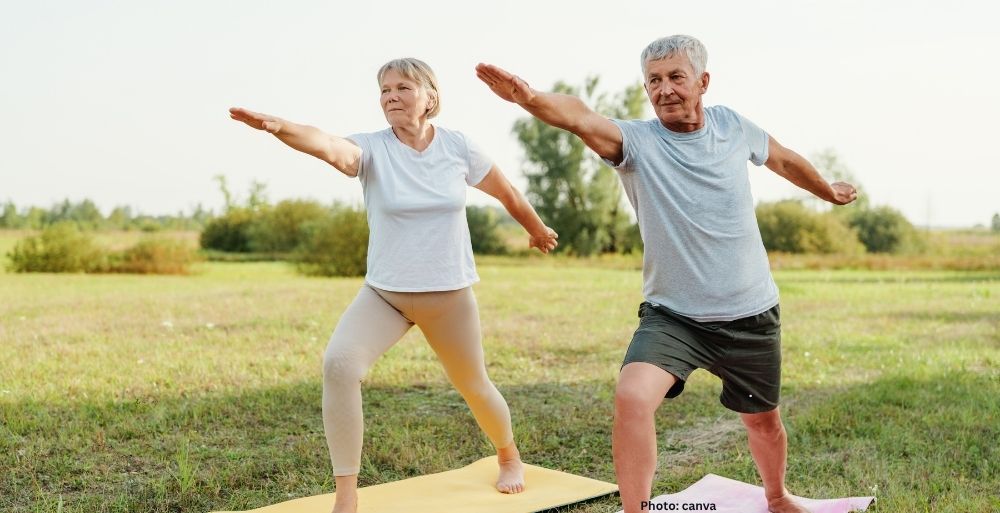
A yoga instructor emphasizes the importance of specific movements for seniors to improve posture, balance, and overall strength as they age.
As individuals reach the age of 60, they often experience a notable decline in muscle mass, a condition known as sarcopenia. Melissa Leach, a yoga instructor and strength and conditioning coach at Yoga-Go, highlights the significance of yoga as a form of exercise that can counteract some of these age-related changes. “By the age of 60, the average person may have lost a significant amount of their total muscle mass,” Leach explains. This loss can lead to decreased mobility, balance issues, and a heightened risk of falls and fractures.
Yoga serves as an effective method to address these concerns. Leach notes, “Yoga supports strength, flexibility, balance, and mindfulness; and its low-impact nature makes it a great option for anyone over 60.” Regular practice of yoga can maintain mobility, alleviate stiffness, and strengthen the muscles that contribute to posture and stability, thereby helping individuals retain their independence and enhance their quality of life.
The Importance of Yoga for Seniors
According to Leach, engaging in yoga offers numerous benefits for seniors. “Each of these poses helps to improve posture, balance, and body awareness by strengthening areas such as the legs or chest,” she remarks. Improved mobility can significantly reduce the risk of falls, which become more prevalent with age. Moreover, yoga aids in digestion and alleviates stiffness, particularly in the back. The focus on mindful breathing during yoga practice is also a powerful tool for reducing overall tension and managing stress.
The yoga routine suggested by Leach is particularly suitable for beginners and requires no special equipment, although a non-slip yoga mat is recommended for comfort and stability. Despite its straightforward nature, the routine provides substantial benefits for older adults.
Recommended Yoga Poses for Individuals Over 60
Leach outlines four foundational yoga poses that can be particularly beneficial for seniors:
- Mountain Pose
Sets: 2-3 Time: 20-30 seconds
Stand with your feet close together and arms relaxed at your sides. Ensure your weight is evenly distributed on both feet. Engage your thighs slightly, lift your chest, and lengthen your spine as you inhale and exhale. Roll your shoulders back and down, reaching your arms overhead if comfortable. Hold this position while breathing deeply. To increase difficulty, extend the time in the pose to 40 to 60 seconds and aim for one to two minutes. - Tree Pose
Sets: 2-3 Time: 10-15 seconds per side
From Mountain Pose, shift your weight onto your left foot, focusing your gaze on a fixed point in front of you. Place the sole of your right foot on your inner left thigh, calf, or ankle. Bring your hands to a prayer position at your chest. Hold the pose, then switch sides. For added challenge, raise your arms overhead and increase the duration to 20-30 seconds on each side, working up to 40-60 seconds. - Seated Spinal Twist
Sets: 2-3 Time: 10-15 seconds per side
Sit on the floor with your legs extended. Place your right foot flat on the floor outside your left knee. Use your left elbow to press against your right knee while twisting your torso to the right. Breathe deeply and hold the position before switching sides. To increase the challenge, extend the hold to 20-30 seconds per side and eventually aim for 40-60 seconds. - Cat-Cow Pose
Sets: 2-3 Reps: 5-6
Begin on your hands and knees with your hands beneath your shoulders and knees under your hips. Inhale while arching your back and lifting your tailbone and head. Exhale while rounding your spine, tucking your chin and tailbone. Flow gently between these two movements while coordinating with your breath. To increase difficulty, work up to two sets of eight to ten rounds and eventually two to three sets of twelve to fifteen rounds.
This beginner-friendly routine provides a solid foundation for seniors looking to enhance their physical well-being without overwhelming complexity. For those with prior yoga experience, the suggested times for each pose can be gradually increased, allowing individuals to tailor the practice to their personal fitness levels.
In conclusion, the incorporation of yoga into the daily routine of older adults can significantly improve their physical health, mental well-being, and overall quality of life. By offering accessible movements that focus on strength, balance, and mindfulness, yoga stands out as a valuable practice for aging populations.






No Comment! Be the first one.