





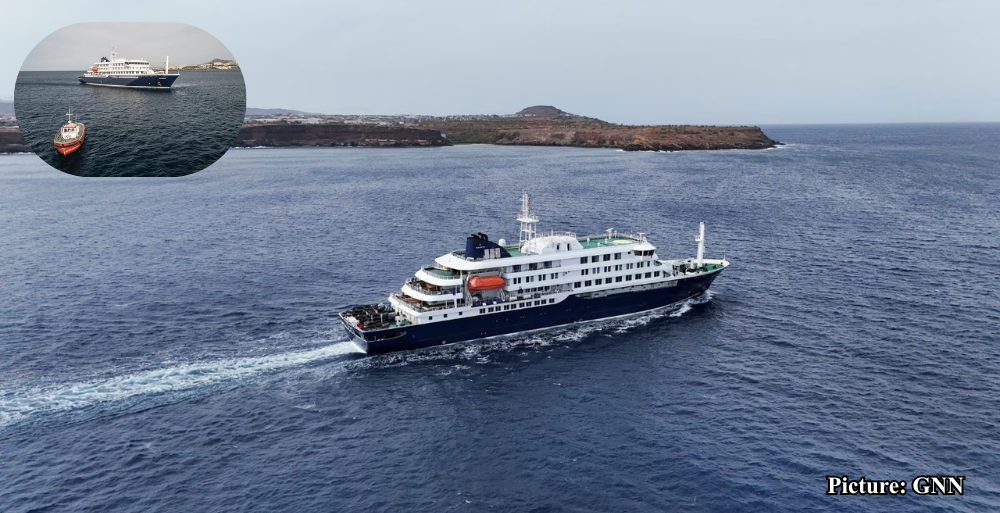
A Dutch-flagged cruise ship carrying passengers affected by a hantavirus outbreak is set to dock in Tenerife, prompting a coordinated response from health authorities and assurances from the World Health Organization’s Director-General.
TENERIFE, Spain — The Director-General of the World Health Organization (WHO), Tedros Adhanom Ghebreyesus, arrived in Tenerife on Saturday to address public concerns regarding the Dutch-flagged cruise ship MV Hondius, which is scheduled to dock early Sunday morning amid a hantavirus outbreak. The ship, carrying over 140 passengers and crew members, has been the center of attention as local residents express fears about potential virus transmission.
The MV Hondius is en route to Spain’s Canary Islands, situated off the coast of West Africa. Amid growing unease among the island’s residents, Ghebreyesus joined Spanish Health Minister Monica Garcia and Interior Minister Fernando Grande-Marlaska in coordinating the disembarkation process for the passengers and crew. Ghebreyesus acknowledged the local community’s apprehension, stating, “I know you are worried. I know that when you hear the word ‘outbreak’ and watch a ship sail toward your shores, memories surface that none of us have fully put to rest. The pain of 2020 is still real, and I do not dismiss it for a single moment.”
Despite the anxiety surrounding the ship’s arrival, Ghebreyesus reassured residents, emphasizing that the current public health risk from hantavirus is low. “This is not another COVID. The current public health risk from hantavirus remains low. My colleagues and I have said this unequivocally,” he stated.
Background on Hantavirus Outbreak
The outbreak aboard the Hondius has resulted in three reported deaths, with five passengers confirmed to be infected with hantavirus. Hantavirus is primarily spread through the inhalation of contaminated rodent droppings and is not typically transmitted between humans. However, the Andes virus, which has been detected in this outbreak, has been noted to have rare instances of human-to-human transmission. Symptoms of hantavirus infection can appear between one and eight weeks after exposure.
Health authorities, including the WHO and Spanish officials, have confirmed that no one currently aboard the Hondius is exhibiting symptoms of the virus. “WHO continues to actively monitor the situation, coordinate support and next steps, and will keep Member States and the public updated accordingly. So far, the risk for the population of Canary Islands and globally remains low,” Ghebreyesus posted earlier on social media platform X.
Evacuation Protocols and Health Measures
In response to the outbreak, Spanish authorities have implemented strict health protocols for the disembarkation process. Minister Garcia announced that all passengers and some crew members will undergo medical checks before leaving the ship. Only those without symptoms will be permitted to disembark, and individuals will be allowed to take only minimal personal items with them, such as essential documents and a cellphone.
Additionally, the United States and the United Kingdom have agreed to deploy planes to evacuate their citizens from the cruise ship. Spanish officials confirmed that all Spanish passengers will be transported to a medical facility for quarantine. A total of 13 Spanish passengers and one Spanish crew member are currently aboard the Hondius.
International Coordination and Repatriation Plans
Spain has activated the European Union’s civil protection mechanism, which includes a standby medical evacuation plane equipped for high-consequence infectious diseases. Should anyone on board the ship develop symptoms, medical personnel will notify Spanish authorities to facilitate a swift air evacuation to the European mainland.
The Dutch government has also indicated its intention to collaborate with Spanish authorities and the cruise company for the repatriation of Dutch passengers and crew members. Those disembarking without symptoms will be required to enter home quarantine for a period of six weeks, monitored by local health services.
Tracing Contacts and Global Health Concerns
Health officials worldwide are currently tracking more than two dozen passengers who disembarked from the ship prior to the outbreak’s detection. Over 25 individuals from at least 12 different countries left the Hondius without contact tracing, prompting concerns among health authorities. The first confirmation of hantavirus in a passenger was reported on May 2, nearly two weeks after the initial death on board.
In a related development, the WHO reported that a flight attendant who briefly boarded a plane with an infected passenger tested negative for hantavirus, alleviating concerns regarding the virus’s potential transmissibility.
The situation remains fluid as authorities continue to monitor and respond to the ongoing outbreak. Health experts emphasize the importance of vigilance and preparedness in addressing infectious disease incidents, particularly in the wake of the COVID-19 pandemic.





No Comment! Be the first one.