





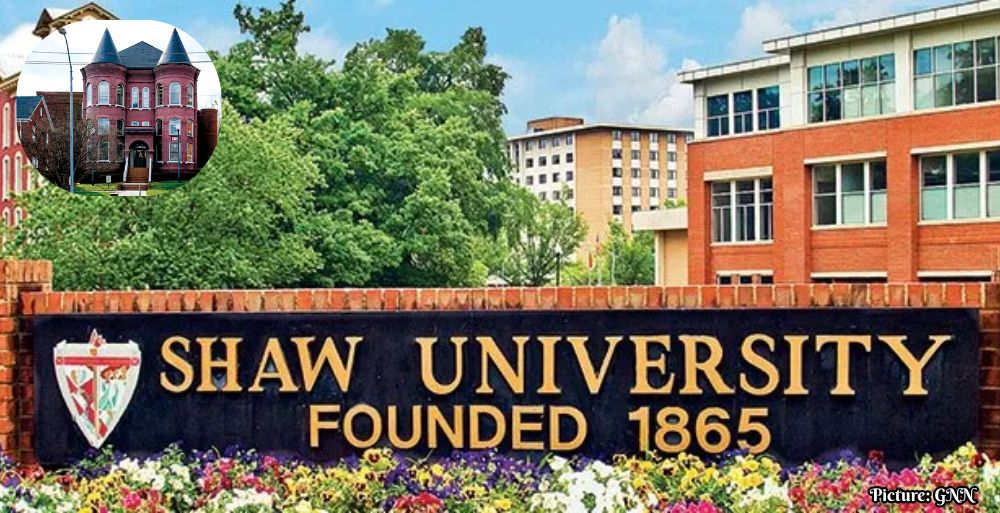
Shaw University, a historically significant institution in North Carolina, is pioneering a new Doctor of Education program in Artificial Intelligence and Moral Agency, marking a significant step in theological education and AI ethics.
RALEIGH, N.C. — Shaw University, a historic institution founded after the Civil War to provide education to formerly enslaved individuals, is set to launch the first Doctor of Education (Ed.D.) program focusing on Artificial Intelligence (AI) and Moral Agency in January 2024. This initiative aims to address the ethical implications of AI as it increasingly takes on roles traditionally performed by humans.
Mark Harden, dean of Shaw University Divinity School, emphasized the school’s commitment to leadership in educational literacy, stating, “We (half) joke this is our second calling because we’re building AI literacy for vulnerable communities with an emphasis on social justice and ethics.” This perspective is particularly relevant as AI technologies have begun to permeate various aspects of life, raising questions about their moral and ethical implications.
Accreditation and Historical Significance
Shaw’s divinity school received approval in June from the Southern Association of Colleges and Schools Commission on Colleges, a crucial step in establishing the new program. The school is also pursuing accreditation from the Commission on Accrediting at the Association of Theological Schools (ATS), which encompasses 280 graduate schools of theology in the United States and Canada. Chris Meinzer, ATS’s chief operating officer, pointed out that Shaw’s initiative will be unprecedented within the ATS network, as no other divinity school currently offers a program at either the master’s or doctoral level focusing specifically on AI.
Shaw University has a storied history in social justice and civic engagement, particularly during the Civil Rights Movement. Notable figures such as Ella Baker, a key organizer of the movement, were educated at Shaw. This legacy of activism informs the divinity school’s current focus on ethical AI education.
Context of AI in Theological Education
The development of AI raises significant ethical questions that intersect with moral philosophy and theological discourse. In December 2022, Notre Dame’s Institute for Ethics and the Common Good received a $50 million grant from the Lily Endowment to establish the DELTA network, which aims to provide resources for faith leaders to navigate the challenges posed by AI. This initiative emphasizes core Christian values such as dignity, embodiment, love, transcendence, and agency.
Meghan Sullivan, the director of the Institute for Ethics and the Common Good, noted that theological schools are uniquely positioned to explore the ethical implications of AI. She stated, “One of the most fundamental questions in Christianity is, we were given this power to choose and to develop our consciences and to develop our agency.” Sullivan advocates for a theological perspective on AI, which could illuminate how society might navigate the complexities of delegating decision-making to technology.
Papal Engagement and Ethical Inquiry
The need for ethical engagement with AI was underscored earlier this year when Pope Leo XIV published an encyclical titled “Magnifica Humanitas.” In this letter, he stressed the importance of safeguarding human dignity and agency in an age where AI might supplant human roles. The Pope’s concerns reflect broader apprehensions that tech firms might shape ethical guidelines for AI without adequate consideration of societal impacts.
In response to these developments, divinity schools are increasingly integrating AI into their curricula. Philip Butler, an associate professor at Iliff School of Theology in Denver, co-founded an AI institute and teaches a course examining the ethical dimensions of AI technology. He noted, “We raise what does it mean to be human in relation to technology broadly,” highlighting the importance of understanding who benefits from AI innovations.
Program Details and Future Aspirations
Shaw University anticipates a strong interest in its new doctoral program, with at least 66 individuals already expressing interest. The divinity school, which currently enrolls around 65 students in its two existing master’s degree programs, will accept candidates who hold a master’s degree in arts or divinity and have at least five years of professional experience in pastoral ministry or related fields such as social work.
Harden indicated that many students are expected to be bi-vocational, balancing their educational pursuits with non-church employment. Classes will be offered online, a format adopted by the divinity school during the COVID-19 pandemic. The program is projected to take three to four years for completion, and the divinity school is in the process of hiring faculty who will have qualifications in AI.
As Shaw University prepares to embark on this innovative educational journey, the intersection of AI and moral agency is expected to stimulate critical discussions and research that could contribute significantly to the broader understanding of technology’s role in society.





No Comment! Be the first one.