




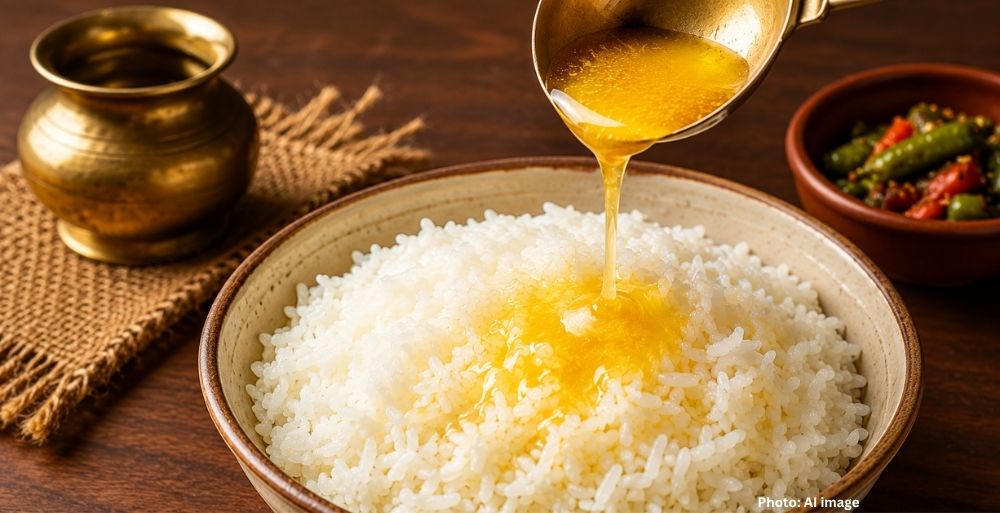
Recent studies shed light on the health benefits of pairing ghee with rice, revealing potential advantages for digestion, nutrient absorption, and blood sugar control.
The tradition of adding ghee to hot rice is a longstanding practice in Indian cuisine, cherished for both its flavor and cultural significance. Whether in the South Indian dish ney chor or the North Indian staple dal-chawal, this combination has been a staple for generations. Recent scientific research reveals that this culinary custom may offer more than just comfort; it may also provide several health benefits that enhance digestion, nutrient absorption, and blood sugar regulation.
Impact on Blood Sugar Levels
White rice, known for its high carbohydrate content, has a relatively high glycemic index, which can lead to rapid spikes in blood sugar levels. A significant study published on ResearchGate involved 103 participants with type 2 diabetes, examining the effects of incorporating ghee into their rice consumption over a three-month period. The findings were noteworthy: 86.41% of participants exhibited a decrease in HbA1c levels, a critical marker for blood glucose control, while only 13.59% experienced an increase. This indicates that preparing white rice with ghee may help moderate blood sugar levels more effectively than consuming plain rice alone, allowing for a more gradual release of glucose into the bloodstream.
Beneficial Fatty Acids in Ghee
Despite its reputation for being high in saturated fat, ghee contains beneficial short-chain and medium-chain fatty acids, including butyric acid, which is particularly notable for its health implications. Butyrate, derived from butyric acid, has gained attention for its role as a primary energy source for the cells lining the colon and its possible therapeutic effects. A review by the National Library of Medicine highlighted that ghee’s unique fatty acid profile, combined with its vitamins and bioactive compounds, may provide various health benefits. While ghee should not be considered a therapeutic source of butyrate, its contribution to the overall nutritional profile of traditional dairy fats is significant.
Nutrient Absorption Enhancement
A critical aspect of dietary health is the absorption of nutrients, particularly fat-soluble vitamins and compounds. Many vitamins, such as A, E, and K, as well as carotenoids like beta-carotene, are absorbed more efficiently when consumed with dietary fats. For instance, pairing ghee with nutrient-rich vegetables like carrots, spinach, and leafy greens can enhance the absorption of these essential nutrients. A study by Yao et al. (2022) in the National Library of Medicine confirmed that dietary fats significantly improve the bioavailability of carotenoids. This understanding lends further credence to the traditional Indian practice of combining rice, vegetables, and ghee, which may naturally facilitate better nutrient utilization.
The Role of Aroma in Meal Satisfaction
The sensory experience of food, particularly its aroma, plays a crucial role in meal satisfaction and overall eating behavior. Ghee’s rich and distinctive aroma has contributed to its enduring popularity in Indian cuisine. Food scientists have noted that flavor and aroma significantly enhance meal enjoyment, encouraging more mindful eating habits. When meals are satisfying, individuals may be less inclined to seek additional snacks, promoting healthier eating patterns. While responses to aroma can vary among individuals, the importance of sensory satisfaction in fostering healthy eating behaviors is increasingly recognized.
Ayurvedic Insights on Ghee
Long before the advent of modern nutritional science, the traditional Indian system of Ayurveda acknowledged the health benefits of ghee. In Ayurvedic philosophy, ghee is described as a substance that supports agni, or digestive fire, while nourishing bodily tissues. Texts such as the Charaka Samhita, a cornerstone of Ayurvedic literature, recommend ghee (ghrita) for regular consumption due to its nourishing and medicinal properties. Ayurveda links ghee to cognitive health, gut health, and overall nourishment, suggesting a holistic approach to diet that aligns with modern scientific findings regarding digestion and nutrient absorption.
Moderation in Consumption
While the potential health benefits of ghee are noteworthy, it is essential to consider its calorie density; one teaspoon of ghee contains approximately 45 calories. Health authorities, including the World Health Organization and the American Heart Association, recommend limiting saturated fat intake to maintain cardiovascular health. For most healthy adults, incorporating one to two teaspoons of ghee as part of a balanced meal is deemed reasonable, particularly when the diet is rich in vegetables, whole grains, and includes regular physical activity.
Conclusion
The simple act of adding ghee to hot rice serves as a reminder that traditional culinary practices often have substantial nutritional logic underpinning them. While ghee should not be regarded as a superfood or a cure-all, it may play a role in slowing carbohydrate absorption, enhancing the absorption of fat-soluble nutrients, providing beneficial fatty acids, and enriching the sensory experience of meals. Ultimately, the real benefit lies in enjoying ghee as part of a wholesome, balanced diet, exemplifying how traditional food practices can align with contemporary nutritional science.




No Comment! Be the first one.