





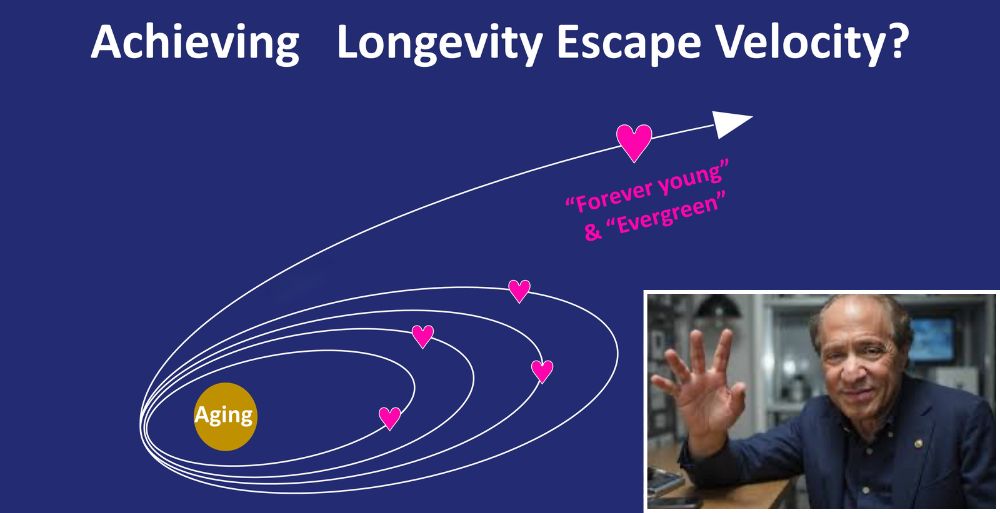
Computer scientist Ray Kurzweil forecasts that advancements in medical technology could allow humans to achieve ‘longevity escape velocity’ by 2029, a concept that suggests life expectancy could increase faster than aging.
In a recent statement, prominent futurist and computer scientist Ray Kurzweil predicted that humanity could reach a pivotal milestone known as ‘longevity escape velocity’ by the year 2029. This concept, which has garnered both intrigue and skepticism, posits that advances in medical technology will enable life expectancy to extend at a rate that surpasses the aging process itself. Kurzweil’s assertion invites scrutiny regarding the implications for healthcare accessibility and the nature of future medical advancements.
Understanding Longevity Escape Velocity
Longevity escape velocity refers to a theoretical point where medical innovations lead to an increase in life expectancy of more than one year for each year lived. Kurzweil explained this concept during an interview with the venture capital firm Bessemer Venture Partners in March 2024. He illustrated it with the hypothetical scenario where, if an individual ages one year, their life expectancy could be extended by a year and two months, effectively giving them back two months of life.
Kurzweil’s confidence in achieving this milestone stems from what he perceives as a rapid acceleration in medical advancements. He cited the expedited development of the COVID-19 vaccine as a significant example, noting that the entire process took just ten months to complete. ‘It took two days to create it. Because we sequenced through several billion different mRNA sequences in two days,’ Kurzweil remarked, highlighting the potential for future breakthroughs as technology continues to evolve.
Rapid Medical Advancements and Their Implications
The rapid pace of medical innovation has indeed made a profound impact on healthcare, particularly in developed nations. For example, advancements in genomic medicine, artificial intelligence, and biotechnology are poised to revolutionize how diseases are treated and prevented. As Kurzweil explained, the emergence of simulated biology is among the factors driving optimism regarding health breakthroughs over the next few years.
However, while technological progress has the potential to extend average life expectancies, it is critical to distinguish between life expectancy and the actual length of life. Achieving longevity escape velocity does not equate to immortality or universal health improvements. Kurzweil himself acknowledged this limitation, stating, ‘Achieving longevity escape velocity doesn’t guarantee you living forever. You could have a 10-year-old who has many decades of longevity, but he could die tomorrow.’
The Challenge of Accessibility
A significant issue in realizing the potential of longevity escape velocity is the disparity in access to cutting-edge medical technology. Although advancements are occurring, ensuring that these innovations are available to all individuals globally remains a formidable challenge. For instance, diseases like tuberculosis continue to claim lives at alarming rates, despite the existence of effective treatments. According to the World Health Organization, tuberculosis was responsible for over 1.5 million deaths worldwide in 2020, emphasizing the urgent need for improved healthcare access across the globe.
Furthermore, the unpredictability of life—whether due to accidents, unforeseen health complications, or other factors—poses an additional barrier to the realization of Kurzweil’s vision. While advancements in technology, such as self-driving cars, may reduce the likelihood of fatal accidents, they cannot entirely eliminate all risks associated with life.
Historical Context and Future Predictions
Kurzweil’s history of making predictions about technology is notable, with many of his forecasts having come to fruition, including the rise of portable computing and cloud technology. However, he has also faced criticism for predictions that did not materialize, underscoring the inherent uncertainty in forecasting technological advancements. This duality raises questions about the reliability of predictions related to longevity escape velocity.
The implications of achieving such a milestone could be far-reaching, affecting societal structures, economies, and healthcare systems. If life expectancy were to increase significantly, pressing questions would arise concerning resource allocation, elder care, and the overall health of populations. How society adapts to these changes could reshape many facets of daily life and governance.
Critical Perspectives on Longevity Predictions
While Kurzweil’s claims present an exciting possibility for the future of healthcare, it is essential to approach them with a critical lens. The concept of longevity escape velocity relies on optimistic assumptions about the pace of medical innovation and the equitable distribution of advancements. As history has shown, technological progress does not guarantee universal benefits, and disparities in healthcare access may remain persistent challenges.
Moreover, the sociocultural implications of significantly longer life expectancy raise further ethical and logistical questions. How would an increase in average lifespan affect population dynamics, job markets, and pension systems? These are critical considerations that demand thorough analysis as humanity looks toward a future potentially altered by medical advancements.
Conclusion
As of now, the notion of longevity escape velocity remains speculative, with Kurzweil’s predictions serving as a catalyst for discussions about the future of healthcare, technology, and society. While advancements in medical science are likely to continue, the journey toward achieving such ambitious goals is laden with challenges that must be addressed. Until substantial progress is made, the certainties of life—namely death and taxes—remain integral to the human experience.






No Comment! Be the first one.