




New Study Suggests Modern Neuroscience Is Rediscovering Freud’s 130-Year-Old Ideas About the Mind

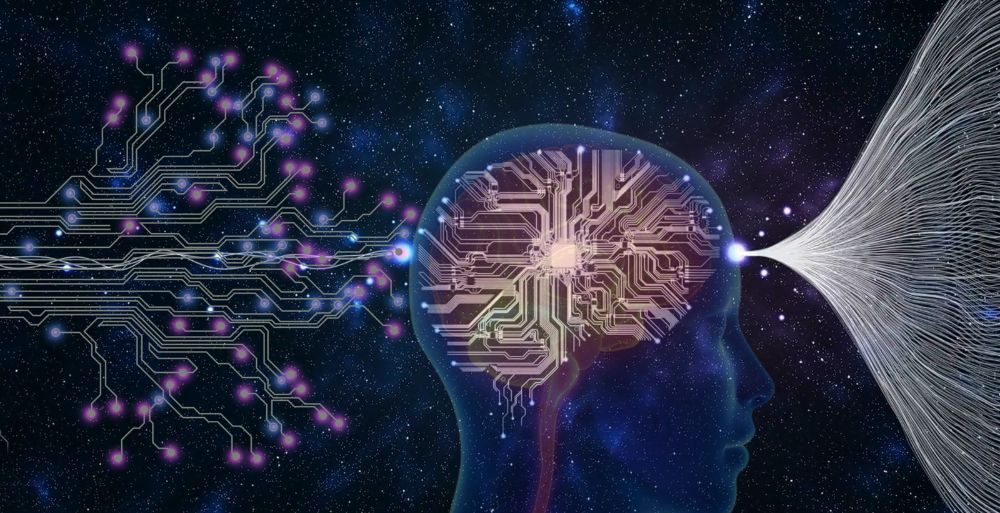
Bringing these two fields together can open up for a more holistic psychology, in which both neurological mechanisms and subjective experience are included. In this way, we can understand subjectivity in a more scientific manner.
Modern neuroscience may be arriving at conclusions that closely resemble ideas first proposed by Sigmund Freud more than a century ago, according to a new study published on July 1, 2026, in the journal Entropy.
Researchers from the Department of Psychology at the University of Oslo argue that one of neuroscience’s leading theories—the “predictive brain” model—shares striking similarities with concepts developed in psychoanalysis over the past 130 years. Rather than viewing the two fields as competing schools of thought, the authors suggest they may offer complementary perspectives on how the human mind functions.
The study, led by Erik Stänicke, Bendik Hovet, Line Indrevoll Stänicke and colleagues, examines the prediction paradigm, a dominant framework in contemporary neuroscience. According to this theory, the brain constantly generates predictions about the external world and updates them by comparing those expectations with incoming sensory information. Scientists believe this continuous process helps shape perception, behaviour and emotional regulation.
The researchers argue that this process closely mirrors long-standing psychoanalytic theories describing how individuals interpret experiences through previously established mental expectations.
“For over 130 years, psychoanalysis has developed psychological theories about how predictions take place at a subjective level, which cognitive neuropsychology is now studying at a physiological level,” the authors wrote.
The paper highlights the psychoanalytic concept of projection as one example of this overlap. According to Stänicke, people often attribute intentions, emotions or characteristics to others based on expectations formed through earlier life experiences.
“When we attribute qualities, intentions or feelings to other people, our brain shapes our experience of the world in line with established expectations,” Stänicke said.
The authors explain that previous relationships gradually influence expectations of future interactions, a process that closely resembles what neuroscience describes as “active inference”—the brain’s effort either to update its predictions or shape the environment to match them.
The study also explores implications for understanding mental health. Both predictive neuroscience and psychoanalytic theory describe the mind as striving for stability, or homeostasis, by reducing uncertainty. While this tendency can promote psychological balance, it may also contribute to persistent mental health symptoms.
According to Stänicke, rigid patterns of thinking—such as chronic expectations of rejection, criticism or hostility—can become stable prediction models that continue to shape how people interpret reality, even when evidence suggests otherwise.
“Rigid and persistent symptoms, such as paranoid ideas or an internalized critical voice, may be stable but not very flexible prediction models,” he said.
The researchers argue that these deeply rooted expectations are often embedded not only in conscious beliefs but also in procedural memory, influencing behaviour and relationships at an unconscious level.
This, they suggest, helps explain why meaningful psychological change often requires time and why psychotherapy frequently relies on the therapeutic relationship itself to gradually reshape entrenched patterns.
“New experiences in the relationship between therapist and patient can gradually help to change entrenched relational patterns,” Stänicke noted.
The authors conclude that integrating predictive neuroscience with psychoanalytic theory could offer a more comprehensive understanding of the human mind by combining biological mechanisms with subjective experience.
Rather than replacing one framework with another, they argue that the two disciplines may together provide a richer scientific explanation of perception, behaviour, emotion and psychological change.





No Comment! Be the first one.