





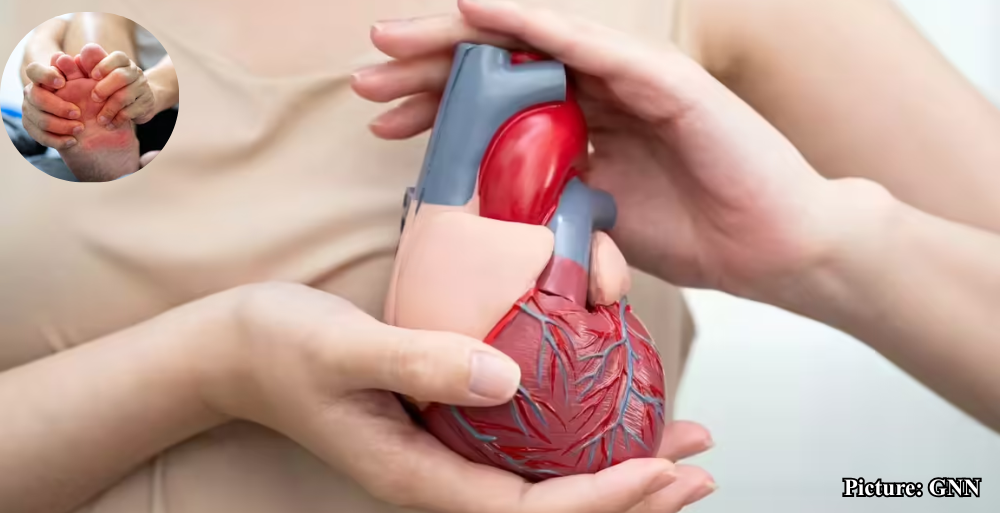
A novel mRNA therapy has shown potential in revitalizing heart muscle cells, leading to improved cardiac function in mice after heart attacks, according to a recent study published in Nature Cardiovascular Research.
Scientists at the University of Cambridge have developed a groundbreaking mRNA therapy that appears to ‘reawaken’ heart muscle cells, prompting them to divide and aid in the repair of damaged cardiac tissue. This research, conducted in mice, demonstrated that the therapy resulted in a stronger heartbeat, with a notable increase of approximately 10% in the volume of blood pumped with each heartbeat compared to a control group that received a sham treatment following induced heart attacks.
While the treatment does not represent a complete cure for heart failure, even modest enhancements in heart function are linked to significant reductions in mortality rates and improved daily activity levels for patients suffering from heart conditions. Heart failure, a chronic and often progressive disease, affects around 200,000 individuals annually in the UK alone, and current treatment options primarily focus on alleviating symptoms rather than regenerating lost heart muscle.
Mechanism of Action
The innovative approach utilizes mRNA therapy to temporarily activate two critical proteins within heart cells, known as Myc and Cyclin T1. By promoting the repair of heart tissue, this therapy holds promise for future applications in treating patients with heart failure. Dr. Catherine Wilson, an Associate Professor at the University of Cambridge’s Department of Pharmacology and Gurdon Institute, emphasized the significance of these results, stating, “There’s no cure for heart failure, and our treatment could potentially have a meaningful impact on the quality of life of millions of people around the world.” She added, “We’re not just treating the symptoms of heart failure – this approach could help the heart to repair itself.”
Future Directions
The research team is currently working on refining the treatment and has secured funding from the British Heart Foundation to further advance their work. They acknowledge that additional trials in larger animal models, followed by human testing, are necessary to fully ascertain the safety and effectiveness of this therapy.
The method of testing involved injecting the mRNA therapy directly into the hearts of mice post-heart attack, with the results assessed using echocardiograms. This imaging technique is akin to ultrasound scans used in prenatal care, allowing researchers to visualize heart function. Importantly, as the therapy is designed to be transient and localized, it is not expected to cause permanent changes to heart cells, which helps mitigate risks of potential overgrowth. No adverse effects were reported in the study’s animal subjects.
Follow-up assessments after 28 days and 12 weeks indicated that improvements in heart function were sustained over time, suggesting that the therapy may have lasting benefits.
The Urgency of Heart Regeneration
Post-heart attack, it is estimated that an adult human heart may lose up to one billion heart muscle cells. Unlike many other organs, the adult heart lacks the ability to regenerate itself, meaning that lost cells are never replaced. This loss not only weakens the heart but can also lead to scarring, heart failure, and ultimately, death.
As the global population ages and the incidence of heart failure rises, the financial burden of treating these patients is expected to escalate significantly. Researchers believe that the ability to reactivate and rejuvenate heart muscle cells represents a promising avenue for addressing this growing health crisis.
Professor Bryan Williams, Chief Scientific and Medical Officer at the British Heart Foundation, remarked on the significance of this research, stating, “Getting the human heart to repair itself is the holy grail for cardiologists. The heart is easily repaired when we are babies in the womb, but our heart muscle cells lose the ability to regenerate and fix the heart shortly after we are born. That makes it exciting when studies like this are able to reignite regeneration in heart muscle cells. While the research is in mice and still at an early stage, it is an important step forward towards therapies which could help repair the damage to the heart following a heart attack.”
Publication and Reference
The findings from this research have been published in the journal Nature Cardiovascular Research, with the study titled “A transient modified mRNA encoding Myc and cyclin T1 improves cardiac function after myocardial injury.” The complete reference is: Boikova, A., et al. (2026). DOI: 10.1038/s44161-026-00910-7. The research provides hope for the future of heart failure treatment and highlights the ongoing efforts to enhance cardiac repair mechanisms.




No Comment! Be the first one.