





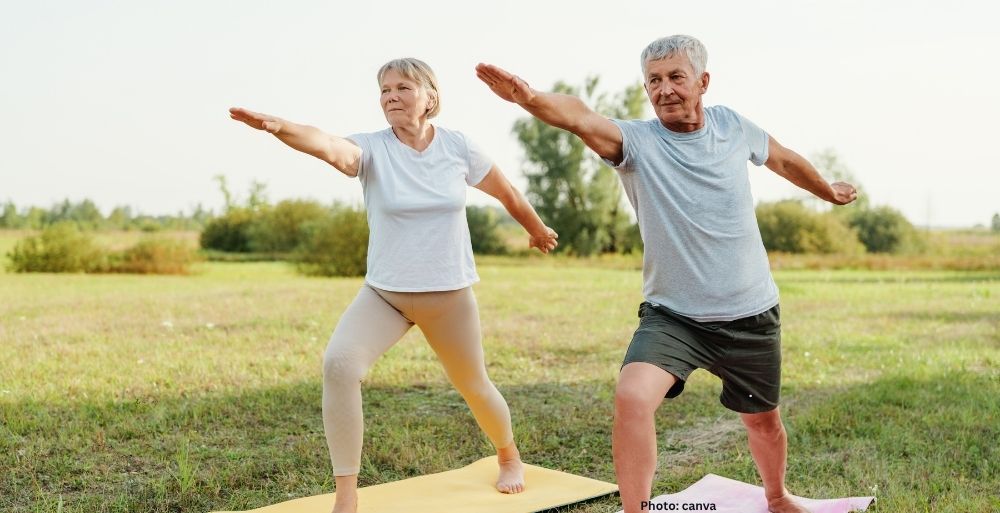
Warrior 2 Pose, or Virabhadrasana II, combines physical strength and mental focus, drawing on ancient teachings to inspire personal growth and resilience.
In the realm of yoga, the Warrior 2 Pose, known as Virabhadrasana II, stands out not only for its physical demands but also for its deep philosophical roots. This iconic pose is not merely a display of strength; it is a reflection of the inner battles we all face. The pose serves as a reminder of the teachings found in the Bhagavad Gita, a text that has influenced millions over the centuries.
Originally composed over two millennia ago, the Bhagavad Gita recounts the story of Arjuna, a warrior paralyzed by doubt just before entering a great battle. His chariot driver, Lord Krishna, imparts wisdom that transcends the battlefield, illuminating the path of yoga as a means to achieve clarity and purpose. In one notable translation of the Gita by scholar Eknath Easwaran, yoga is defined as “wisdom in action”—a principle that resonates with practitioners seeking to apply yoga’s teachings to everyday life.
The Metaphor of the Battlefield
Mahatma Gandhi, a key figure in India’s struggle for independence, drew upon the lessons of the Gita and adopted them as guiding principles in his life. He interpreted the battlefield as a metaphor for internal conflict, portraying Arjuna as the embodiment of the human spirit capable of overcoming fear and uncertainty. In contemporary yoga practice, the Warrior Pose invites practitioners to tap into this archetype of the courageous warrior, encouraging them to confront their own challenges with clarity and strength.
Despite the apparent contradiction of a “warrior” pose in a discipline largely centered around nonviolence, Virabhadrasana II embodies the essence of strength in peace. This pose teaches modern yogis about the importance of making wise choices and taking purposeful action, illustrating that strength can coexist with compassion.
Finding Your Center
Practitioners often describe feelings of being “off-centered” in their daily lives, a sentiment that can lead to stress and imbalance. In yoga, being “centered” denotes a state of physical, emotional, and mental equilibrium. To achieve this state, one must cultivate awareness from within, starting with the foundational Mountain Pose (Tadasana). Here, practitioners are encouraged to ground themselves, letting go of distractions to focus on their core. The journey into Warrior 2 begins with this grounding, helping practitioners prepare for the challenges ahead.
To initiate the pose, step your feet apart, aligning them parallel to one another. Turn the left foot out at a 90-degree angle, while pivoting the right foot at a 45-degree angle. As you plant your feet firmly, visualize them as roots, drawing stability from the ground. With arms relaxed at your sides, bend the left knee to ensure it aligns directly over the ankle, exploring weight distribution between both legs.
As practitioners deepen their understanding of the pose, they are encouraged to engage their hips and core. The right leg should remain firm, and the chest should open as the torso finds its vertical center. This process not only strengthens the body but also fosters a sense of internal awareness, aligning physical posture with mental focus.
Facing Internal Fears
Warrior Pose also serves as a powerful metaphor for confronting fears and anxieties. While holding the pose, it is common to experience tension—whether through clenched jaws or rigid shoulders. Practitioners are urged to recognize these physical manifestations of stress and to cultivate a state of relaxed focus instead. By raising the arms to shoulder height and directing the gaze towards the extended fingers, one can develop concentration akin to a Zen archer honing in on a target.
This balance between effort and ease is central to the philosophy of yoga. As practitioners refine their focus, they may hear their inner voice guiding them towards greater balance in life. The teachings of Krishna encourage an understanding that action and inaction are inherently intertwined. As one learns to navigate these dualities, they may find the courage to face their fears and embrace compassion.
Ultimately, the practice of Warrior 2 Pose is not merely about achieving physical prowess; it is about unlocking the potential within, fostering resilience, and cultivating a deeper understanding of one’s self. Like Arjuna, who received divine guidance in his moment of need, practitioners can draw strength from their yoga practice, finding clarity and purpose amidst the chaos of life.


No Comment! Be the first one.