




Public Health and Sports Medicine Experts Outline Daily Resistance Protocol to Address Visceral Fat and Core Weakness in Adults Over 65

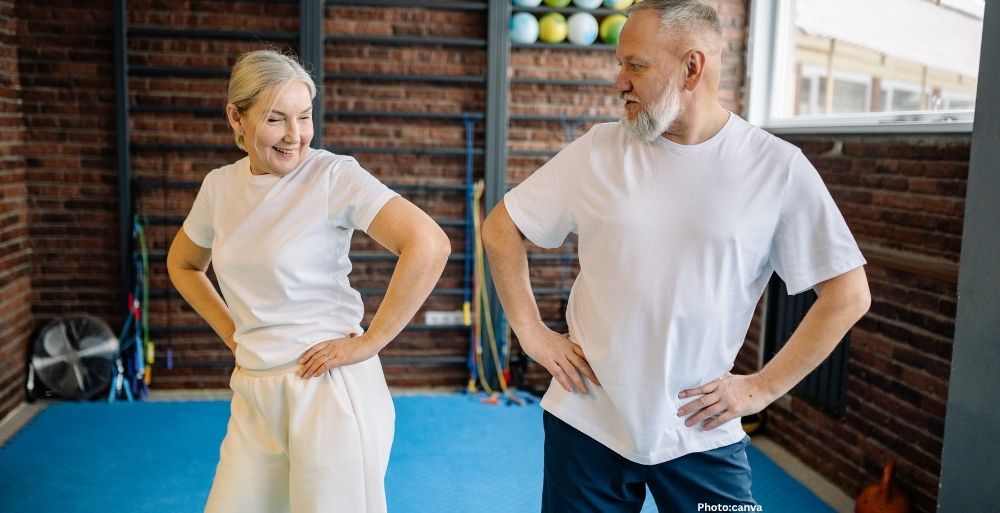
A comprehensive analysis by clinical exercise physiologists and geriatric health specialists highlights a structured, daily 12-to-15-minute low-impact movement framework designed to reverse age-related abdominal changes in adults aged 65 and older. Combining joint-friendly cardiovascular stimulation with standing and counter-supported core resistance exercises, the low-impact routine directly addresses both deep visceral adipose tissue accumulation and superficial abdominal wall laxity. Public health scholars stress that high-consistency, daily home-based movement blocks—when paired with dietary strategies targeting visceral fat—provide a more sustainable and effective intervention for functional mobility and waistline reduction than low-frequency group exercise classes.
Mitigating Midsection Morphologies in Aging Populations
WASHINGTON — Midsection weight gain in older adults presents a distinct physiological challenge governed by dual biological mechanisms: the accumulation of deep visceral adipose tissue behind the abdominal wall and the concurrent loss of structural integrity and tone within the rectus abdominis, obliques, and transverse abdominis musculature. As metabolic rates slow and neuromuscular signaling decreases with age, traditional weight loss metrics based solely on body weight often fail to capture key structural improvements.
Public health researchers and geriatric fitness coaches emphasize that adults over 65 should prioritize abdominal circumference measurements over scale weight. Visceral fat—the active metabolic fat surrounding internal organs—presents severe long-term health risks, including systemic inflammation, insulin resistance, and cardiovascular vulnerability. While nutritional adjustments govern the overall reduction of visceral fat mass, regular daily physical resistance provides the mechanical signal necessary to restore stiffness and tension to the abdominal wall.
Exercise scientists note that while structured group fitness classes offer social engagement and accountability, their typical schedule—two to three sessions per week—is often insufficient to generate the steady volume of caloric expenditure and continuous neuromuscular engagement required to reduce visceral waist circumference. Instead, clinical guidance favors short, brisk, high-frequency daily routines that fit easily into domestic schedules without inducing systemic fatigue or requiring floor-based positioning.
The 12-to-15-Minute Daily Protocol Framework
The recommended daily home routine consists of five low-impact exercises arranged progressively from dynamic standing cardio-respiratory openers to targeted rotational and counter-supported movements. Spanning 12 to 15 minutes total, the protocol is completed across three rounds of 30 to 40 seconds of work per movement, interspersed with 20 to 30 seconds of passive recovery.
To ensure safety and athletic longevity, practitioners are advised to remain off the floor entirely, utilize steady household counters for structural balance, step rather than jump, and avoid moving any exercise to complete muscular failure.
1. Step Jack With Overhead Reach: Dynamic Respiratory Opener
The routine opens with a low-impact lateral step jack to elevate heart rate, increase systemic blood circulation, and prime upper-body mobility while maintaining foot contact with the ground at all times.
- Target Musculature: Deltoids, calves, gluteus medius, and cardiovascular system.
- Execution Protocols: Standing tall adjacent to a sturdy counter within arm’s reach, knees soft, and feet positioned hip-width apart, the individual steps one foot laterally outward while sweeping both arms overhead. Returning to center with control, the user alternates sides at a brisk, rhythmic pace for 30 to 40 seconds.
- Progressive Modifications: To increase difficulty, practitioners can accelerate the lateral cadence or incorporate a deeper knee flex during each stepping phase.
2. Dumbbell Halo: Rotational Core Bracing Under Load
The dumbbell halo utilizes a light external weight moving around a stationary head, forcing the deep core musculature to stabilize the spine against shifting multi-planar forces.
- Target Musculature: Rectus abdominis, transverse abdominis, obliques, and shoulder complex.
- Execution Protocols: Grasping a light dumbbell by both ends at chest height with ribs depressed, the user circles the weight closely around the head at a controlled tempo of roughly two seconds per orbit. The direction of rotation reverses halfway through the set.
- Progressive Modifications: Advanced practitioners can increase dumbbell mass or stretch the orbit duration to four seconds per full revolution to prolong time-under-tension.
3. Standing Dumbbell Press-Out: Anti-Extension Moment Arm Loading
By pushing a dumbbell horizontally away from the sternum, the exercise extends the lever arm of the external load, significantly increasing forward pulling torque on the torso and requiring severe anterior abdominal contraction to prevent spinal arching.
- Target Musculature: Rectus abdominis, anterior deltoids, and spinal stabilizers.
- Execution Protocols: Standing near a support surface with feet hip-width apart and knees slightly bent, the individual holds a dumbbell vertically at the chest. The weight is pressed straight outward to full arm extension, held for a one-second isometric pause, and returned to the chest under strict control.
- Progressive Modifications: Load can be incrementally increased, or isometric holds at full extension extended to three full seconds.
4. Counter Plank Hip Twist: Oblique Stabilization and Rotational Control
Utilizing a stable countertop to maintain an inclined plank position, this exercise shifts dynamic load to the internal and external oblique networks by introducing controlled pelvic rotation.
- Target Musculature: Internal and external obliques, transverse abdominis, and shoulder stabilizers.
- Execution Protocols: Placing hands shoulder-width apart on the counter edge, the user steps the feet back into a linear head-to-heel plank stance. Maintaining upper-body positioning, one hip is dipped smoothly toward the counter cabinet, returned through the central axis, and alternated to the opposite side.
- Progressive Modifications: Moving foot placement farther backward deepens the incline angle, while adding a one-second pause at maximum hip rotation heightens anti-rotational recruitment.
5. Counter Burpee: Full-Body Conditioning and Structural Integration
Serving as the metabolic apex of the routine, the counter-supported burpee integrates stepping plank transitions with cardiovascular output, eliminating joint stress associated with floor burpees.
- Target Musculature: Anterior core, pectorals, quadriceps, glutes, and cardiovascular system.
- Execution Protocols: Positioned one step back from the counter, the user hinges at the hips to place hands on the edge. Feet are stepped backward individually into an inclined plank stance, then stepped forward back under the hips before standing fully upright without jumping.
- Progressive Modifications: Cadence can be quickened, or an overhead arm reach added upon reaching the full standing position of each rep.
Clinical Research and Public Health Longevity Implications
The integration of brief daily movement blocks aligns with a growing body of clinical evidence regarding geriatric physical health and functional independence. Sarcopenia—the age-related loss of skeletal muscle mass and function—and visceral adiposity are leading contributors to loss of mobility, metabolic disease, and balance degradation in seniors. Clinical studies evaluating body composition in older cohorts demonstrate that posture alignment and abdominal bracing exercises alone can reduce measurable abdominal circumference by up to 5.2 centimeters by improving active muscle tone and trunk alignment.
Furthermore, sports medicine trials demonstrate that initiating resistance training in later life yields substantial physiological returns, with previously sedentary older adults improving functional capacity and strength metrics by 5% to over 10% through consistent, short-duration regimens.
Public health experts stress that consistency remains the fundamental variable in long-term wellness. By replacing infrequent, high-intensity group classes with accessible, 12-to-15-minute daily home circuits, older adults establish sustainable movement habits that support core strength, lower fall risks, and preserve operational autonomy.
Tags: Senior Fitness, Visceral Fat, Sarcopenia Prevention, Core Workouts Over 65, Geriatric Health, Low Impact Exercise, Functional Mobility, Fall Prevention, Abdominal Strength, Exercise Physiology



No Comment! Be the first one.