




A coalition of more than 120 prominent Christian leaders, including conservative evangelicals, prominent theologians, and mainline Protestant ministers, has dispatched an urgent letter to high-ranking White House officials.
WASHINGTON — In a rare and significant break from the executive branch’s traditional faith-based base, a broad coalition of more than 120 Christian leaders, authors, and artists has formally petitioned the White House to halt the potential forfeiture of $1.35 billion in international health assistance.
The letter, delivered on Sept. 18 to White House Chief of Staff Susie Wiles and Office of Management and Budget (OMB) Director Russell Vought, challenges current plans to absorb or expire funds originally allocated for maternal health, disease control, and child nutrition. With the federal fiscal year ending on Sept. 30, faith leaders contend that converting these dollars into funds for “closeout” operations at the United States Agency for International Development (USAID) represents an unacceptable deviation from public intent and Christian ethical teachings.
A Diverse Coalition Across the Theological Spectrum
What elevates this intervention beyond typical Capitol Hill lobbying is the sheer theological breadth of its signatories. The coalition bridges long-standing ideological divides within American Christianity, uniting staunch administration allies with progressive activists.
Among the prominent conservative signatories is the Rev. Samuel Rodriguez, president of the National Hispanic Christian Leadership Conference and a longtime member of President Donald Trump’s informal evangelical advisory council. Joining Rodriguez are key evangelical figures such as Myal Greene, president and CEO of World Relief; Rick Warren, co-founder of Saddleback Church; Russell Moore, editor-in-chief of Christianity Today; and the Rev. Gabriel Salguero, president of the National Latino Evangelical Coalition. Cultural figures, including contemporary Christian music artist Amy Grant and Jars of Clay member Charlie Lowell, also affixed their names.
Simultaneously, the letter includes influential progressive and historic black church leaders, including Red Letter Christians co-founder Shane Claiborne and Pastor Walter August Jr., who leads both The Church at Bethel’s Family in Houston and its foreign humanitarian arm. Ecumenical partners including Catholic Medical Mission Board CEO Mary Beth Powers, Presbyterian Church (U.S.A.) minister Rev. Letitia M. Campbell of Emory University’s Candler School of Theology, and Latter-day Saint advocate Emma Adams of Mormon Women for Ethical Government further broadened the petition’s reach.
Organized under the auspices of the 2030 Collaborative—a public policy firm assisting humanitarian non-profits—the letter strikes a firm yet conciliatory tone. Rather than adopting an openly adversarial stance, the signatories framed their plea around shared stewardship and moral obligation.
“These global health programs reflect our shared moral commitment to protect life, especially children and pregnant women,” the leaders wrote. “We also share the Administration’s commitment to responsible stewardship of public resources. For decades, U.S. global health investments have reflected these principles while saving lives and advancing American interests around the world.”
Breakdown of Funds and Congressional Pushback
At the core of the debate is $1.35 billion in foreign assistance appropriations. According to financial analyses cited by faith leaders, the endangered funds include:
- $320 million allocated for maternal and child health initiatives.
- $250 million intended for malaria prevention and vector control.
- $135 million dedicated to urgent global nutrition programs.
- Remaining multi-million dollar balances slated for emergency medical relief and infectious disease monitoring.
Faith leaders contend that allowing these dollars to return to the Treasury or be absorbed by agency shutdown procedures violates biblical mandates. The letter explicitly cites Matthew 25, reminding administration officials of Jesus’ instruction to care for “the hungry, the thirsty, the stranger, the naked, the sick, and the imprisoned.”
“The moral stakes are considerable,” the letter emphasizes, urging immediate presidential intervention to obligate the capital before the midnight deadline.
The letter arrives amidst escalating friction between the executive branch and lawmakers over executive impoundment and agency restructuring. In Capitol Hill hearing rooms, senators from both parties have increasingly challenged administration officials over the fate of foreign assistance.
Republican Sen. Susan Collins of Maine issued her own warning letter to OMB Director Vought, Secretary of State Marco Rubio, and USAID leadership. Collins stressed that federal agencies must honor statutory directives:
“I urge USAID to ensure that the funding is spent to combat public health threats consistent with congressional intent, either by obligating the funding prior to the end of the fiscal year or transferring funds to the Department for such purposes,” Collins stated.
Democratic lawmakers have leveled similar criticisms during public oversight hearings. During a contentious Senate hearing earlier this summer, Sen. Patty Murray (D-WA) and Sen. Brian Schatz (D-HI) repeatedly pressed Secretary Rubio regarding unspent allocations.
“The three billion that we enacted for specific purposes should be used for those specific purposes,” Schatz argued directly during the proceedings, warning against administrative tactics that lead to artificial funding expirations.
Ground-Level Impacts and Escalating Advocacy
While OMB Director Russell Vought and executive branch spokespersons have repeatedly defended spending pauses as necessary measures against global bureaucratic inefficiency—denying that administrative delays have caused harm—investigative reports tell a starker story. Independent field assessments conducted by investigative outlets, including The Associated Press, have documented operational disruptions in regions such as Nepal, Myanmar, Nigeria, and Somalia. In several instances, suspended USAID distributions directly coincided with severe shortages of therapeutic food, maternal medicine, and infant vaccines.
Refusing to let the issue fade in the bureaucratic quiet of fiscal-year-end procedures, faith leaders are taking their message directly to Pennsylvania Avenue.
Jenny Dyer, head of the 2030 Collaborative, confirmed that while the White House has yet to issue a formal written response to the Sept. 18 petition, a delegation of 42 faith leaders—including numerous signatories—will convene in Washington next week. The leaders are scheduled to attend an official global health “listening session” hosted by the White House Office of Faith-Based and Neighborhood Partnerships.
Dyer noted that delegates intend to use the dialogue to press both State Department officials and OMB representatives on the legal obligation to disburse humanitarian funds.
“It’ll be 42 faith leaders flying in from across the United States who are showcasing a united front of moral support — because these are moral issues — on behalf of the world’s poorest,” Dyer said in a quiet, resolute tone prior to the delegation’s arrival.
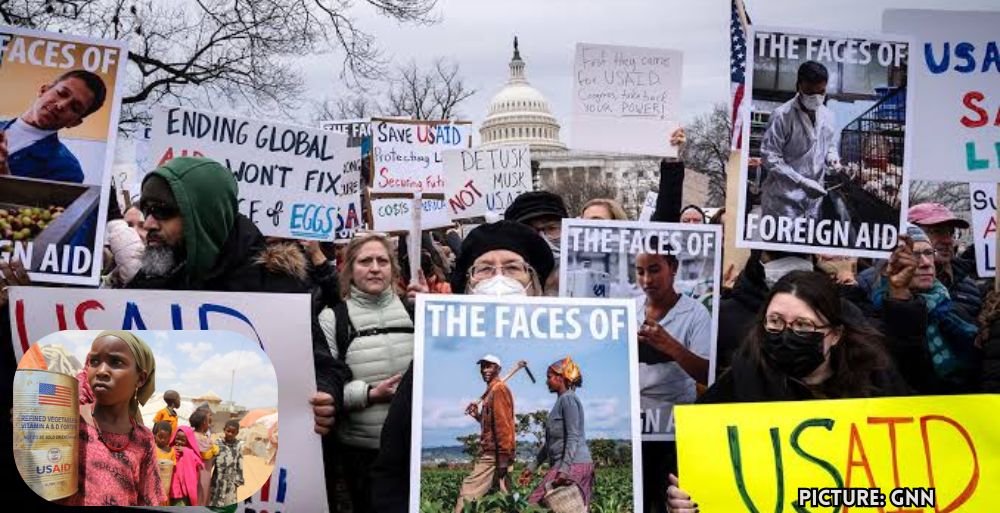
This week’s pressure campaign is part of a broader trajectory of evangelical mobilization around international aid. When initial reductions to international development programs were outlined last year, religious groups stood at the forefront of public pushback. Multi-denominational coalitions previously convened outside the U.S. Capitol for a public “Prayer Vigil for Foreign Aid,” demonstrating that global health advocacy remains a central political priority for a significant segment of the American faith community.
Whether the White House moves to obligate the $1.35 billion prior to the fiscal deadline remains uncertain. However, the willingness of high-profile evangelical allies to publicly challenge the administration underscores a widening rift over the moral obligations embedded in U.S. foreign policy.



No Comment! Be the first one.