





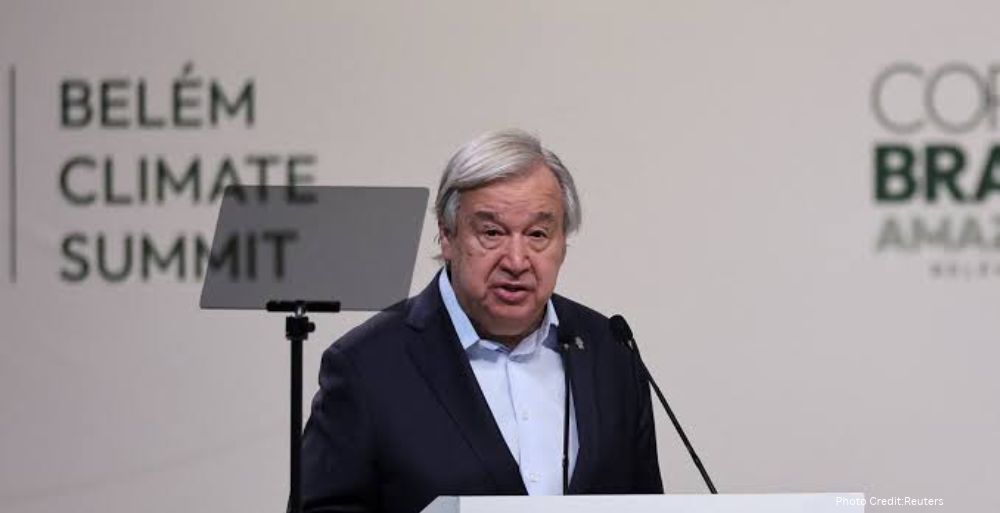
At the COP31 summit in Antalya, UN Secretary-General António Guterres emphasized the urgent need for a climate justice compact, calling for action against fossil fuel interests and greater support for developing nations.
ANTALYA, Turkey – World leaders convened today for a two-day high-level summit at COP31, where discussions focused on climate action and justice. The event commenced with an opening ceremony that featured traditional Turkish performances and a COP31 theme song, setting an energetic tone amid the backdrop of pressing climate challenges.
UN Secretary-General António Guterres delivered a stark message, warning that the pace of the climate crisis is outpacing global efforts to combat it. He stated, “Our planet is heating up. The clock is winding down. It’s make or bake time,” highlighting that even if current national climate plans are fully implemented, the planet is on track for over 2.5°C of warming by the end of the century.
Despite the daunting projections, Guterres urged leaders not to surrender to despair. He asserted, “Science is not telling us to surrender. It is telling us to fight harder,” emphasizing the significance of every fraction of a degree of warming avoided.
A New Deal for Climate Justice
In light of these challenges, Guterres proposed a ‘climate justice compact’ aimed at assisting developing nations in transitioning away from fossil fuels while simultaneously addressing their current vulnerabilities to climate impacts. “We cannot demand that countries transform their economies while denying them the means to do so,” he explained.
The proposed compact outlines four main priorities: accelerating the transition from fossil fuels through protective national plans, safeguarding vulnerable populations with enhanced warning systems and support mechanisms, ensuring affordable climate finance with commitments from wealthy countries, and fostering international cooperation to dismantle trade barriers and bridge technological gaps.
Holding Polluters Accountable
Guterres also criticized fossil fuel companies for their role in delaying necessary climate action, stating, “Fossil fuels must go the way of the dinosaurs. The dinosaurs did not have a lobby. Fossil fuels do.” He cited a stark financial comparison, noting that the nine largest oil companies collectively earned $95 billion in a single quarter, compared to just $600 million allocated to the international fund for vulnerable countries dealing with climate-related issues. This disparity, according to Guterres, highlights the urgent need for governments to implement taxes on windfall profits from fossil fuel companies, a sentiment that received a strong ovation from attendees.
Addressing Unfinished Business
Turkish President Recep Tayyip Erdoğan, co-host of COP31, acknowledged the shortcomings of three decades of climate negotiations, stating, “This success at the level of ideas has not produced the same results when it comes to implementation.” He called for enhanced support for developing nations to fulfill their climate commitments.
Brazilian President Luiz Inácio Lula da Silva added that climate change is increasingly overshadowed by global conflicts and economic disputes. “We started talking more about weapons and tariffs than the survival of future generations,” he remarked, underscoring the need for renewed international collaboration amid growing attacks on climate science and multilateralism. Lula also announced Brazil’s commitment to developing national roadmaps aimed at reducing reliance on fossil fuels and halting deforestation, continuing the momentum from last year’s COP30 held in the Amazon.
Tackling Methane Emissions
During the summit’s “Zero Waste” thematic day, discussions highlighted the urgent need to address methane emissions, a gas known to trap heat significantly more effectively than carbon dioxide. Guterres called for the UN Environment Programme (UNEP) to establish a global standard for near-zero methane emissions from oil and gas sectors. Methane is responsible for nearly one-third of global warming to date, with its sources including fossil fuel operations, agriculture, and waste decomposition.
UNEP is currently utilizing advanced technologies, including satellites and artificial intelligence, to monitor methane emissions. Julia Ferini, who leads UNEP’s International Methane Emissions Observatory, reported success in reducing emissions through immediate responses to leaks identified by the monitoring system. However, Guterres noted that of the more than 5,000 alerts issued in 2023, only one in eight received a timely response.
Innovative Solutions from the Ground Up
While negotiations continue in Antalya, young entrepreneurs are already implementing climate solutions on the ground. In Botswana, biologist Makwena Moesi is combating food waste through vermicomposting, utilizing more than half a million worms to convert organic waste into fertilizer. Her company, Viva Organica, has processed over 1,000 tonnes of organic waste, demonstrating a practical application of sustainable practices. Moesi emphasized that climate-friendly solutions must also be economically viable, stating, “A farmer does not wake up in the morning thinking about what am I gonna do to help sequester this amount of carbon dioxide from the air.”
As COP31 progresses, the ongoing dialogue among global leaders reflects an urgent call for actionable steps towards climate justice and accountability, highlighting the need for immediate and collaborative responses to one of the most pressing challenges facing the world today.






No Comment! Be the first one.