



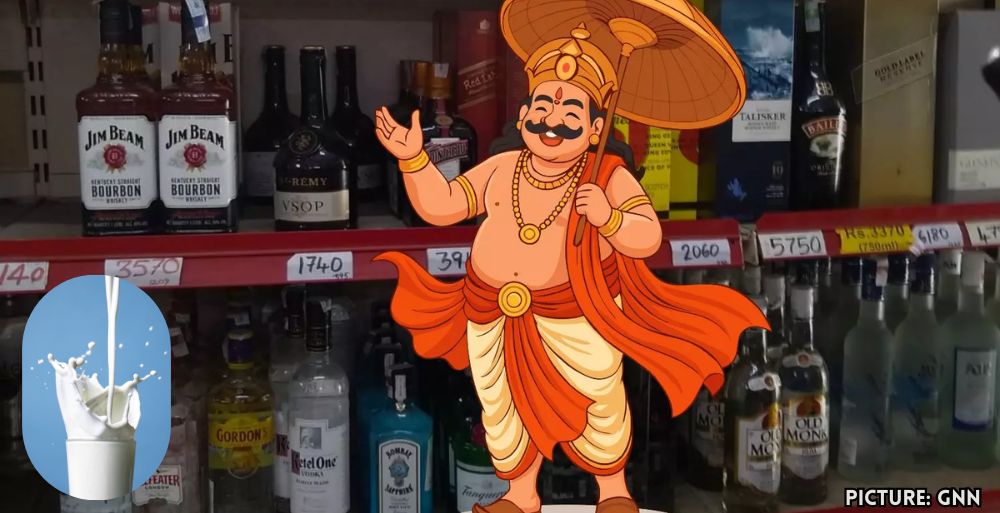
As the Onam festival unfolds, Kerala witnesses a notable increase in both milk and liquor sales, reflecting the cultural significance of these commodities and their impact on the local economy.
THIRUVANANTHAPURAM — During the vibrant Onam festival, which celebrates the harvest and the return of the mythical King Mahabali, Kerala has observed significant increases in the sales of both milk and liquor. This year’s festive season, which spanned from August 20 to August 25, coinciding with Uthradam, the festival’s first day, has seen the state’s dairy cooperative, Milma, report a 5.61 percent increase in milk sales, amounting to approximately 1.46 crore liters. Sales of curd performed even better, surging by 9.68 percent to exceed 18 lakh kilograms in the same period.
Conversely, liquor sales through the Kerala State Beverages Corporation (BEVCO) and Consumerfed reached Rs 771.29 crore during the eight days leading up to Uthradam, marking an increase of nearly 11 percent from the previous year’s figure of Rs 694.96 crore. This surge in liquor sales underscores a growing trend in festive consumption patterns among the Malayali community.
Uthradam: A Busy Day for Liquor Outlets
The day of Uthradam itself was particularly bustling, with liquor outlets across Kerala experiencing heavy foot traffic as consumers prepared for the festivities. Major establishments were crowded, indicating that many Malayalis were stocking up for the celebrations. This trend illustrates a unique aspect of Onam, where traditional culinary preparations, such as the sweet dish payasam and the elaborate sadya (a traditional feast), coincide with increased liquor consumption. The simultaneous rise in both milk and liquor sales highlights a complex relationship between cultural practices and economic dynamics during this festive season.
Regional data further supports this narrative of heightened demand for dairy products across the state. The Thiruvananthapuram regional union, for example, recorded a 5.86 percent increase in milk sales and a significant 7.94 percent rise in curd sales. The Ernakulam union reported a 4.2 percent increase in milk and an impressive 16.44 percent rise in curd sales. Similarly, the Malabar region experienced increases of 6.03 percent in milk and 8.7 percent in curd sales. Furthermore, ghee, a staple in the Onam culinary repertoire, sold briskly, with the Thiruvananthapuram union selling 297.85 tonnes, while the Ernakulam and Malabar unions sold 172.58 tonnes and 358.35 tonnes, respectively.
Strategic Planning and Supply Chain Management
The notable growth in dairy sales can be largely attributed to effective planning and supply chain management strategies employed by Milma. The cooperative expanded its procurement efforts and implemented meticulous supply chain measures to meet the seasonal demand during the festival. K.S. Mani, Chairman of Milma, expressed gratitude to consumers, dairy farmers, employees, and distributors for their roles in ensuring a steady supply throughout the festive period. This coordinated effort highlights the importance of logistical efficiency in meeting consumer demands during peak seasons.
While detailed outlet-specific liquor sales figures have not been released by the government, the rising popularity of alcoholic beverages during Onam raises questions regarding which retailer emerges as Kerala’s largest liquor seller during this peak time. The absence of this data creates a gap in understanding consumer preferences and behaviors in the state.
Cultural Significance and Economic Implications
The contrasting sales figures of milk and liquor during Onam provide a fascinating insight into the cultural fabric of Kerala, where both commodities play important roles in the festive celebrations. The juxtaposition of milk, traditionally used in sweets and religious offerings, alongside liquor, which is often consumed during social gatherings, reflects the diverse ways in which Keralites engage with their heritage during this significant festival. This duality highlights a broader cultural acceptance of consumption that resonates deeply with the community’s celebrations.
Moreover, as Kerala continues to celebrate Onam with rich traditions and a strong communal spirit, the economic repercussions of these sales figures are likely to extend beyond the festival period. Observers note that Onam has increasingly become a time not only for family gatherings and traditional feasting but also for heightened commercial activity in both the dairy and liquor sectors. The significant increase in sales underscores the festival’s role as a critical driver of economic activity within the state.
In essence, this year’s Onam celebrations in Kerala vividly illustrate the intertwining of cultural traditions with economic practices. As residents ensure that both their glasses of milk and liquor remain full throughout the festivities, this blend of tradition and commerce serves as a reflection of how deeply embedded these practices are within the state’s social fabric. The Onam festival, therefore, stands as a testament to the balance of heritage and modern consumerism, showcasing the significance of the occasion to both the cultural and economic landscape of Kerala.



No Comment! Be the first one.