




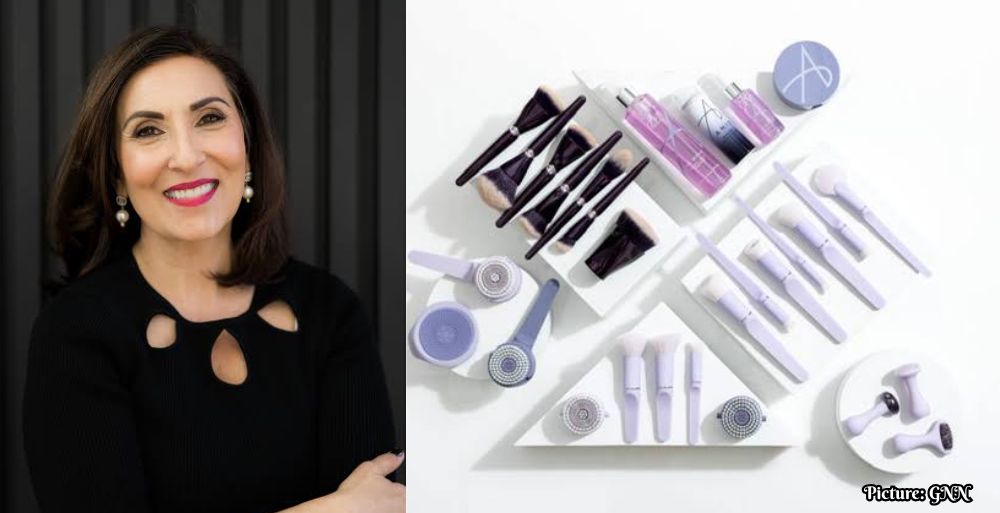
Anisa Beauty, a consumer brand under Anisa International, is winding down its operations as the parent company aims to concentrate on its core business and innovation in brush manufacturing.
Anisa Beauty, the direct-to-consumer brand launched by Anisa International in 2019, will cease operations at the end of 2026, as announced by founder Anisa Telwar Kaicker on social media. The Atlanta-based company plans to focus its efforts on research and development, pivoting away from the consumer market that has become increasingly challenging.
Founded in 1992, Anisa International has been recognized for its innovation in makeup brush manufacturing. The decision to close Anisa Beauty follows a series of operational challenges, including rising tariffs on goods imported from China, where Anisa operates its manufacturing facilities. Despite initial success, the brand faced difficulties in maintaining growth amidst a saturated market and declining consumer interest in makeup products.
In her announcement, Kaicker noted, “As the brand grew, so did the complexity and resources required to operate a consumer business at scale. I ultimately had to ask myself where my time, our investment, and our innovation could have the greatest impact.” This reflection led to the decision to streamline operations and return to the core focus of brush manufacturing.
Market Challenges and Industry Dynamics
The makeup brush industry has faced significant hurdles in recent years. Anisa Beauty’s market has been further complicated by consumer trends that favor inexpensive alternatives available on platforms like TikTok and Amazon. The cyclical nature of the beauty industry, which has seen a downturn in makeup sales, has also impacted the brand’s performance.
In 2024, industry estimates reported by Women’s Wear Daily placed Anisa Beauty’s annual sales between $25 million and $50 million, a modest figure relative to the overall performance of Anisa International, which boasts more than 400 employees and 180 brand partnerships worldwide. Despite its success in the high-end segment—with brushes priced between the high-$20s and nearly $50—Anisa Beauty’s direct-to-consumer model has struggled to acquire new customers, prompting a partnership with Amazon Premium Beauty in 2024.
Kaicker emphasized the significance of Anisa Beauty as a platform for research and development, stating, “Its significance to us went far beyond its percentage of revenue. For me, Anisa Beauty was an extraordinary R&D and learning platform. It allowed us to take our innovations directly to consumers, receive feedback in real time, and understand the entire journey, from product discovery and education to purchase, application, and repeat use.” This knowledge is expected to inform future product development at Anisa International.
Financial Context and Competitive Landscape
The financial landscape for beauty brands, particularly those focusing on makeup brushes, has become increasingly competitive. Anisa Beauty, which positioned itself at the upper end of the brush market, faced unique challenges as numerous brands introduced lower-cost options that attracted budget-conscious consumers. Social media platforms have amplified this trend, enabling brands like BK Beauty to flourish in the market by selling more than $100 million worth of brushes, while also diversifying into color cosmetics.
In contrast, Anisa Beauty’s model remained largely direct-to-consumer throughout its operation, complicating customer acquisition efforts. The brand’s unique offerings, such as the Pinnacle Foundation Brush and Pinnacle Skincare Brush, were designed with proprietary technology and craftsmanship, but these premium products could not shield the brand from broader market shifts.
Future Directions for Anisa International
Despite the closure of Anisa Beauty, the parent company is not exiting the branded brush market entirely. Anisa International launched Rose and Ben Beauty in 2021, a partnership with makeup educator and influencer Rose Siard. This premium brush brand caters to a similar demographic, with products priced between the mid-$20s to $45.
Looking ahead, Kaicker is focused on advancing brush technology and innovation. She stated, “Our work has always been about much more than making brushes. We engineer tools around formulas, application techniques, and performance. That philosophy remains central to our product development. I believe there is still enormous opportunity for innovation in beauty tools.” This commitment to innovation suggests that Anisa International may continue to explore new avenues for growth within the beauty industry.
Conclusion and Final Offerings
The closure of Anisa Beauty, while marking the end of a significant chapter for Kaicker and her team, reflects broader trends within the beauty industry that are forcing brands to adapt rapidly to changing consumer preferences and market conditions. As the company winds down operations, it aims to leverage the insights gained through Anisa Beauty to enhance its core offerings.
Anisa Beauty will continue to sell through the end of the year, offering a final collection known as the 999 Edit, which features a nine-brush set priced at $99. This promotion is positioned as a farewell to the brand and a celebration of its contributions to the beauty industry.
As Anisa International shifts its focus towards innovation and research, the lessons learned from Anisa Beauty’s journey may play a crucial role in shaping the future of brush manufacturing and the beauty tools market at large.



No Comment! Be the first one.