





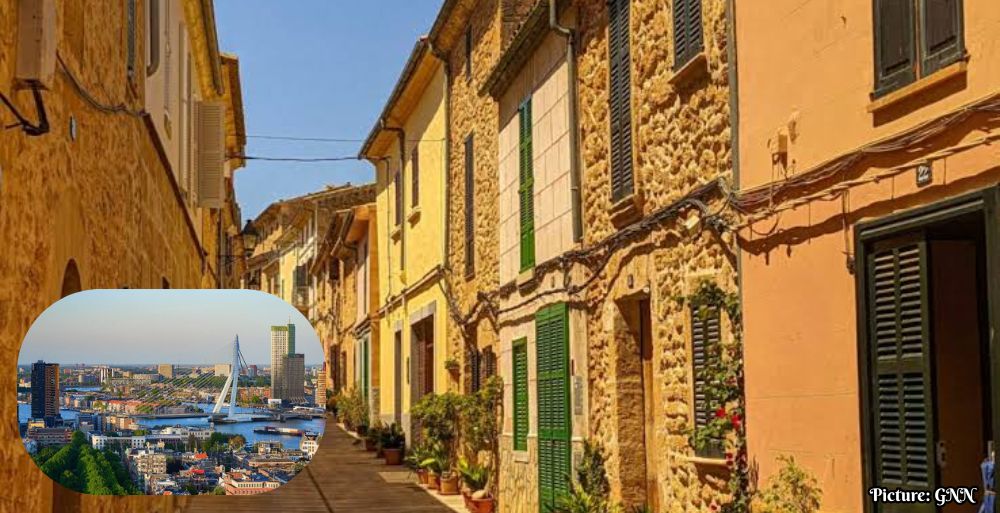
As Europe grapples with extreme heatwaves, the debate over air conditioning has intensified, revealing a deep divide in energy preparedness across the continent. Experts advocate for a return to historical architectural principles that prioritize passive cooling solutions.
As extreme heatwaves continue to sweep across Europe, the debate over air conditioning has escalated into a significant cultural and political issue. In France, where only about 25% of households are equipped with air conditioning, localized blackouts—such as the transformer failure in Finistère that affected over 100,000 homes during a heatwave in June—have underscored the vulnerabilities of an aging energy infrastructure under thermal stress. This issue is not confined to France; the disparity in cooling solutions is evident across the continent. While Spain has integrated cooling systems in over 40% of homes, Italy consumes nearly a third of the European Union’s cooling energy, and countries like Germany and the Netherlands remain structurally unprepared, with only about 20% of dwellings equipped with air conditioning.
The urgency of effective cooling solutions is underscored by the medical necessity for vulnerable populations, including the elderly and pregnant women, to access temperature control. However, the environmental ramifications of air conditioning are troubling; the systems contribute significantly to the urban heat island effect, leading to increased energy demand and emissions.
The Call for Passive Cooling Solutions
In light of these challenges, some experts suggest that solutions may lie not in high-tech innovations but in the passive design wisdom of the past. Christine Thornley, a chartered architect from northeast England and founder of Grove Studio Architecture, argues for a reevaluation of 20th-century construction practices that prioritized energy efficiency for heating while neglecting cooling needs. “We spent a long time focusing on how to make buildings more energy efficient to heat them in winter, and then we forgot that there’s a converse side to that,” Thornley explains. “Now we have to deal with the heat as well.”
Thornley advocates for returning to fundamental architectural principles that facilitate natural airflow and manage solar radiation. For instance, she notes that traditional Victorian windows in the UK, designed for airflow with sliding sashes, have been replaced in recent decades by modern double-glazed units that trap heat inside. Similarly, the decline of external shutters in northern European architecture has exacerbated heat accumulation within buildings. “Shutters on the outside stop that energy from getting built up inside,” she points out, emphasizing the need to reintroduce these elements to combat rising temperatures.
Historical architecture, such as that found in the Alhambra in Granada, exemplifies effective passive cooling techniques, utilizing air circulation, shading, and thermal mass to maintain comfort even during high temperatures. Thornley highlights the importance of landscape design, noting that a dense tree canopy can lower local temperatures by three to four degrees, preventing heat absorption by the ground.
Mass Timber: A Sustainable Alternative
However, passive cooling strategies alone may not suffice given the heat-retaining structures of modern cities. Andrew Waugh, director of Waugh Thistleton Architects, argues for a shift toward mass timber construction as a solution to both the global carbon crisis and local microclimate issues. Waugh envisions a future city that prioritizes lightweight, healthy, and walkable environments. He asserts, “Mass timber buildings have a far lower thermal mass; you’re not creating these heat islands.” Waugh further emphasizes the biophilic benefits of timber, stating that it positively impacts human health and well-being compared to traditional concrete structures.
Despite the potential benefits of mass timber, the construction industry remains resistant to change. Waugh attributes this stagnation to the lobbying power of large corporations in the steel, concrete, and cement sectors, which dominate the market and influence government policy. He points out, “These products are run by big businesses that are very good at self-promotion and lobbying governments,” whereas the timber industry is often represented by smaller, family-owned businesses that lack the same resources.
Heritage and Sustainability: A Necessary Alliance
The challenge extends beyond material choice to the broader question of urban development philosophy. Vanessa Fraga Prol, Advocacy and Partnerships Manager at Europa Nostra, argues for a shift from a “demolition-first” mentality to a “repurposing-first” approach in urban planning. Fraga Prol believes that cultural heritage should be seen as an asset in achieving sustainability goals rather than a hindrance. “The most sustainable building is the one that exists already,” she asserts, advocating for innovative adaptations of historic structures to meet modern energy performance standards.
Aligned with the New European Bauhaus initiative and the Faro Convention, Europa Nostra promotes the idea that preserving historical buildings and addressing climate change can coexist harmoniously. Fraga Prol critiques current practices wherein heritage sites are often exempt from modern energy regulations, arguing this leads to stagnation rather than innovation. “When you exempt heritage, then there is a kind of laziness. There are no innovative ways to adapt historic buildings to new rules,” she states.
Case Studies in Integration
Successful integration of modern technologies within historical contexts can be seen in projects such as POCITYF, a European smart city initiative that transforms protected heritage sites into laboratories for sustainable innovation. In Évora, Portugal, a UNESCO World Heritage site, project managers faced the challenge of balancing heritage preservation with the implementation of renewable energy technologies. Humberto Queiroz, site manager, explained that their approach focused on installing energy systems that are discreet and in harmony with the historical aesthetic. They replaced traditional clay shingles with photovoltaic tiles that blend seamlessly with the local architecture, demonstrating that modern energy solutions can coexist with historical integrity.
As the construction sector evolves, the Évora project illustrates the potential for community-oriented energy solutions that foster a sense of shared living. Nuno Bilo, project manager, reflects on the social implications of these initiatives, stating, “Through these community solutions, we are going back to a shared scale of living.”
Ultimately, the path forward for urban environments in Europe may not require radical new designs but rather a synthesis of past wisdom and modern technology. As experts advocate for both passive design principles and innovative materials like mass timber, the future of cities may hinge on their ability to learn from history while adapting to contemporary challenges.





No Comment! Be the first one.