





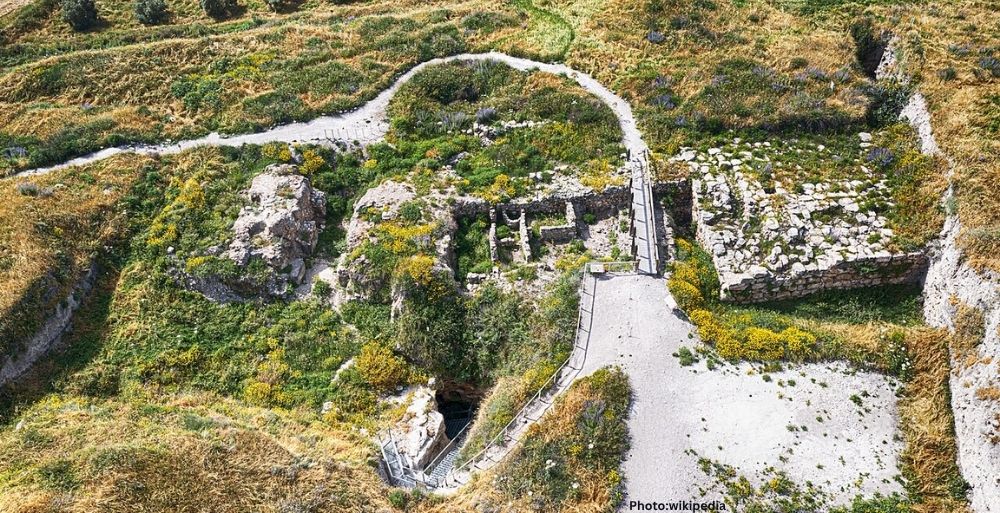
An extraordinary archaeological excavation on the northern coast of Israel has uncovered a remarkably well-preserved prehistoric cave dating back as far as 400,000 years. The site, sealed for hundreds of millennia by a collapsed limestone roof, offers a pristine look into the complex daily camp life and evolutionary transition of early pre-Neanderthal hominins. The discovery has prompted structural alterations to regional infrastructure projects to ensure scientists can continue long-term field operations at what experts describe as a global time capsule from the late Lower Paleolithic era.
FUREIDIS, Israel — A salvage excavation ahead of a municipal road project in northern Israel has uncovered a rare, sealed prehistoric cave containing stone tools and butchered animal remains dating back between 400,000 and 250,000 years. Located on the outer margins of Fureidis, a town south of Haifa near the Zikhron Ya’akov interchange, the site offers an unprecedented look into the elusive Acheulo-Yabrudian culture. The discovery provides rare evidence of large-group hominin habitation and advanced resource management during a pivotal evolutionary phase just before Neanderthals and modern Homo sapiens emerged as dominant global lineages.
The site was initially discovered decades ago by field survey researchers in the 1970s who inaccurately cataloged the site as a shallow Middle Paleolithic shelter dating to approximately 200,000 years ago. However, extensive modern excavations initiated roughly six months ago ahead of planned infrastructure work have overturned that timeline, establishing that the cave was utilized up to 400,000 years ago during the Lower Paleolithic era.
A Sealed Lithic Time Capsule
The exceptional state of preservation within the Fureidis cave is a direct consequence of a prehistoric geological event. Hundreds of thousands of years ago, the original limestone roof of the cave structure disintegrated and collapsed inward. Huge boulders, combined with accumulated layers of soil and dense regional vegetation, effectively created an airtight barrier that protected the interior floor from atmospheric degradation and subsequent human disruption for multiple eras.
Dr. Kobi Vardi, head of the Prehistory Branch at the Israel Antiquities Authority (IAA) and co-director of the dig, described the team’s astonishment during a telephone interview detailing the stratigraphy. “The original roof of the cave disintegrated and crashed down, and the site was covered by very large boulders,” Vardi explained, highlighting that artifacts remained resting exactly where early hominins had left them. He noted that the initial assumption about the site’s age made the subsequent findings a profound revelation: “It was a big surprise to find that the cave was much older than previously thought.”
Working alongside co-director Amit Gabay and Professor Ron Shimelmitz of the Zinman Institute of Archaeology at the University of Haifa, the excavation team extracted hundreds of diagnostic flint tools embedded within the sediment layers. These tools include sophisticated, small handaxes, side scrapers, and elongated stone blades. The presence of these specific types of stone fabrications serves as a definitive marker for the Acheulo-Yabrudian culture, which occupied the Levant between 400,000 and 250,000 years before the present day.
Evolutionary Transitions and Social Dynamics
The Acheulo-Yabrudian period represents a critical evolutionary bridge in the fossil and cultural record. During this multi-millennial window, ancient hominins moved away from mobile, small-scale foraging toward prolonged occupations of specific central hubs within the landscape. The Fureidis cave features deep accumulations of faunal remains, including the highly preserved bones of fallow deer, gazelles, wild cattle, and ancient horses. Many of these animal remains display clear taphonomic signatures of human processing, such as precision cut marks from flint butchery tools.
Professor Ron Shimelmitz emphasized that the findings reflect a sharp behavioral shift toward structural social cooperation. “The gradual changes that emerged during this period in human physiology, technology, and society foreshadowed the traits and complex behavioral patterns that developed later and characterize both Neanderthals and modern humans,” Shimelmitz stated. He noted that the site highlights a distinct transition where early human ancestors began living in larger groups for longer periods. “Caves from this period have yielded evidence of intensive use of fire and prolonged human activity, suggesting complex and rich camp life,” he added.
While the presence of heavily processed animal bones and dense lithic scatters implies the domestic use of fire, researchers have not yet identified localized hearth structures or distinct burn marks on the bones. However, the geographic context explains why the site was so heavily favored: geological data indicates a freshwater spring ran adjacent to the cave entrance during the Lower Paleolithic, offering an optimal environment for hunting and resource processing.
Global Significance and Infrastructure Preservation
The global archaeological community has reacted with notable enthusiasm to the announcement. Dr. Armando Falcucci, a lecturer in Paleolithic archaeology at the University of Southampton who was not affiliated with the project, noted that cave deposits from this specific chronological window are exceedingly rare across the Levant. He emphasized that the site’s value lies in its ability to focus research on a long-overlooked era of profound technological transition, especially the habitual, controlled use of cave structures as permanent landmarks.
Similarly, Professor Catriona Pickard, head of archaeology at the University of Edinburgh, observed that the intact nature of the Fureidis site provides critical data regarding the lifeways of early hominins. She noted that the find has the explicit potential to fundamentally reshape existing theories regarding how ancient populations navigated the Levantine corridor between Africa and Eurasia.
The ultimate fate of the cave was salvaged through an agreement between scientists and civil authorities. The excavation, funded primarily by the Ayalon Highways Company, was initially intended as a routine rescue operation prior to the layout of a new municipal access road into Fureidis. Recognizing the global importance of the undisturbed Paleolithic layers, the IAA presented its preliminary data to the civil infrastructure planners. In response, engineering blueprints were modified to replace the surface road with an elevated road bridge spanning over the site, successfully bypassing the cave mouth and keeping the entire system protected and accessible for decades of future research.
While no hominin skeletal remains have been recovered from the Fureidis site to date, the excavation directors are preparing a comprehensive, multi-year research program to dig into deeper sediment layers. The primary objective remains finding fossilized human remains, which would conclusively identify the specific hominin species responsible for the Acheulo-Yabrudian tool kits.






No Comment! Be the first one.