




Health Care Lobbies Weaponize Affordability Concerns to Shift Federal Regulatory Focus to Hospitals

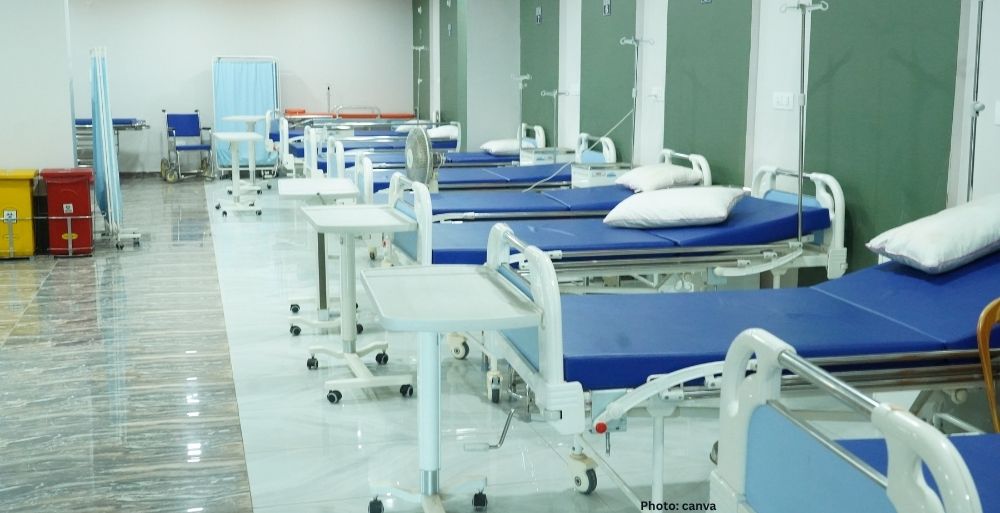
WASHINGTON — Facing intense bipartisan scrutiny over rising cost burdens in the nation’s $5 trillion health care sector, the pharmaceutical and health insurance industries have launched a coordinated, multimillion-dollar lobbying campaign to redirect federal regulatory intervention toward America’s hospital systems. Capitalizing on congressional anxieties regarding out-of-pocket medical expenses, these sector lobbies are actively promoting policy overhauls—including site-neutral payment mandates and restrictions on federal drug discount programs—that critics argue would insulate their own profit margins while severely constraining hospital revenues. This strategic realignment marks an aggressive transformation in a long-standing tri-sector proxy war, threatening to disrupt the financial stability of providers already managing major legislative reductions to safety-net programs.
The Tri-Sector Lobbying Clash and the Push for Hospital Regulation
The domestic health care landscape, which commands roughly 17% of the U.S. gross domestic product, is currently the battleground for an unprecedented public relations and legislative offensive. Historically, the Pharmaceutical Research and Manufacturers of America (PhRMA), AHIP (formerly America’s Health Insurance Plans), and the American Hospital Association (AHA) functioned as distinct, highly influential advocacy centers on Capitol Hill. However, as federal lawmakers face growing public dissatisfaction over medical debt and escalating premiums, the traditional trilateral equilibrium has fractured.
Drugmakers and insurers are actively seeking to exploit Washington’s current focus on affordability. By framing hospital systems as consolidated, anti-competitive “mega-corporations,” these industries aim to deflect legislative penalties away from drug pricing and insurance premium structures. The operational stakes are exceptionally high, given that all three sectors have faced intense federal scrutiny over the past year. While pharmaceutical executives have aligned with the Trump administration to promise nominal price concessions, and insurers have offered to expedite claims processing to mitigate criticism over Affordable Care Act (ACA) user fees, hospitals have emerged as the primary targets for structural spending cuts.
The political vulnerability of the hospital sector has been compounded by the broader legislative environment. Following the enactment of nearly $1 trillion in Medicaid reductions under the One Big Beautiful Bill Act, alongside the scheduled year-end expiration of enhanced ACA subsidies, hospital networks are facing significant budgetary constraints. Seizing upon this financial pressure, rival industry coalitions are aggressively promoting legislative fixes that were previously stalled by partisan gridlock.
“The aperture is just being opened,” observed Adam Buckalew, founder of the lobbying firm ALB Solutions and a senior adviser to Hospital Watch, an insurance-backed advocacy coalition. Buckalew, who previously served as deputy health policy director for former Senator Richard Burr (R-N.C.) on the Senate Health, Education, Labor, and Pensions (HELP) Committee, noted that concepts discussed conceptually for over a decade are rapidly advancing into actionable federal policy.
Bipartisan Alignment Against Industry Consolidation
This corporate offensive has found unexpected reinforcement from across the ideological spectrum, as both conservative and progressive public policy organizations align against hospital business practices. In April 2026, the Paragon Health Institute—a right-leaning think tank directed by former Trump administration economic adviser Brian Blase—published a comprehensive policy report concluding that legacy federal regulatory structures have inadvertently incentivized horizontal and vertical hospital consolidation, directly driving medical price inflation.
Two weeks later, the progressive advocacy group Families USA released a parallel analysis that echoed those findings, arguing that corporate healthcare mergers systematically erode consumer choice and increase out-of-pocket costs.
The analytical consensus between organizations that rarely agree underscores how much ground the hospital lobby has lost. Sophia Tripoli, the Senior Director of Health Policy at Families USA, acknowledged the uniqueness of the situation, noting that while the two organizations differ on most health policy issues, they are fully aligned on the need to address hospital pricing and market concentration.
This analytical backing has given lawmakers the political leverage needed to challenge hospital executives directly. During a recent high-profile hearing held by the House Ways and Means Committee, Republican representatives questioned hospital leadership regarding their financial practices. Committee Chairman Jason Smith (R-Mo.) led the critique, stating that the traditional model of the community hospital has largely “been replaced by mega-corporations that put quarterly earnings over quality care.”
Chairman Smith threatened to leverage federal authority to reduce hospital Medicare reimbursements down to the baseline levels applied to independent doctors’ offices—a policy change that insurance industry strategists have long advocated for.
Data compiled by healthcare industry consultancies supports the underlying trend of market concentration. According to a report by Kaufman Hall, the first quarter of 2026 witnessed 22 formal hospital and health system mergers, representing the highest volume of consolidation recorded for that specific period since 2020. Furthermore, an analysis of federal expenditure data conducted by KFF (formerly the Kaiser Family Foundation) revealed that hospital care accounted for a striking 40% of the net growth in total national health care spending between 2022 and 2024, outstripping the cost increases documented in pharmacy benefits, clinical services, or medical equipment.
| Health Care Sector Indicators | Documented Metric / Statistic | Associated Source |
| First-Quarter Hospital Mergers (2026) | 22 formal system consolidations | Kaufman Hall Consultancy |
| Contribution to Health Spending Growth (2022–2024) | 40% of total national expenditure growth | KFF National Analysis |
| Historical 340B Program Growth (2010 vs. 2024) | Increased from $6.6 Billion to $81 Billion | Federal Oversight Data |
| Post-Acquisition Price Increases | 14% average service fee escalation | Joint Agency Report |
The Battle Over the 340B Drug Pricing Discount Program
The most immediate regulatory threat to hospital revenues centers on the 340B drug pricing program. Established under Section 340B of the Veterans Health Care Act of 1992, the statutory program requires pharmaceutical manufacturers to provide outpatient drugs to eligible healthcare organizations—known as covered entities—at significantly reduced rates. The program was designed to enable public and nonprofit providers serving large volumes of low-income or uninsured patients to stretch scarce federal resources, using the financial margins generated from the discounted drugs to fund comprehensive safety-net services.
However, driven by broader hospital consolidation, increased drug utilization, and regulatory expansions allowing hospitals to contract with external retail pharmacies, the financial scale of the program has expanded dramatically. Total purchases within the 340B ecosystem reached more than $81 billion in 2024, a massive increase from the $6.6 billion recorded in 2010.
Pharmaceutical companies have used this rapid expansion to argue that the program lacks sufficient statutory guardrails, leading to widespread exploitation by well-capitalized health systems and major pharmacy chains. PhRMA recently launched a major seven-figure multimedia advertising blitz designed to highlight these concerns to both voters and lawmakers.
Molly Jenkins, a spokesperson for PhRMA, argued that any meaningful conversation about healthcare affordability must address both Pharmacy Benefit Managers (PBMs) and the 340B program.
This narrative is gaining significant traction within the federal government. Last year, Senator Bill Cassidy (R-La.), Chairman of the Senate HELP Committee, called for a complete legislative overhaul of the program following an internal committee probe that raised concerns about transparency and corporate oversight. A bipartisan group of senators is currently drafting legislative frameworks to address these issues.
Executive branches are also applying pressure; at the recent House Ways and Means hearing, Health and Human Services (HHS) Secretary Robert F. Kennedy Jr. criticized the program’s expansion, alleging that certain wealthy, non-profit institutions were misallocating 340B revenues.
The Trump administration is already laying the operational groundwork for major administrative changes. In February, HHS formally requested industry feedback on a regulatory proposal to replace the program’s traditional upfront discount structure with a back-end rebate model. Under this setup, championed by the pharmaceutical lobby, hospitals would be forced to purchase drugs at full wholesale acquisition costs and later apply for rebates—a process hospital advocates warn would create severe, unsustainable cash-flow constraints for rural and safety-net clinics. This regulatory move follows a previous attempt to implement a pilot rebate framework in January, which was temporarily shelved following immediate legal challenges.
Concurrently, the administration is moving forward with an executive order directing HHS to collect detailed pricing data on what hospitals actually pay for drugs. This data collection is a strategic effort to satisfy the administrative requirements established by the Supreme Court, which previously blocked a first-term attempt by the Trump administration to cut 340B outpatient drug reimbursement rates by 30%.
John F. Williams, head of the federal advocacy practice at the law and lobbying firm Hall Render, observed that “this time around, in Trump 2.0, they are dotting their i’s and crossing their t’s,” signaling that the 340B framework faces its most significant existential threat since its inception.
Insurer Offensives and the Push for Site-Neutral Reforms
While drugmakers focus their efforts on reforming the 340B program, health insurance providers are directing their lobbying resources toward hospital consolidation and billing practices. Led by AHIP, insurers argue that the widespread acquisition of independent physician practices by large hospital networks has enabled these systems to engage in “facility fee arbitrage.” This practice allows hospitals to rebrand ordinary outpatient treatments as hospital-based services, thereby charging significantly higher rates for care that was previously billed at lower, independent doctor-office prices.
To back this claim, insurance groups point to a cross-agency report released during the final days of the Biden administration. The study confirmed that hospital acquisitions of independent physician groups led to an average price increase of 14% for identical medical services, without a corresponding increase in care quality.
However, showing the complex nature of the issue, that same federal report also warned against the ongoing consolidation within the insurance sector itself, noting that high market concentration among insurers successfully raised consumer premiums while depressing financial reimbursements to front-line medical providers.
In response, Mike Tuffin, Chief Executive of AHIP, stated to reporters that common-sense policy reforms are urgently needed to address the role of hospitals in driving up national healthcare costs. Insurers are pushing for two specific policy measures: absolute price transparency and universal “site-neutral” payment metrics. Site-neutral policies would mandate that Medicare and commercial insurers reimburse specific medical procedures at a uniform rate, regardless of whether the service is performed in a high-overhead hospital department or a standalone community clinic.
To advance this agenda, a well-funded insurance coalition called Better Solutions for Healthcare—which includes Blue Cross Blue Shield and other major commercial underwriters—launched a series of targeted media campaigns. This was followed by the creation of the Hospital Watch group, which has placed anti-consolidation opinion pieces across regional newspapers and national media outlets.
[Legacy Reimbursement Structure]
Hospital Outpatient Dept.  --->  Receives Higher Facility Fee + Professional Fee
Independent Doctor Office  --->  Receives Standard Professional Fee Only

[Proposed Site-Neutral Structure]
Hospital Outpatient Dept.  ---\
                               ---> Uniform Standard Reimbursement Rate
Independent Doctor Office  ---/
Congress has already signaled an increased willingness to implement these changes. New hospital billing restrictions were included in the same February legislative package that cracked down on pharmacy benefit managers. Additionally, the Centers for Medicare and Medicaid Services (CMS) took an initial regulatory step toward site neutrality by reducing reimbursement rates for routine drug administration within hospital outpatient departments.
Karl Rebay, a healthcare consulting leader at the advisory firm Baker Tilly, warned that site-neutral cuts are no longer a distant possibility, advising hospital clients to immediately adjust their financial projections. Industry insiders report that an upcoming end-of-year health care package or future budget reconciliation bills could serve as the primary vehicles for this legislation.
Defensive Mobilization on K Street
Faced with challenges on multiple fronts, the hospital industry is launching a major defensive effort on K Street, Washington’s primary lobbying corridor. Data analyzed by Baron Public Affairs revealed that 16 major hospital networks and health systems registered new federal lobbying representations last month alone—a fourfold increase compared to the previous month’s baseline.
These new registrations include major regional healthcare providers such as the Cleveland Clinic and ECU Health. Testifying before the House Ways and Means Committee, ECU Health Chief Executive Michael Waldrum urged lawmakers to reject broad site-neutral cuts, warning that such policies could inadvertently force the closure of financially vulnerable rural emergency facilities that rely on outpatient margins to sustain round-the-clock operations.
At the same time, the Coalition to Strengthen America’s Healthcare—backed directly by the AHA and the Federation of American Hospitals (FAH)—has deployed three distinct national advertising campaigns. These ads aim to shift the blame back to insurers, accusing commercial health plans of driving up consumer costs through restrictive prior-authorization requirements and high denial rates for necessary medical care.
Charlene MacDonald, Chief Executive of the FAH, strongly defended the current fee structure, stating that tax-paying hospitals invest heavily in their local communities and provide substantially more charity care than the national average. She emphasized that hospitals are forced to absorb chronic underpayments from Medicare and Medicaid, navigate rising drug acquisition costs, and manage increasingly complex administrative burdens imposed by commercial insurers.
                  ┌────────────────────────────────────────┐
                  │       THE THREE-WAY LOBBYING WAR       │
                  └────────────────────────────────────────┘
                                       │
         ┌─────────────────────────────┴─────────────────────────────┐
         ▼                                                           ▼
┌─────────────────────────────────┐                         ┌─────────────────────────────────┐
│       PHARMACEUTICALS           │                         │        HEALTH INSURERS          │
│            (PhRMA)              │                         │            (AHIP)               │
├─────────────────────────────────┤                         ├─────────────────────────────────┤
│ • Target: 340B Discount Program │                         │ • Target: Hospital Mergers      │
│ • Goal: Protect drug margins    │                         │ • Goal: Site-Neutral Payments   │
└─────────────────────────────────┘                         └─────────────────────────────────┘
         │                                                           │
         └─────────────────────────────┬─────────────────────────────┘
                                       │ Directs regulatory focus to
                                       ▼
                        ┌──────────────────────────────┐
                        │       HOSPITAL SYSTEMS       │
                        │         (AHA / FAH)          │
                        ├──────────────────────────────┤
                        │ • Defending: 340B Revenue    │
                        │ • Defending: Facility Fees   │
                        └──────────────────────────────┘
The hospital industry is also continuing to leverage the federal court system, where it has historically found success. The AHA led the litigation that blocked HHS’s initial attempt to implement a 340B rebate pilot, and it previously secured the Supreme Court victory that overturned the Trump administration’s first-term 340B rate reductions.
Maureen Testoni, President of 340B Health—a nonprofit coalition representing discounted providers—confirmed that the sector is pursuing a coordinated defense across legal, congressional, and administrative channels. Her organization recently conducted a comprehensive briefing for legislative staff following an extensive grassroots advocacy effort in April.
While industry groups fight the changes publicly, some hospital executives are quietly preparing for a shift in federal policy. Speaking on the condition of anonymity to discuss internal strategy, the chief executive of a major non-profit health system confirmed that their organization is actively reconfiguring its cost structures and outpatient footprints to absorb the financial impact of potential site-neutral mandates.
“Let’s control our own destiny,” the executive noted, indicating that the most proactive systems are already moving to adjust before federal cost-cutting measures are officially enacted.



No Comment! Be the first one.