




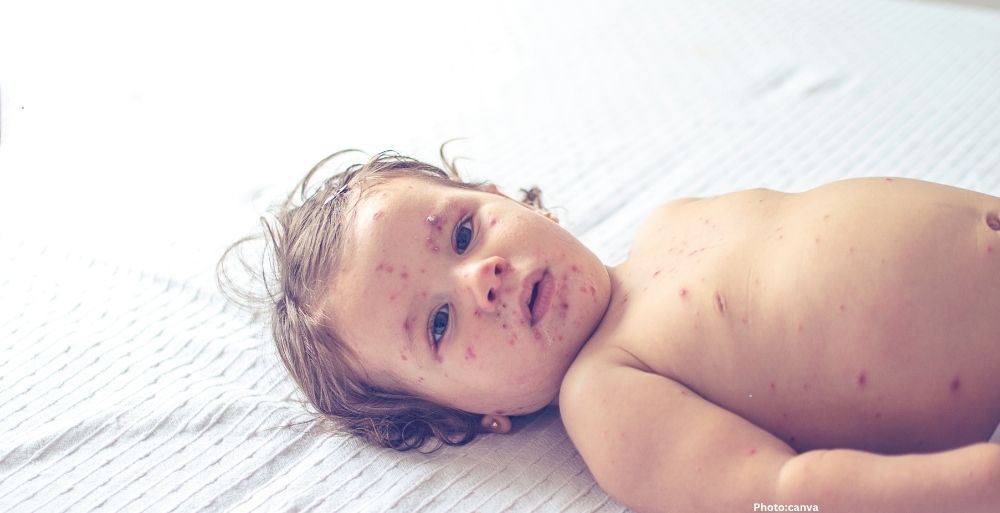
After six months of aggressive public health intervention, South Carolina officials have officially declared the end of the state’s largest measles outbreak in decades. The crisis, which saw nearly 1,000 confirmed cases and dozens of hospitalizations, served as a flashpoint in a national debate over falling vaccination rates and the resurgence of eliminated diseases. While the state celebrates two full incubation periods without transmission, federal data suggests a “collective remembering” may be taking hold, as MMR vaccination rates among toddlers showed their first significant increase in over a decade. However, with nearly 1,800 cases already reported nationally in 2026, experts warn that the status of the United States as a measles-free nation remains in jeopardy.
COLUMBIA, S.C. — State health officials announced Monday that the South Carolina measles outbreak, a massive epidemiological event that strained state resources and sickened hundreds of children, has been contained. The announcement comes after 42 consecutive days—representing two full incubation cycles—passed without a single new case linked to the original October cluster.
The outbreak, centered largely in Spartanburg County, accounted for a significant portion of the record-breaking 2025-2026 measles surge in the United States. While the immediate threat in South Carolina has abated, the national landscape remains volatile. Currently, the U.S. is on track for its worst year since the virus was declared eliminated in 2000, with an ongoing outbreak on the Utah-Arizona border currently exceeding 600 cases.
The Cost of Containment and the Power of the “Fire Break”
The six-month battle in South Carolina resulted in at least 21 hospitalizations. Public health leaders attributed the successful suppression of the virus to a combination of “old-school” epidemiology and a sudden surge in vaccine uptake.
“Vaccination—combined with other opportunities for good, solid public health work—really can be effective, even against some of the most contagious viruses,” said Dr. Brannon Traxler, deputy director and chief medical officer with the South Carolina Department of Public Health.
Traxler detailed a “fire break” strategy involving aggressive contact tracing, mandatory quarantine protocols, and case investigations that cost the state approximately $2 million. The effort was bolstered by a dramatic shift in local behavior: MMR (measles-mumps-rubella) vaccine doses administered in Spartanburg County nearly doubled year-over-year during the crisis, while statewide figures saw a 31% increase.
A “Collective Remembering” of Disease Severity
Nationally, more than 90% of measles cases have occurred in unvaccinated individuals, the majority of whom are children. However, preliminary data from the CDC’s National Immunization Surveys offers a “hopeful glimmer.” Approximately 97% of 3-year-olds in the U.S. had received at least one dose of the MMR vaccine by late 2025, a notable jump from 93% in 2024.
This marks the first time in more than a decade that toddler MMR coverage has surpassed the 95% threshold required for “herd immunity.”
“I’ve been saying for a couple years now that I think it was going to take a resurgence of vaccine-preventable diseases in our communities for people to really understand the benefits,” said Dr. Josh Williams, a pediatrician with Denver Health. Williams characterized the shift as a “collective remembering” of the severity of diseases that had effectively vanished from the American consciousness for a quarter-century.
Dr. Paul Offit, director of the Vaccine Education Center at the Children’s Hospital of Philadelphia, was more blunt about the catalyst for the change. “More than anything, we’re compelled by fear,” Offit said. “I think people are a little scared of the disease and they’re tired of anti-vaccine activity.”
Political Friction and Policy Shifts
The resurgence of measles has also become a focal point of intense political scrutiny in Washington. During recent congressional hearings, U.S. Department of Health and Human Services Secretary Robert F. Kennedy Jr. faced sharp criticism from lawmakers who alleged his rhetoric on vaccine safety contributed to the current crisis. Kennedy has denied these claims, stating the outbreaks have “nothing to do” with his advocacy for “vaccine safety and choice.”
The debate comes as the CDC undergoes significant internal shifts. In 2025, the agency officially abandoned the policy of universal hepatitis B vaccination for newborns, a change championed by members of the CDC’s Advisory Committee on Immunization Practices (ACIP) appointed during the current administration.
Public health advocates remain concerned that while MMR rates are ticking up due to the immediate threat of measles, other routine immunizations may continue to lag. A study published in JAMA Network Open on Friday found that children who miss their birth dose of the hepatitis B vaccine are significantly less likely to complete the full series by 18 months, suggesting a widening gap in pediatric preventative care.
The Looming National Threat
Despite the victory in South Carolina, the national statistics for 2026 remain grim. As of late April, 1,792 measles cases have been reported across the country, with 22 active outbreaks currently being monitored. Four new states reported their first cases within the last week alone.
South Carolina officials also reported a new, separate measles case this month involving an individual who exposed more than 40 people. Though unrelated to the previous cluster, Dr. Traxler used the incident to warn against complacency.
“We are certainly not letting our guard down,” Traxler said. “The most recent case has shown that measles outbreaks in other parts of the country or the world are going to continue to present threats… that we must be vigilant against.”
The CDC is expected to release comprehensive data on kindergarten vaccination coverage later this year, which will provide a clearer picture of whether the “cautious optimism” of 2025 has translated into a permanent reversal of vaccine hesitancy trends.




No Comment! Be the first one.