





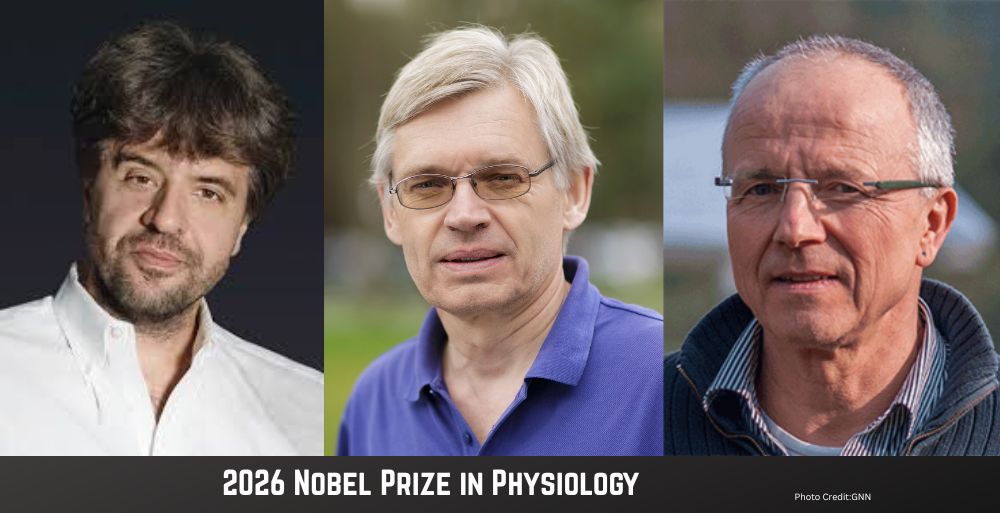
The 2026 Nobel Prize in Physiology or Medicine has been awarded to Karl Deisseroth, Peter Hegemann, and Georg Nagel for their pioneering work in the field of optogenetics, a revolutionary technique that allows scientists to manipulate nerve cell activity using light.
STOCKHOLM, Sweden – The Nobel Assembly at the Karolinska Institute announced on October 5, 2026, that the Nobel Prize in Physiology or Medicine has been awarded to Karl Deisseroth, Peter Hegemann, and Georg Nagel for their groundbreaking discoveries concerning light-gated ion channels and the innovative technique known as optogenetics. This prestigious accolade is accompanied by a prize sum of 12 million Swedish crowns, approximately $1.2 million, which will be shared among the three laureates.
Understanding Optogenetics
Optogenetics is a transformative technique that allows researchers to control the activity of specific neurons within living organisms using light. By introducing light-sensitive proteins into targeted neurons, scientists can activate or inhibit these cells in real time, providing unprecedented insight into the complex workings of the brain. As emphasized by the Nobel Committee, this method is instrumental in revealing the intricacies of neural circuits and has significant implications for understanding various brain functions, behaviors, and potential treatments for neurological disorders.
Karl Deisseroth, a 54-year-old American professor at Stanford University, has been a leading figure in advancing optogenetics. His contributions have enabled research into brain disorders and hold promise for developing therapeutic strategies for conditions such as Parkinson’s disease and depression. Alongside Deisseroth, Peter Hegemann, 71, and Georg Nagel, 73, both esteemed German researchers, have significantly contributed to elucidating the biological mechanisms that facilitate light’s control over cellular processes. Their collective efforts have laid the foundational groundwork for this innovative field, which continues to evolve rapidly.
Significance of the Award
The Nobel Prize in Physiology or Medicine recognizes the vital role of optogenetics in modern neuroscience. The ability to manipulate specific neurons has allowed researchers to explore previously uncharted territories of brain function, aiding in the understanding of conditions such as epilepsy, anxiety, and even mental health disorders. The Nobel Committee’s acknowledgment of Deisseroth, Hegemann, and Nagel underscores the importance of their discoveries in advancing both basic science and clinical applications.
Historically, the Nobel Prize has celebrated transformative scientific achievements that have far-reaching implications for health and medicine. Last year’s prize was awarded to Mary E. Brunkow, Fred Ramsdell, and Shimon Sakaguchi for their discovery of regulatory T cells, which have opened new pathways for treating cancer and autoimmune diseases. The continuity of recognizing groundbreaking work in these fields highlights the ongoing commitment to rewarding scientific excellence that benefits humanity.
Nobel Week and Future Announcements
The announcement of the Nobel Prize in Physiology or Medicine marks the beginning of Nobel Week, during which additional prizes will be unveiled, including those in Physics on October 6, Chemistry, Literature, and the Peace Prize later in the week. The Sveriges Riksbank Prize in Economic Sciences is scheduled to be announced on October 12. The formal award ceremony will take place on December 10, coinciding with the anniversary of Alfred Nobel’s death, a day that signifies the legacy of his vision to reward those who have conferred the greatest benefit to humanity.
The Legacy of Alfred Nobel
The Nobel Prize was established by the will of Alfred Nobel, an inventor and philanthropist, who specified that his fortune be used to fund prizes to honor those whose contributions have significantly advanced human knowledge and welfare. Over the years, the Nobel Prize in Physiology or Medicine has become synonymous with excellence in scientific research, influencing not only the fields of medicine and biology but also public perception of science.
Future Implications for Research
The recognition of Deisseroth, Hegemann, and Nagel serves as a testament to the importance of interdisciplinary approaches in addressing complex biological questions. As the field of optogenetics continues to evolve, it holds potential for enhancing our understanding of neurological disorders and could lead to novel therapeutic strategies that integrate technology with biological insights. Their work exemplifies a growing trend in scientific inquiry, where advancements in technology intersect with biology, paving the way for future innovations in medicine and neuroscience.
As the global scientific community celebrates this achievement, the implications of their discoveries are likely to influence research directions, funding priorities, and collaborative efforts in the years to come. The Nobel Prize not only honors past accomplishments but also inspires ongoing exploration in the quest to improve human health and well-being. The laureates’ groundbreaking work in optogenetics represents a significant milestone in our understanding of the brain and its functions, promising a brighter future for both research and treatment of neurological conditions.






No Comment! Be the first one.