





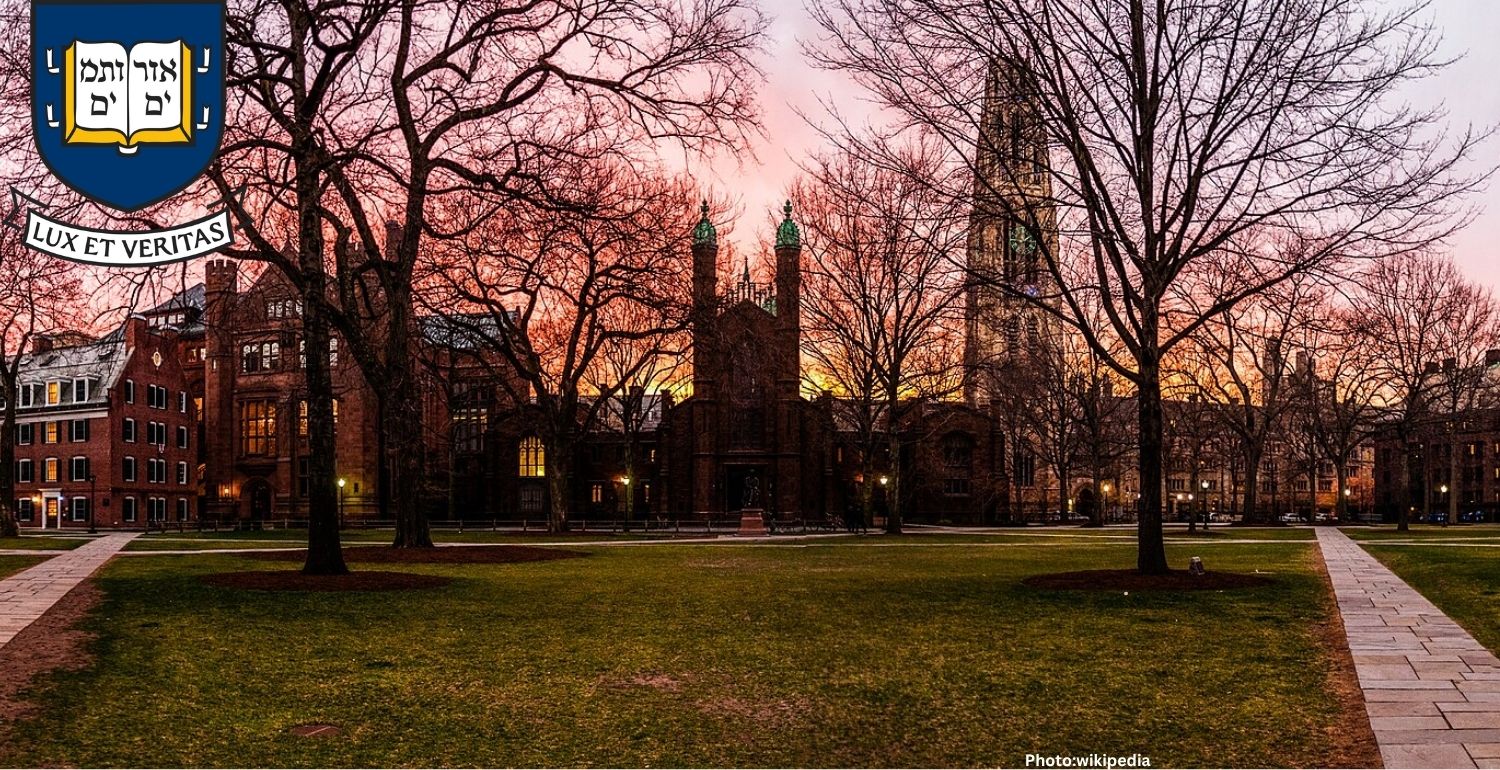
As Yale University students navigate a challenging job market, they increasingly turn to non-university affiliated organizations for career support, revealing a shift in how elite graduates pursue professional opportunities.
NEW HAVEN, CT — Yale University students are adapting to a volatile job market by seeking alternative career pathways through organized programs outside of traditional university resources. With job postings appearing plentiful but actual offers declining, many students are finding success in professional environments that diverge from the conventional routes typically associated with elite education.
When Will Barbee, a member of the class of 2026, arrived at Yale, his aspirations centered around theater and music. However, after facing rejection from several campus groups, he applied to the William F. Buckley Jr. Program—an organization aimed at promoting conservative thought and open debate. His acceptance, which he described as a swift process, marked the beginning of a journey that would reshape his college experience and career trajectory. “I was immediately accepted into the community,” Barbee noted.
As a Buckley fellow, Barbee engaged in various intellectual activities, including speaker events and intimate dinners, which he found to provide a level of access that traditional classroom settings often lacked. By his junior year, he had ascended to the role of president of the program, and by senior year, a mentor from Buckley was assisting him with recommendations for journalism fellowships.
This experience illustrates a broader trend at Yale, where students are increasingly turning to established programs for career preparation as traditional job pipelines have become more uncertain. The Trump administration’s cuts to federal employment and military education have significantly narrowed the avenues for public interest careers, a common destination for Yale graduates. Meanwhile, sectors like finance and consulting, once considered reliable fallback options, have also begun to slow hiring and announce layoffs, intensifying the competition for entry-level positions.
Changing Landscape of Career Preparation
Research conducted by Amy Binder, a sociologist at Johns Hopkins University, reveals a lack of structured career pathways at elite institutions like Yale. Unlike many public universities that incorporate career prep programs into their curricula, students at Yale often must navigate their career paths independently. In a 2025 white paper, Binder characterized this process as a “gravitational pull” toward a limited set of outcomes, a phenomenon she termed “career funneling.”
According to a 2016 study published in the journal Sociology of Education, approximately half of graduates from Ivy League and similar institutions find themselves in finance, consulting, or technology roles. At Yale, more than a third of the class of 2025 entered these sectors immediately after graduation. In contrast, students from the class of 2026 are increasingly realizing that traditional pathways may not yield desirable outcomes.
The Yale Office of Career Strategy has responded to heightened demand for career guidance, conducting 7,391 advising interactions in the 2024-2025 academic year, reflecting a 9 percent increase from the previous year. Robyn Acampora, the office’s deputy director, reported that 87 percent of the class of 2025 utilized the office’s resources. However, financial constraints have led to a reduction in available resources, with Yale College Dean Pericles Lewis announcing the consolidation of two funding opportunities into a single grant beginning in 2027.
Allie Ruiz, a coordinator at Dwight Hall, Yale’s center for voluntary service, expressed concern over the impact of these cuts on public service opportunities. “Students might have limited opportunities to engage in public service because of the cuts,” she stated. This shift complicates an already unstructured career preparation landscape for students interested in public service.
Emerging Organizations Fill the Gap
In response to these challenges, various student-led organizations at Yale have emerged to provide alternative career pathways. The William F. Buckley Jr. Program, founded in 2010, boasts over 800 student fellows and a multimillion-dollar budget. Its summer internship initiative places students in internships in Washington, D.C., and New York with stipends funded through partnerships with conservative think tanks and alumni contributions.
The Buckley Institute’s funding model, which involves collaboration with organizations like the Manhattan Institute and the Coolidge Presidential Foundation, has allowed it to grow into a significant player in Yale’s career landscape. Barbee remarked on the program’s evolution, stating, “It’s allowed us to grow into something bordering on a think tank, right here in New Haven.”
Conversely, the David Network, established in 2020, focuses on connecting conservative students with professional opportunities through vetted interactions. Annie Rogers, the organization’s director, emphasized that ideological alignment is paramount in their selection process, which aims to foster meaningful networking opportunities away from the pressure of traditional recruitment environments.
Recent events, such as private dinners featuring executives from major companies like Palantir, illustrate the network’s approach to career advancement. These informal settings allow students to build connections organically, often leading to job opportunities that may not be publicly advertised.
Public Interest Careers: A Different Landscape
For students pursuing careers in public service, the landscape is markedly different. Dwight Hall, while not originally designed as a career office, increasingly functions as one. The organization hosts events that challenge the conventional prestige-driven career paths, emphasizing the importance of “moral ambition.”
Rutger Bregman, a Dutch historian, recently addressed a gathering at Dwight Hall, urging students to reconsider traditional career trajectories in favor of meaningful work that contributes to societal welfare. “Let’s be honest: Today, a lot of people get burnout while they do jobs they don’t really like,” Bregman told attendees.
Although the Office of Career Strategy has made strides in supporting public-interest careers, Ruiz highlighted the disparity in resources available to students compared to those pursuing paths in finance and consulting. “The resource gap is difficult to ignore,” she said. Initiatives like the Urban Fellows program aim to bridge this gap by providing stipends to students pursuing nonprofit internships, allowing them to gain valuable experience without financial burden.
As Yale continues to navigate these evolving dynamics in career preparation, the median starting salary for the class of 2025 stands at $90,000, as reported by the Office of Career Strategy. However, for many students, the journey toward establishing a fulfilling career remains fraught with uncertainty and the challenge of finding pathways that align with their aspirations in a competitive job market.





No Comment! Be the first one.