



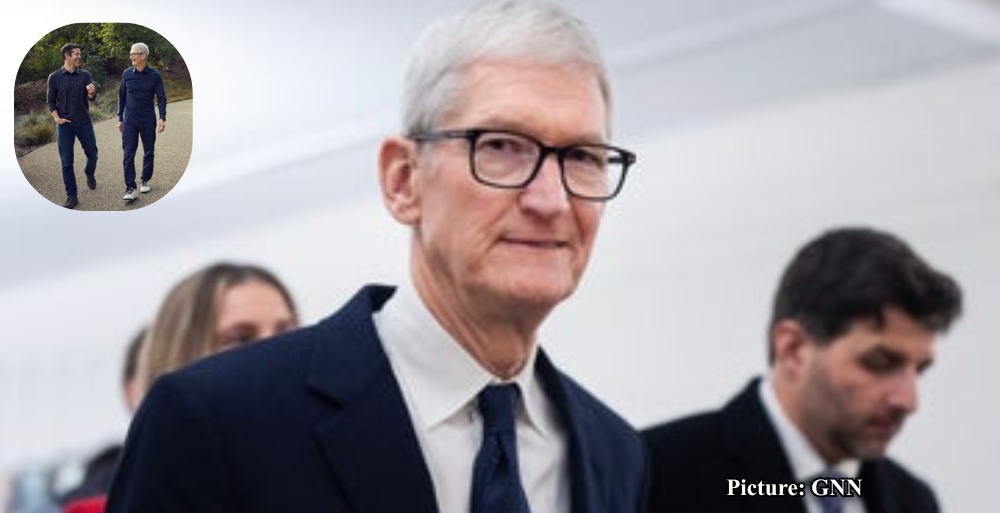
Tim Cook’s departure from Apple as CEO is part of a larger trend of significant leadership changes across major corporations in 2026, signaling a shift in management strategy amid evolving market demands.
In a significant development for the corporate landscape, Tim Cook, the CEO of Apple, announced his departure, making way for John Ternus to take over the reins of the tech giant. This transition, effective immediately, was revealed during an event at the World Economic Forum in Davos on January 21, 2026. Cook, who has led Apple since 2011, leaves behind a remarkable legacy, having transformed the company from a $300 billion enterprise at the time of Steve Jobs’ death to a valuation exceeding $4 trillion today.
The announcement of Cook’s exit is set against the backdrop of a broader wave of CEO transitions within Corporate America. Notable leadership changes include Greg Abel succeeding Warren Buffett at Berkshire Hathaway, Josh D’Amaro replacing Bob Iger at Disney, and John Furner taking over for Doug McMillon at Walmart. This trend reflects a pivotal moment in corporate leadership as companies navigate the complexities of a rapidly changing business environment.
The Context of Leadership Changes
As the corporate world witnesses this significant turnover, analysts have pointed to several factors driving these changes. A common theme among departing CEOs is the need for agility and adaptability in an era defined by technological advancement and shifting consumer expectations. For instance, Doug McMillon of Walmart cited the urgency surrounding artificial intelligence (AI) as a critical reason for his departure, emphasizing that leading in such a fast-paced environment requires a different skill set.
James Quincey, CEO of Coca-Cola, echoed similar sentiments as he handed the leadership baton to COO Henrique Braun. Both leaders acknowledged that the demands of the current market necessitate a more dynamic approach, with a focus on immediate transformation rather than long-term planning. This shift signals a recognition that the traditional paradigms of business management are evolving, requiring leaders who are not only innovative but also capable of rapid execution.
A Legacy of Transformation
Tim Cook’s tenure at Apple is notable for its emphasis on growth and innovation, yet it also raises questions about the company’s future direction, particularly in the realm of AI. Despite Apple’s substantial market capitalization, the company has faced criticism for lagging behind competitors in AI technology. As Cook prepares to step down, the question remains whether Ternus, an engineer by training, will bring the necessary expertise to elevate Apple’s AI initiatives.
Leadership consultant Stephen Miles highlighted the importance of aligning leadership capabilities with the demands of the current business landscape. “Every company has to run a faster 800 each year, and you need someone fit for the 800 who has the longevity to see this through to the other side,” Miles stated, underscoring the necessity for CEOs who can navigate the complexities of modern business.
Implications for Corporate Governance
The trend of promoting COOs to CEO positions, as seen with Ternus, Abel, and Braun, indicates a strategic move toward continuity and stability within organizations during periods of transformation. This approach contrasts with traditional practices where boards often sought external candidates during times of upheaval. By selecting leaders from within, companies aim to maintain their core values and operational consistency while adapting to new challenges.
Moreover, the recent transitions highlight the growing importance of legacy management for outgoing CEOs. Cook’s decision to step down at 65 suggests a recognition that lingering too long in the role can tarnish a leader’s legacy. This sentiment was echoed by Adobe CEO Shantanu Narayen, who announced his impending departure after 18 years without a defined successor, emphasizing the need for timely transitions to preserve a company’s trajectory.
Market Reactions and Future Outlook
Market reactions to these leadership changes have been cautiously optimistic. Following the announcement of Cook’s departure, global markets showed signs of recovery, with S&P 500 futures rising by 0.23%. Investors are closely watching how these transitions will impact company performance and innovation in the coming months.
As Tim Cook concludes a transformative era at Apple, the implications of his exit extend beyond the company itself, reflecting a larger trend in corporate governance and leadership dynamics across various industries. The ability of leaders to adapt and innovate in response to shifting market demands will be crucial for the future success of these organizations.



No Comment! Be the first one.