




“Seeking The Infinite” Brings a Message of Oneness and Interfaith Harmony to New Jersey Event

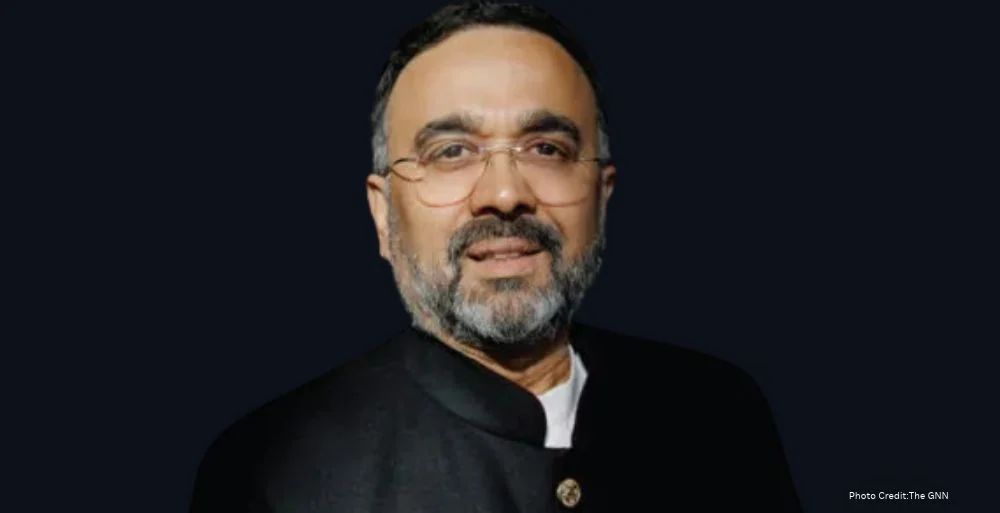
Inspired by Yakub Mathew’s acclaimed book on the Maha Kumbh, the New Jersey gathering brings faith leaders, musicians, students, and community members together in a shared search for the Infinite.
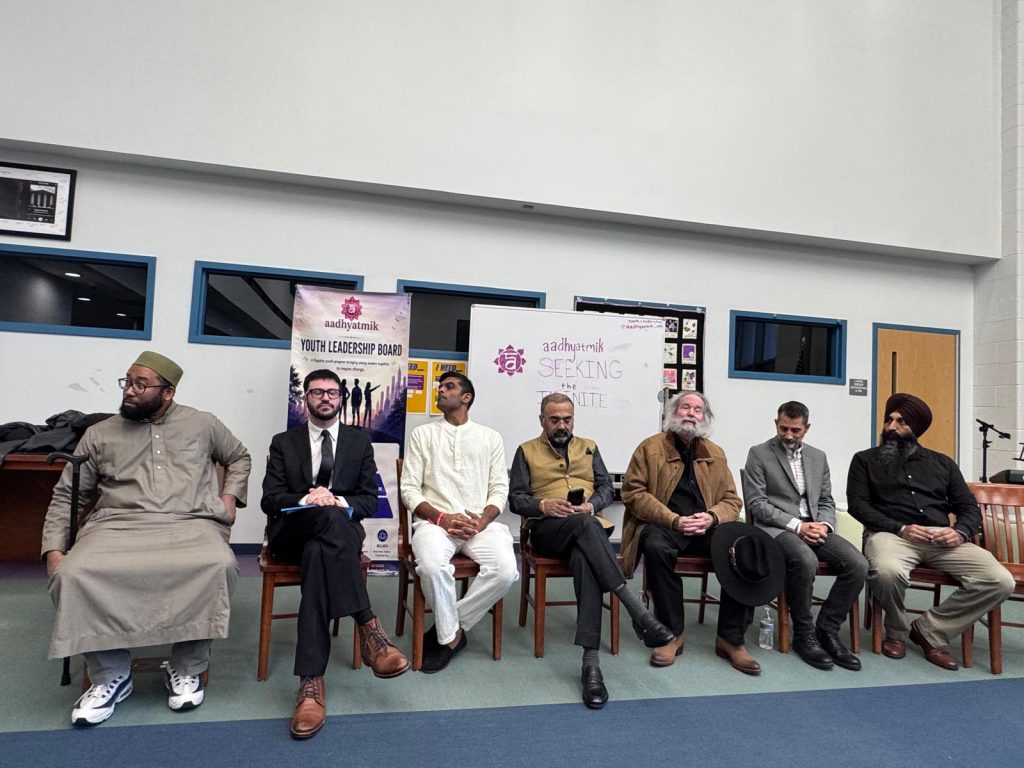
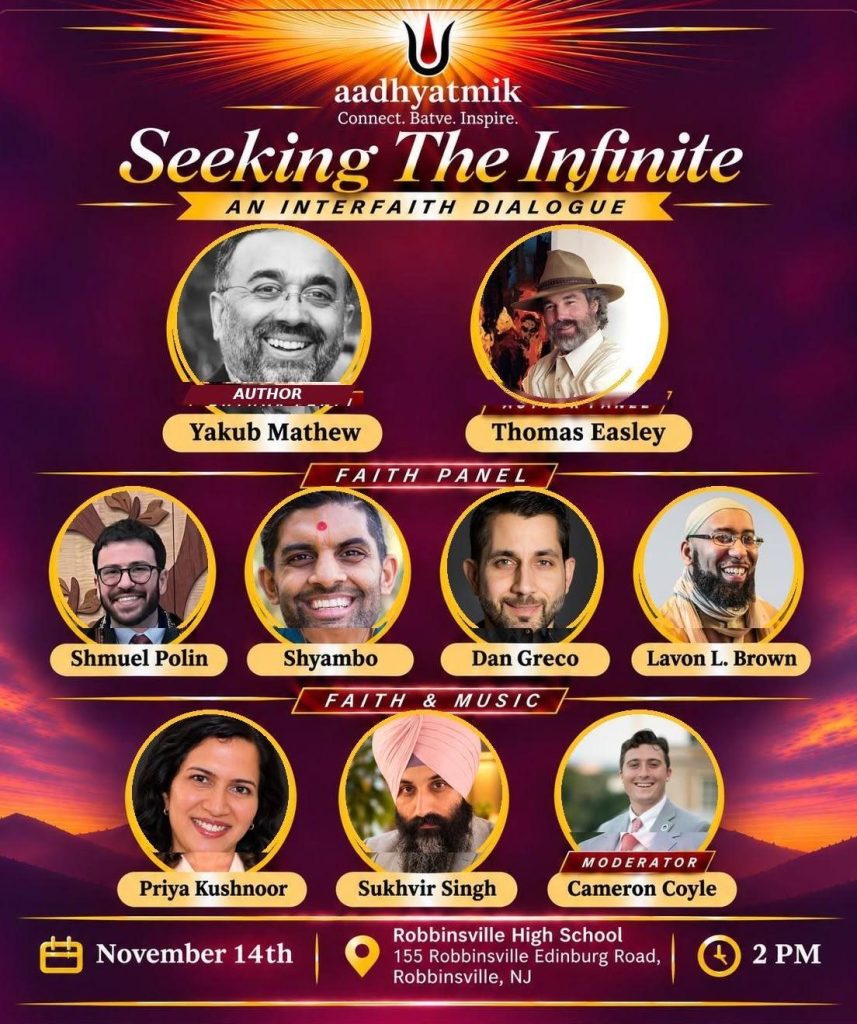
ROBBINSVILLE, NJ: The spiritual journey that began for author Yakub Mathew amid the vast human confluence of the Maha Kumbh in Prayagraj found a powerful new expression in New Jersey on Saturday, November 14, 2026, as a full house gathered at Robbinsville High School for “Seeking The Infinite: An Interfaith Dialogue.”
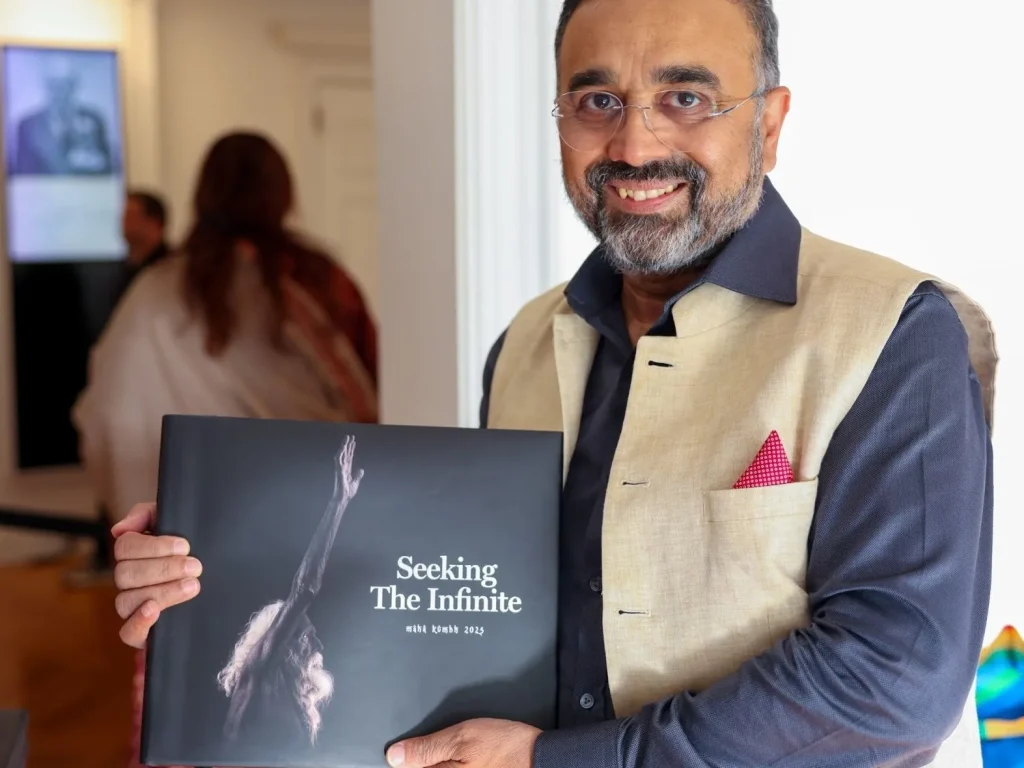
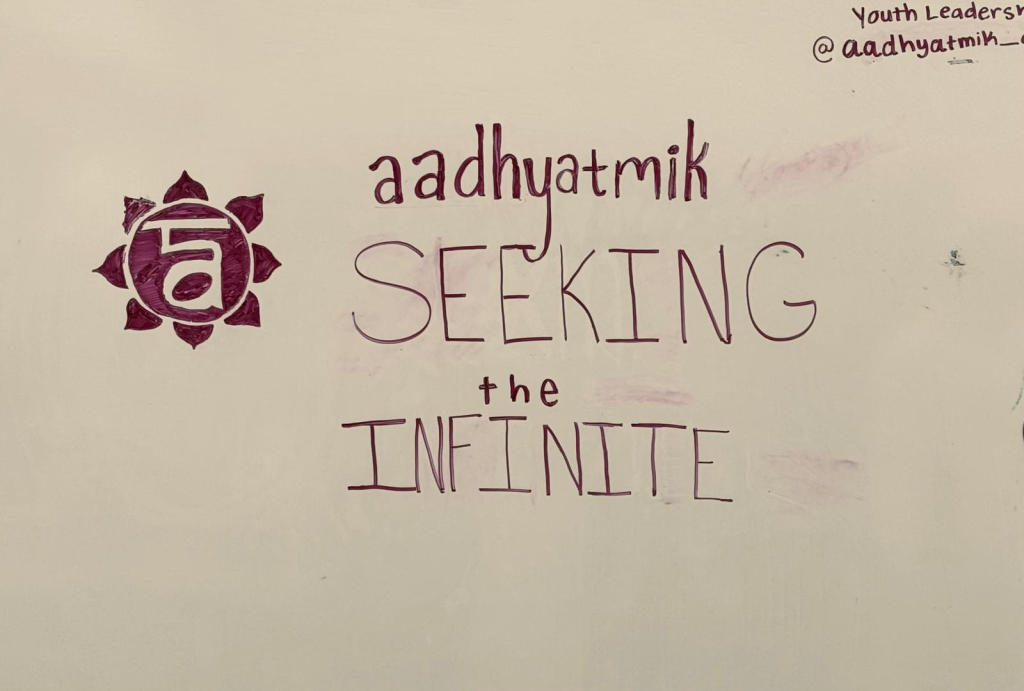
The gathering brought the central themes of Yakub Mathew’s book, Seeking the Infinite: Maha Kumbh 2025, from the printed page into a living community conversation about the Infinite, oneness, faith, and the common bond of humanity.
What made the occasion particularly meaningful was the presence of school and college students alongside members of the wider community, creating an intergenerational setting for a conversation that reached across religious traditions.
Reflecting on the gathering of the young and the learned, Yakub Mathew described the panel discussion on “The Infinite, Oneness and the bond of humanity that binds us all” as “a remarkable experience.”
Faith Traditions Meet Around a Common Question
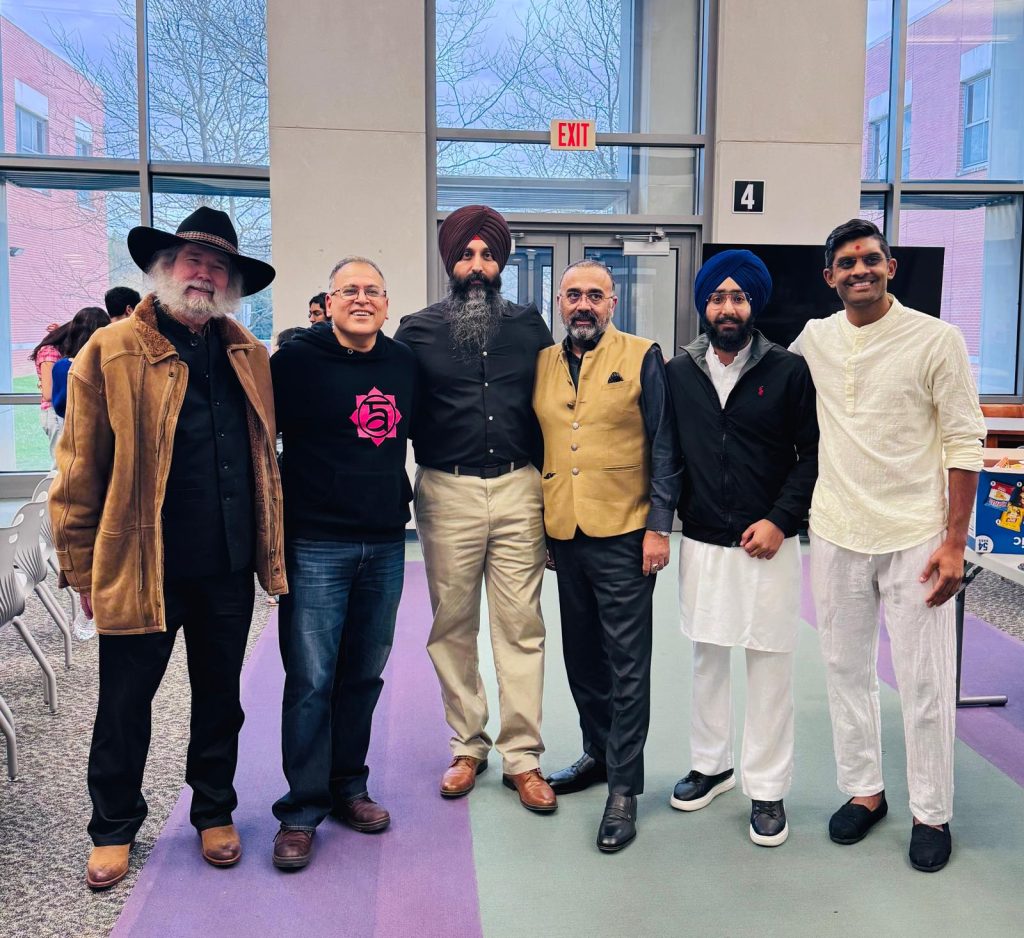
The program featured author Yakub Mathew and Thomas Easley, while the Faith Panel brought together Shmuel Polin, Shyambo, Dan Greco and Lavon L. Brown. Priya Kushnoor and Sukhvir Singh were featured in the Faith & Music segment, with Cameron Coyle as moderator.
Behind the names and different traditions was a deceptively simple question: How does humanity seek the Infinite?
The Robbinsville conversation was especially relevant because that question lies at the very heart of Yakub Mathew’s book.
From the Maha Kumbh to Robbinsville
Seeking the Infinite: Maha Kumbh 2025 began with a profoundly personal journey.
Yakub Mathew has said that in January 2025 he fulfilled a lifelong dream of making a pilgrimage to Prayagraj for the Maha Kumbh. Accompanied by his wife, Shilpa, and 17 close friends from around the world, the pilgrimage also marked the completion of his 60th year. What initially began as an effort to preserve memories of that experience eventually evolved into a much larger literary project enriched by insights from more than fifty personalities from diverse fields.
Explaining what the pilgrimage awakened in him, Yakub Mathew said:
“The Maha Kumbh reminded us that beyond faith and culture lies a shared divine essence, and through this work, we hope to spark interfaith harmony and inspire seekers everywhere to look within and seek the Infinite.”
That aspiration provides an important backdrop to the gathering in Robbinsville.
The setting had changed dramatically, from one of the world’s great pilgrimages in India to a high school in New Jersey, but the underlying inquiry remained: Can people of different religious traditions look beyond their differences and recognize something fundamental that they share?
“The Infinite Is Not a Place to Reach”
The book, Seeking the Infinite, has been described as a contemplative anthology of essays, dialogues and reflections inspired by the Maha Kumbh.
But Yakub Mathew’s interpretation of the Infinite is not limited to a pilgrimage or physical destination. “The Infinite is not a place to reach,” Yakub Mathew has said, “but a truth to remember – that within you lies a horizon without end.”
It is a thought that transforms the pilgrimage from an outward journey into an inward search.
Described as “a living chronicle of spiritual encounters where faith traditions meet in humility and the sacred becomes a shared language,” the book seeks to look beyond the sheer scale and spectacle of the Maha Kumbh and toward questions of meaning, belonging and transcendence.
That description could equally capture the spirit of the Robbinsville gathering: different voices meeting without surrendering their individual traditions, yet seeking a language through which each could encounter the other.
A Book Built Around Many Voices
That pluralistic character has been fundamental to Seeking the Infinite from its inception.
The anthology contains perspectives from more than fifty personalities. Its foreword includes contributions by Dr. Shashi Tharoor, Muzaffar Ali and Anupam Kher.
Dr. Shashi Tharoor described the work in expansive terms:
“This coffee-table book is more than a collection of photographs; it is a window into the very essence—Mahima—of the Maha Kumbh.”
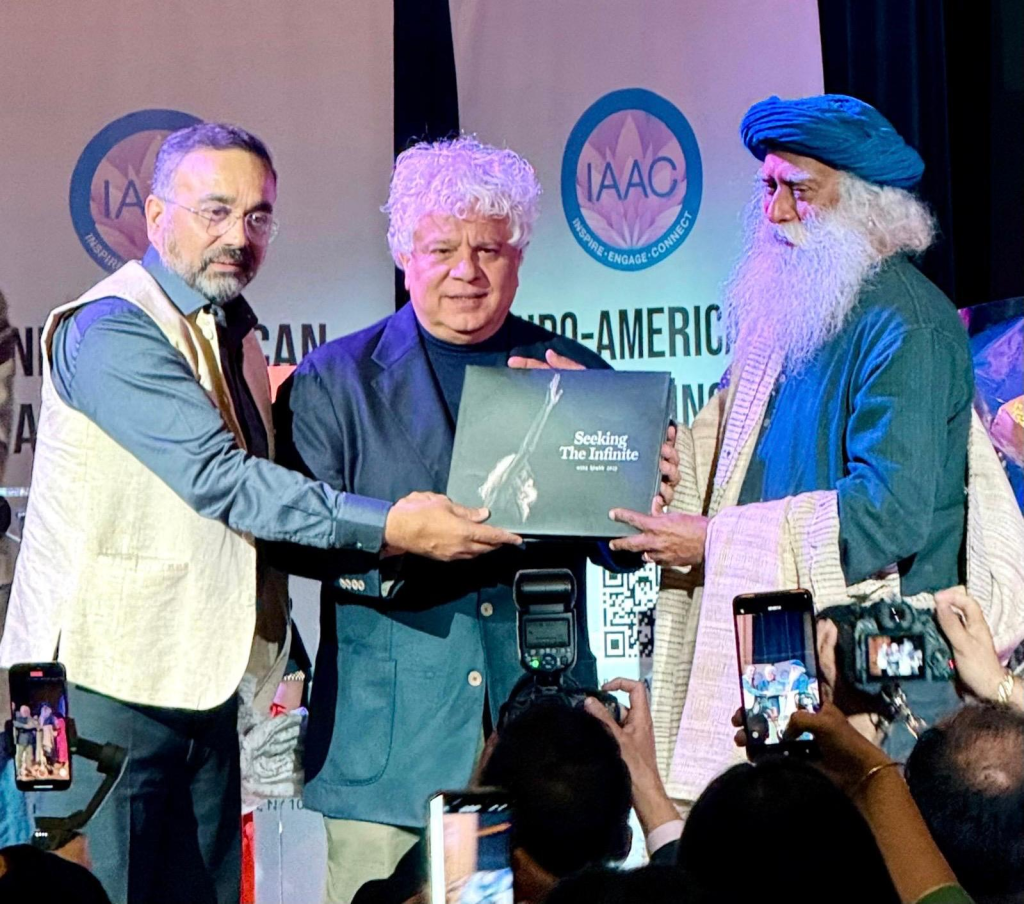
The book’s exploration of spirituality and religious pluralism subsequently moved onto the international stage during its launch at the Indo-American Arts Council Literary Festival at International House in New York City on November 16, 2025.
A year later, that vision moved from a literary festival into a local New Jersey community.
One Unifying Divine Core
Another reflection on the book, published in January 2026 and written by poet Usha Akella, examined the work as something larger than a record of one pilgrimage.
Usha Akella described Seeking the Infinite as a book that presents the Maha Kumbh as part of humanity’s heritage, not as something belonging exclusively to one nation or religious tradition.
Central to that interpretation is Yakub Mathew’s introduction, “United in the Quest of the Infinite,” and his idea that experiences such as the Maha Kumbh can bring about the realization that “humankind has one unifying divine core.”
That idea provides perhaps the clearest philosophical connection between the pilgrimage, the book and the Robbinsville interfaith gathering.
The enormous confluence of pilgrims at the Maha Kumbh and the much more intimate gathering at Robbinsville High School existed on entirely different scales. Yet both provided settings in which individual spiritual journeys could encounter something collective.
A Spontaneous Song of Oneness
The Robbinsville event also acquired an especially personal dimension through music.
Only two days before the program, Shilpa composed a special musical piece titled “Seeking the Infinity.”
Yakub Mathew described the composition as “a spontaneous expression of devotion and oneness through music.”
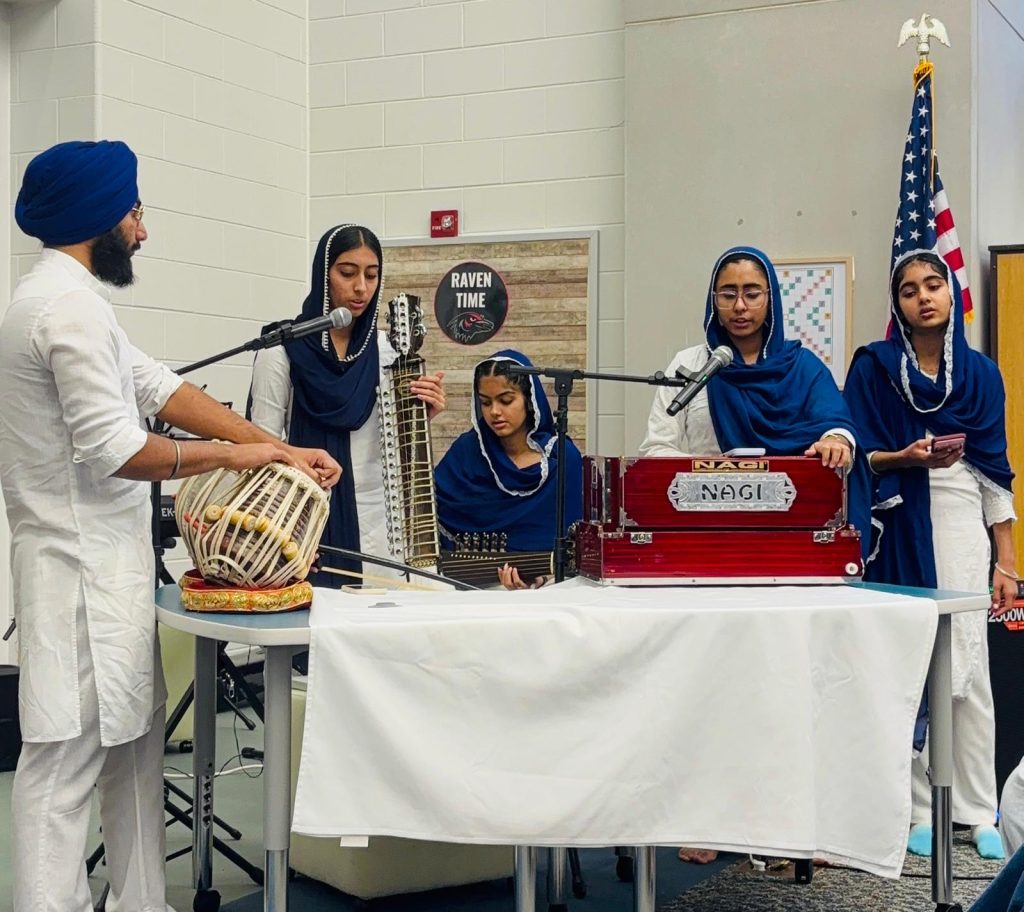
The piece incorporated the Buddhist mantra “Om Tare Tuttare Ture Swaha,” while its original English verses reflected the wider interfaith philosophy of the afternoon.
With imagery of many faiths united through love, many rays connected to one sun and humanity envisioned as one family, the composition complemented the ideas at the heart of Yakub Mathew’s literary project.
Music, in this context, became another form of dialogue.
Rather than explaining interfaith harmony intellectually, the composition expressed it through sound, devotion and the language of universality.
For Yakub Mathew and Shilpa, the experience carried particular personal significance.
“Yesterday was an unforgettable touching experience for me and my wife Shilpa,” Yakub Mathew reflected afterward.
From Pilgrimage to Book, and Book to Dialogue
There is now a striking trajectory to Seeking the Infinite. It began with Yakub Mathew, Shilpa and friends undertaking a spiritual pilgrimage to Prayagraj.
The pilgrimage became a book. The book brought together dozens of voices. Its New York launch became a forum for interfaith conversation. And on November 14, 2026, its core ideas found another expression before students, faith representatives, musicians and community members in Robbinsville, New Jersey.
That progression matters because the enduring significance of a book is not simply in the number of copies it reaches, but in the conversations it inspires.
The Robbinsville program suggested that Seeking the Infinite has begun to move beyond the story of one pilgrimage toward a broader conversation about what people of different beliefs might discover in one another.
In an age frequently defined by polarization, Yakub Mathew’s emphasis on a shared divine essence offers a counterpoint: religious diversity need not prevent genuine human connection.
Interfaith dialogue does not require different traditions to become identical. On the contrary, its power lies in allowing differences to remain while creating space for respect, curiosity and friendship.
The participation of school and college students made that message particularly significant.
Conversations about pluralism and coexistence gain greater meaning when young people are part of them, because they carry those values into the communities of the future.
Ultimately, the journey from the sacred waters of Prayagraj to a full house at Robbinsville High School reflects the continuing evolution of Yakub Mathew’s central idea.
The Infinite is not confined to one pilgrimage, one religion, one book or one place.
The event was part of a youth leadership development series organized by the not-for-profit Aadhyatmik, founded by Robbinsville Councilman Amit Chopra.
“The event was a full house, and being amongst school and college children in Robbinsville, NJ was joyful and special,” Yakub Mathew said.
He expressed gratitude to Amit Chopra, the panel, volunteers, musicians and those who attended.
“Thank you to dear Amit Chopra, the esteemed panel, selfless volunteers, musicians and all attendees for this meaningful dialogue and experience,” Yakub Mathew said.
For Yakub Mathew, it is a search that points inward while simultaneously opening outward toward others.
That may be the enduring message of “Seeking The Infinite” in Robbinsville: many faiths may follow different paths, but the search for meaning, belonging, love and the Infinite can also remind humanity of what it shares.




No Comment! Be the first one.