





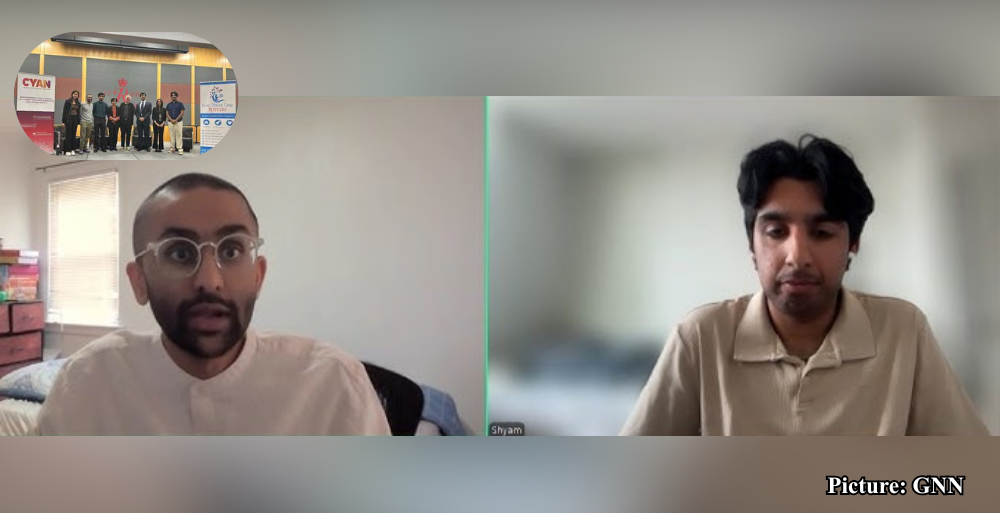
A seminar titled “Demystifying Hinduism: Clarity Through Scholarship” held at Rutgers University on April 30, 2026, engaged over 75 students and scholars in discussions aimed at providing a nuanced understanding of Hinduism and addressing issues of representation and interpretation within academic contexts.
The Coalition of Hindus of North America (CoHNA), in collaboration with the CoHNA Youth Action Network (CYAN), the Rutgers Hindu Students Council, and the university’s Hindu Chaplaincy, organized a significant seminar titled “Demystifying Hinduism: Clarity Through Scholarship.” The event took place on April 30, 2026, and attracted more than 75 participants, including students, scholars, educators, and community members. This seminar forms part of a broader effort to foster in-depth discussions about Hinduism in academic settings.
Dhyey Ray, president of CYAN Rutgers and a senior majoring in Biomedical Engineering, expressed enthusiasm about the event, stating, “The invigorating presentations, the pointed questions, the energetic panel discussion, the food, and the enthusiasm of my fellow students, all made for a memorable day. I came away energized by the passion of the panelists and attendees, and with so much clarity on how to understand my faith and use it to guide important questions in life as I get ready to graduate.”
Focus on Women’s Representation
One of the key presentations was delivered by Lavanya Vemsani, a professor of Indian History and Religions at Shawnee State University. She examined the representations of prominent Hindu women in academic texts, media, and popular culture, focusing on figures such as Savitri, Urvashi, Ganga, Satyavati, Kunti, and Draupadi. Vemsani highlighted common themes in these narratives, noting that many have been subject to sexual objectification and reductive labels, which can dilute the individual potency of their stories. According to the seminar’s statement, these distortions can significantly impact young Hindus and their understanding of their historical and cultural narratives.
Influence of Dharmic Traditions
Another noteworthy presentation was offered by Jeffery D. Long, a professor of Indian Philosophies at Elizabethtown College. He provided insights into the historical influence of Dharmic traditions in Western contexts, referencing notable figures such as George Harrison and Julia Roberts, as well as cultural works like MAS*H and Star Wars. Long traced the intersections of Hindu thought with Western cultural and intellectual life, underscoring the ongoing relevance of these traditions in contemporary discourse.
Addressing Hinduphobia in Academia
The seminar also featured a session led by Neil Desai, a high school history teacher, who addressed the manifestations of “Hinduphobia” within academic settings. This discussion highlighted ongoing concerns about how Hinduism is represented in educational institutions and the implications this has for Hindu students. Desai’s presentation brought to light the challenges that Hindu students face in academic environments, where they often encounter biased narratives that do not reflect their lived experiences.
Collaborative Engagement and Student Perspectives
Concluding the event was a student-moderated panel discussion that addressed a variety of topics including historical research, textual representation, and issues affecting Hindu students such as caste, atheism, pluralism, misogyny, and menstruation. Shyam Kumar, a junior majoring in Political Science at Rutgers and vice president of CYAN, remarked, “For over a year, the CYAN and HSC teams on campus have been working hard to create an authentic space where scholars and students could discuss and debate the Hindu faith. I was thrilled to see the results at Demystifying Hinduism, where we created a unique and refreshing counterpoint to the discourse we normally hear about Hinduism.”
Community Response and Future Directions
According to a statement from CoHNA, the seminar was a direct response to requests from youth members seeking a more accurate representation of Hinduism in academic discourse. Hitesh Trivedi, Hindu Chaplain at Rutgers, noted, “Amid a growing pattern of academic Hinduphobia, it has become the norm to see non-Hindus framing the conversation about Hinduism, which results in the systematic misrepresentation, trivialization, or hostile framing of Hindu traditions within institutional scholarly settings.” This seminar reflects the broader Hindu community’s efforts to engage more actively in academic discourse and to challenge prevailing narratives.
The Importance of Academic Engagement
CoHNA and CYAN underscored the importance of fostering rigorous, accessible, and open scholarly dialogue as a means to address concerns related to the study of Hinduism in academic institutions. They emphasized that events like “Demystifying Hinduism” are essential for reshaping the conversation around Hinduism, allowing for a more comprehensive engagement with the complexities of the faith. This aligns with a growing movement among various religious communities to assert their narratives in academic spaces, aiming to counteract stereotypes and promote a more balanced understanding of their beliefs and practices.
The seminar also provided a platform for young Hindus to connect with scholars and peers, fostering a sense of community and solidarity. As discussions about identity, representation, and scholarship continue to evolve, the collaborative efforts of organizations like CoHNA and CYAN demonstrate the potential for positive change in how Hinduism is perceived and studied in educational settings.
Ultimately, the success of the “Demystifying Hinduism” seminar signifies a crucial step towards creating an inclusive academic environment that respects and accurately represents the diversity of Hindu beliefs and practices. As the dialogue around religious studies progresses, it is essential for institutions to remain open to varied perspectives and to encourage scholarly inquiry that reflects the richness of Hindu traditions and their contributions to global discourse.





No Comment! Be the first one.