

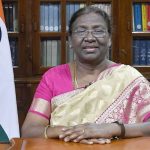



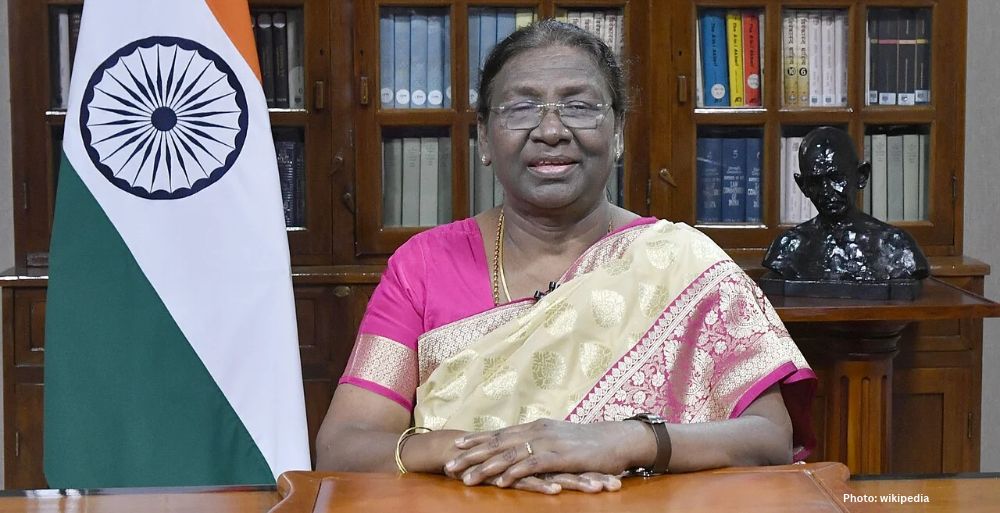
During the Golden Jubilee celebrations of Vaidyaratnam Ayurveda College, President Droupadi Murmu emphasized Keralam’s vital role in Ayurvedic heritage and its potential to become a global center for Panchakarma treatment.
THRISSUR, India — On Friday, President Droupadi Murmu delivered a keynote address at the Golden Jubilee celebrations of Vaidyaratnam Ayurveda College, where she articulated Keralam’s pivotal role in preserving and advancing the art of Ayurveda, particularly focusing on the specialized treatment known as Panchakarma. Her remarks highlighted the state’s unique position in India’s extensive Ayurvedic tradition while advocating for increased collaboration between local educational institutions and international health organizations.
President Murmu acknowledged the contributions of the Ashtavaidyas, a revered group of traditional Ayurvedic practitioners, as well as the Vaidyaratnam group, for their efforts in enriching Ayurvedic medical knowledge across generations. She noted that their work has significantly enhanced the global recognition of Ayurvedic practices, positioning Keralam as a beacon for traditional medicine.
Vision for Keralam as a Global Center
In her address, President Murmu posited that Keralam has the potential to emerge as an international center for Panchakarma treatment, which focuses on detoxification and rejuvenation through holistic Ayurvedic practices. She called on Ayurveda colleges in the state to engage in collaborative research initiatives with notable institutions, such as the Ministry of Ayush and the World Health Organization’s Global Traditional Medicine Centre located in Jamnagar. The goal, she stressed, is to transform Keralam into a reference point for authentic and evidence-based Panchakarma, thereby enhancing its credibility and appeal on a global scale.
Reflecting on the foundational principles laid out by the framers of the Indian Constitution, the President emphasized the necessity for systematic education and scientific research within Ayurveda. She underscored the importance of documenting Ashtavaidya texts, manuscripts, and treatment traditions, characterizing this endeavor as a task of national significance. Such documentation would not only preserve the rich heritage of Ayurveda but also facilitate its integration into contemporary healthcare practices.
Responses from Dignitaries
The event was attended by several prominent figures, including Kerala’s Governor Om Prakash Mathur, Union Minister of State for Tourism and Petroleum Suresh Gopi, and Minister for Health and Devaswom K. Muraleedharan. During the ceremony, Governor Mathur took the opportunity to unveil the logo for ‘PRANA’—a new initiative aimed at enhancing maternal and child health services at Vaidyaratnam Ayurveda College, coinciding with the college’s 50th anniversary. He remarked on Keralam’s leadership in Ayurvedic treatment and research, asserting that the state is at the forefront of integrating traditional practices with modern medical science.
Union Minister Gopi further emphasized the importance of Vaidyaratnam Ayurveda College, referring to it as a guiding light in merging traditional Ayurvedic knowledge with contemporary scientific methodologies. He noted that the institution has been instrumental in advancing the field of Ayurveda through education and research, thereby solidifying its role in the healthcare landscape.
Minister Muraleedharan echoed this sentiment, stressing the need for Ayurveda to become more accessible and user-friendly, positioning it as an integral component of public health policy in Keralam. He highlighted that by making Ayurveda more relatable to the general populace, its adoption and effectiveness can be significantly enhanced.
A Legacy of Ayurvedic Education
The Vaidyaratnam Ayurveda College, established 50 years ago, has played a crucial role in educating and training practitioners in Ayurveda. With a longstanding commitment to promoting Ayurvedic practices, the college has contributed significantly to the field through extensive research and healthcare services. The Golden Jubilee celebrations not only commemorated the institution’s achievements but also sparked vital discussions regarding the future trajectory of Ayurveda in India and its potential global impact.
Among the attendees were Ashtavaidyan Dr. Neelakantan Mooss, Managing Director of the Vaidyaratnam Group, and other prominent figures from the local government and educational institutions, including Kerala University of Health Sciences Vice-Chancellor Dr. Mohanan Kunnummal. Their presence reinforced a collective commitment to advancing Ayurveda’s role in healthcare and promoting its benefits both locally and internationally.
The Future of Ayurveda in Keralam
As the demand for alternative and traditional medicine continues to grow worldwide, Keralam’s emphasis on Ayurveda and its treatments stands to benefit significantly from enhanced international collaborations and research. The call to establish Keralam as a center for evidence-based Panchakarma could position the state as a global leader in traditional medical practices, potentially attracting both health tourists and researchers interested in Ayurvedic methodologies.
President Murmu’s visit and her remarks at Vaidyaratnam Ayurveda College signal a growing recognition of Keralam’s potential to lead in the field of Ayurveda on an international scale. By fostering collaborations and emphasizing rigorous research, the state aims to elevate its contributions to the global understanding and practice of traditional medicine, further solidifying its reputation as a hub for holistic health and wellness.


No Comment! Be the first one.