





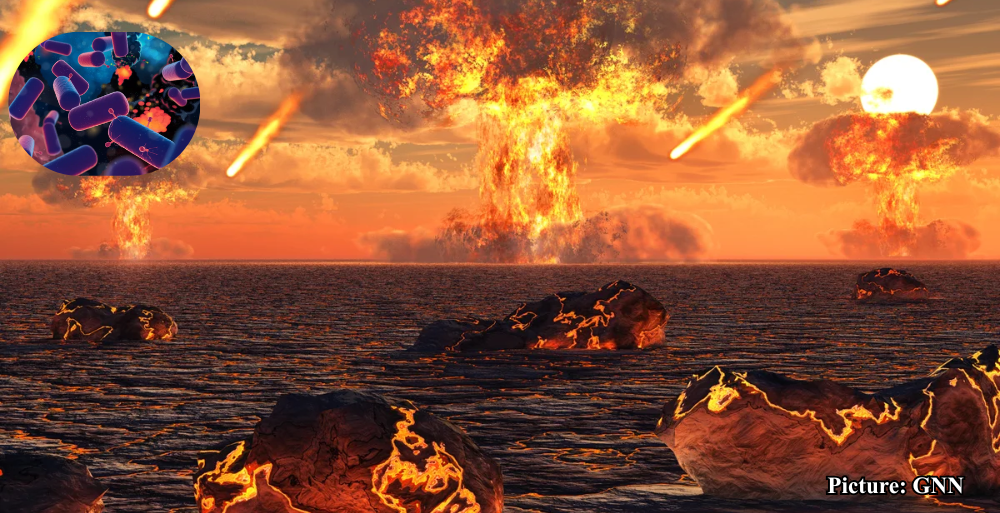
A recent study indicates that the Last Universal Common Ancestor (LUCA), the precursor to all life on Earth, may have appeared as early as 4.2 billion years ago, significantly earlier than previously estimated.
The Last Universal Common Ancestor (LUCA), a single-celled organism from which all life on Earth is derived, may have emerged approximately 4.2 billion years ago, according to a study published in the journal Nature Ecology & Evolution. This timeline challenges earlier estimates which placed LUCA’s existence at around 4 billion years ago, only 600 million years after the formation of Earth, suggesting a longer evolutionary history than previously understood.
Scientific Methodology
The research, conducted by an international team of scientists, utilized a comparative genetic approach to ascertain the timeline of LUCA’s appearance. By analyzing the genetic mutations that have occurred since various species diverged from their common ancestor with LUCA, the scientists estimated that LUCA must have existed as early as 400 million years after its formation. Lead author Edmund Moody from the University of Bristol emphasized the complexity of this task, stating, “The evolutionary history of genes is complicated by their exchange between lineages. We have to use complex evolutionary models to reconcile the evolutionary history of genes with the genealogy of species.” This meticulous method provides a clearer picture of LUCA’s age and environmental context.
Characteristics of LUCA
In addition to determining LUCA’s age, the study investigated its physiological attributes. The results indicate that while LUCA was a simple prokaryotic organism, it likely possessed some form of an immune system. This finding implies that LUCA was not merely a passive entity in its environment but actively engaged in combating primordial viruses that would have posed threats to its survival.
Tim Lenton, a co-author from the University of Exeter, remarked, “It’s clear that LUCA was exploiting and changing its environment, but it is unlikely to have lived alone. Its waste would have been food for other microbes, like methanogens, that would have helped to create a recycling ecosystem.” This insight offers a glimpse into the ecological interactions that may have characterized early life on Earth, suggesting a more complex web of interactions than previously thought.
Implications for Understanding Life’s Origins
The findings challenge scientists to reconsider not only the timeline of life’s evolution but also the conditions under which early organisms thrived. The new understanding of LUCA’s characteristics opens pathways for further research into the nature of early life forms and their environmental contexts. The study underscores the significance of LUCA in the broader narrative of biological evolution, as it represents the last common ancestor of all extant cellular life.
Despite this significant advancement, many questions remain unanswered regarding the transition from LUCA to the diverse array of life forms that followed. The evolutionary journey from LUCA to the first complex communities requires additional investigation, as researchers continue to explore the primordial conditions that fostered the emergence of life. The study of LUCA is crucial for understanding the evolutionary processes that have shaped life on Earth and how they relate to current biological systems.
Historical Context and Future Research
Historically, the concept of LUCA has evolved alongside advancements in genetic research. Initial hypotheses about LUCA’s existence were based on comparative analysis of genetic material across different species, providing a foundational understanding of life’s origins. However, as new technologies and methodologies have emerged, scientists have gained deeper insights into the genetic and physiological traits of LUCA. This evolving understanding has profound implications for multiple scientific fields, including genetics, ecology, and evolutionary biology.
Presently, the challenge lies in bridging the gap between LUCA and the complex ecosystems that developed afterward. The transition from a single-celled organism to the intricate tapestry of life known today is a monumental leap that researchers are striving to understand. Future studies are expected to explore not only LUCA’s genetic makeup but also its interactions with the environment and other early life forms.
Conclusion
The implications of this study are far-reaching, offering crucial insights into how life evolved on Earth. As scientists delve deeper into the origins of life, they are piecing together the history of LUCA while illuminating the broader narrative of biological evolution on our planet. The discoveries surrounding LUCA represent a significant advance in our understanding of life’s beginnings, setting the stage for further exploration into the mysteries of biological evolution and the intricate processes that shaped the diversity of life we observe today.





No Comment! Be the first one.