





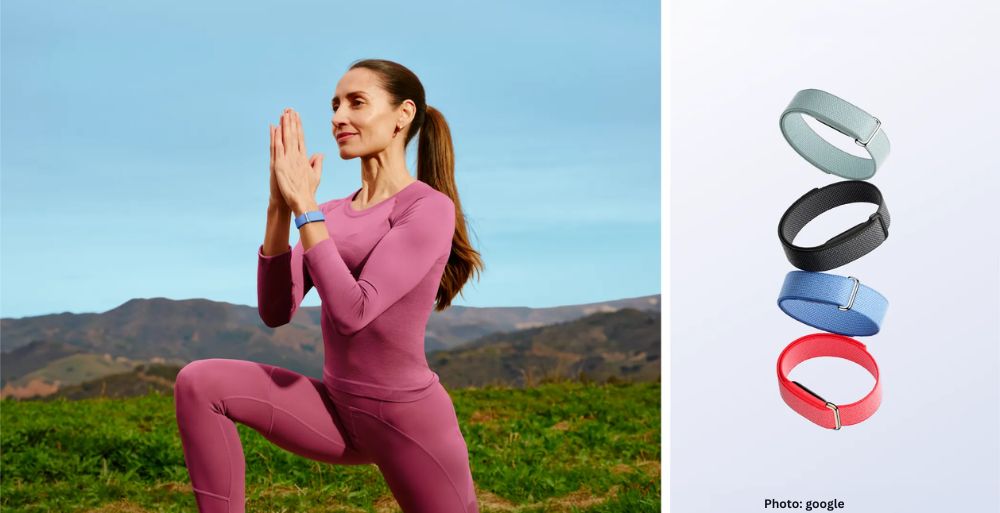
Google has officially expanded its hardware lineup in India with the commercial release of the Fitbit Air, a minimalist, screen-free fitness tracker priced at ₹13,999. Designed to combat notification fatigue and serve users seeking passive wellness tracking, the lightweight device eliminates the traditional digital display in favor of continuous background sensing powered by Google’s Gemini-driven Health Coach. The launch reflects a broader structural shift within the consumer wearables sector, where tech giants and specialized startups are vying to capture a growing market of users moving away from multi-function smartwatches toward dedicated, distraction-free health monitors.
NEW DELHI — Google on Thursday formally introduced the Fitbit Air to the Indian consumer market, marking a strategic pivot toward minimalist, display-free health wearables. The device, which goes on sale nationwide on Friday, October 2, 2026, carries a retail price of ₹13,999 and enters a rapidly expanding product category designed for users who seek comprehensive health metrics without the digital interruptions inherent to conventional smartwatches.
The Indian release follows the wearable’s initial rollout in international markets, including the United States, where it has drawn positive consumer reception. Available in four colorways—Obsidian, Berry, Lavender, and Fog—the Fitbit Air features a compact pebble-style chassis meant to be worn continuously throughout the day and night. By foregoing an interactive screen, Google joins a growing list of technology companies addressing consumer demand for passive health monitoring, directly competing with specialized hardware manufacturers and domestic alternatives.
AI-Driven Analytics and Sensor Capabilities
The core selling point of the Fitbit Air lies in its integration with Google’s artificial intelligence architecture. While traditional fitness bands rely on visual readouts to display real-time steps or heart rates, the Fitbit Air transmits all collected data passively to the Google Health smartphone app, supported on both Android (version 11 and higher) and iOS (version 16.4 and higher) platforms.
At the center of this software experience is the revamped Google Health Coach, powered by Google’s Gemini artificial intelligence models. Rather than delivering raw data tables, the system synthesizes biometric inputs—including continuous 24/7 heart rate monitoring, arterial oxygen saturation (SpO2), heart rate variability (HRV), and atrial fibrillation (Afib) rhythm checks—to deliver contextual health guidance. According to Google executives, Gemini processes wearable sensor data alongside external user-reported variables, such as dietary habits, active injuries, lifestyle changes, and local weather patterns.
“The integration of Gemini allows the platform to move beyond simple data logging,” stated a Google product spokesperson during the announcement. “The more information users share through natural language prompts, the more refined and accurate the coaching feedback becomes over time.”
Hardware enhancements include a refined optical heart-rate sensor array that improves sleep-tracking precision by up to 15 percent compared to previous-generation Fitbit bands. The algorithm automatically logs naps lasting 20 minutes or longer, calculates optimal wake-up times based on sleep cycles, and provides a simplified sleep score designed to make overnight recovery data actionable for general consumers.
Battery Efficiency and Screenless Ergonomics
By eliminating a power-intensive color display, the Fitbit Air achieves a battery life rating of up to seven days on a single charge. The device utilizes an included magnetic charging dock and features fast-charging capabilities, providing 24 hours of operational battery life from a five-minute charge, with a full recharge taking approximately 90 minutes.
The lightweight architecture, weighing approximately 12 grams including the strap, addresses a common ergonomic friction point associated with heavier, glass-and-metal smartwatches. Consumer research indicates that bulky smartwatches are frequently removed during sleep or intensive physical training, leading to gaps in continuous biometric tracking. The screen-free form factor permits undisturbed overnight wear while removing the impulse to check notifications or digital metrics during workouts.
To support different user environments, Google is launching three interchangeable strap styles alongside the tracker:
- Performance Loop Band: Manufactured from breathable, recycled woven materials and included in the standard retail box.
- Active Band: Constructed from sweatproof silicone designed for high-intensity athletic training.
- Elevated Modern Band: A metallic bracelet-style accessory aimed at casual and formal wear.
Shift in the Wearables Landscape and Financial Dynamics
The market for minimalist fitness wearables was originally popularized by Boston-based startup Whoop, founded by CEO Will Ahmed. Initially adopted by elite professional athletes, Whoop expanded its market presence among corporate executives and fitness enthusiasts, driving the company’s valuation past $10 billion as of March 2026. However, Whoop operates on a mandatory subscription model—requiring annual outlays ranging between ₹22,000 and ₹29,000 without a standalone hardware purchase option—which has limited its mainstream penetration in price-sensitive international markets like India.
Google’s commercial strategy with the Fitbit Air aims to bridge the gap between high-end subscription trackers and entry-level fitness bands. Priced at ₹13,999 upfront, the Fitbit Air includes a three-month trial of Google Health Premium out of the box (also bundled for Google AI Pro and Ultra subscribers). Following the trial period, users can choose to retain basic tracking features for free or maintain the paid monthly subscription to access advanced Gemini-powered analytics.
This launch comes amid intensified competition across the global and Indian wearable sectors:
- Garmin: Released the screen-free Garmin Cirqa in July 2026 at a one-time price of $199.99 (~₹18,000), explicitly advertising a subscription-free model to target endurance athletes.
- Domestic Indian Players: Local brands such as Noise have introduced products like the REP Band at ₹9,999, while Amazfit offers the Helio Strap at ₹8,999, both targeting consumers seeking display-free trackers without recurring fees.
- Big Tech Exploration: Market intelligence reports indicate that Apple is similarly exploring screenless health wearables to complement its hardware ecosystem.
Retail availability for the Fitbit Air in India spans major digital and physical channels, including the official Google Store, Flipkart, and nationwide retail chains such as Croma, Reliance Digital, and Vijay Sales. Launch incentives include an instant ₹1,000 bank cashback for eligible cardholders alongside no-cost EMI financing options for up to 12 months.
Industry analysts note that the rise of screenless trackers represents a maturation of the consumer wearable market. As smartphone users experience notification overload from smartwatches, demand is shifting toward single-purpose, ambient technology that quietly monitors health in the background. With the launch of the Fitbit Air, Google positions itself at the center of this industry transition, betting that artificial intelligence and unobtrusive design will define the next phase of personal health tracking.




No Comment! Be the first one.