





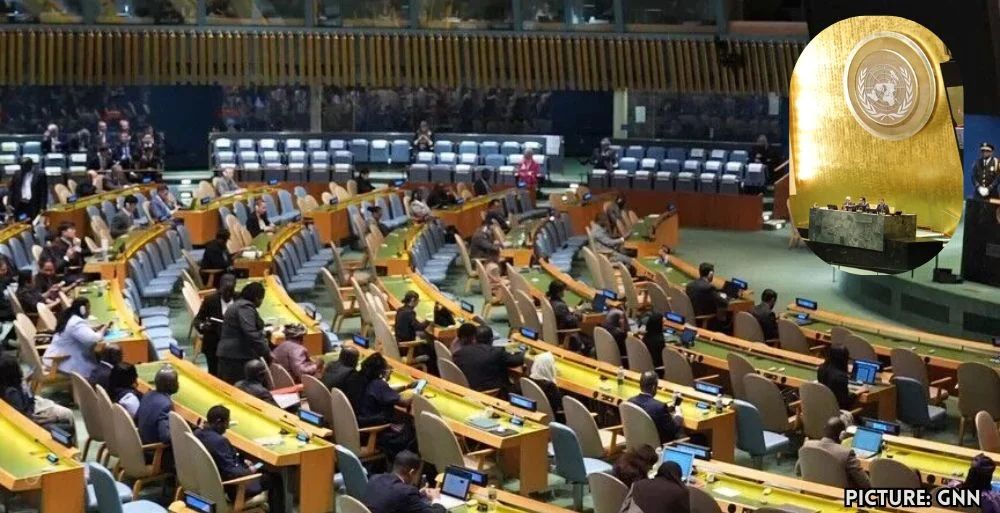
India’s recent vote against a UN General Assembly resolution calling for a global moratorium on the death penalty reflects a divergence from a growing international consensus advocating for the abolition of capital punishment.
New Delhi – On November 13, 2026, during a pivotal session of the United Nations General Assembly (UNGA), India voted against a resolution urging nations to establish a moratorium on the death penalty. The resolution, introduced by Mexico, received overwhelming support, with 133 UN member states voting in favor, 33 against, and 16 choosing to abstain from the vote.
Details of the Resolution
The UNGA resolution is part of a broader international dialogue concerning the death penalty, which has seen increased scrutiny over its ethical implications and human rights concerns. It expresses deep alarm regarding the continued use of capital punishment and highlights a troubling resurgence in reported executions in 2025, despite a global trend toward limiting its application. The resolution’s primary aim is to urge all member states to establish a moratorium on executions with the ultimate goal of abolishing the death penalty.
Specifically, the resolution calls on countries that have abolished the death penalty to refrain from reinstating it and encourages nations to progressively restrict its application. It advocates for prohibiting the death penalty for offenses committed by individuals under the age of 18 or where an offender’s age cannot be accurately determined. Furthermore, it seeks to limit the imposition of capital punishment on pregnant women, individuals with mental or intellectual disabilities, and older persons. The resolution also recommends reducing the number of offenses for which the death penalty can be applied, including the elimination of mandatory death sentences.
India’s Stance and Global Context
By opposing the resolution, India joined a minority of countries, including Bahrain, China, Egypt, Iran, Iraq, Japan, Kuwait, Maldives, Oman, Pakistan, Qatar, Saudi Arabia, and the United States. Critics of India’s position argue that it stands in stark contrast to the evolving global consensus favoring the abolition of the death penalty. Advocacy groups and human rights organizations have expressed concerns that India’s vote may undermine international efforts aimed at reforming capital punishment practices and advancing human rights globally.
Supporters of capital punishment in India maintain that it serves as a critical deterrent against heinous crimes, which is particularly relevant in a country facing significant security challenges. They argue that retaining the death penalty is essential for delivering justice to victims and their families. However, opponents, including various civil society organizations, argue that capital punishment represents an inhumane and irreversible form of punishment, susceptible to judicial errors and potential misuse.
International Trends Towards Abolition
The UNGA resolution reflects a notable shift in the global landscape regarding capital punishment, with many countries reconsidering their legal frameworks in response to human rights advocacy. The call for a moratorium aligns with various international treaties and conventions that emphasize the dignity and rights of individuals, signaling an evolving standard of justice in contemporary society.
According to the World Coalition Against the Death Penalty, over 170 countries have abolished the death penalty in law or practice, indicating a significant trend towards its abolition. Nevertheless, countries that retain capital punishment often cite cultural, legal, and security reasons for its continuation, complicating the dialogue around its global elimination.
Implications for India
India’s vote against the UN resolution may spark further debate within the country concerning the future of capital punishment. Legal experts, policymakers, and human rights advocates are likely to engage in discussions that scrutinize the implications of India’s stance and the broader context of capital punishment in relation to international human rights norms. The issue of capital punishment may also become a focal point in domestic politics, as civil society groups advocate for legal reforms aligned with global human rights standards.
Moreover, India’s position within the UN framework could influence future discussions on global legal standards and human rights practices. This underscores the complex interplay between national sovereignty and international human rights obligations, as countries navigate their domestic legal systems in the context of global human rights advocacy.
Conclusion
The recent UNGA resolution and India’s rejection of it highlight the ongoing tension between varying national perspectives on capital punishment. As the international community increasingly calls for the abolition of the death penalty, India’s position may contribute to shaping the future discourse on human rights and justice both domestically and globally. The implications of India’s vote will likely resonate in ongoing debates about the ethics of capital punishment and its place within contemporary legal systems.






No Comment! Be the first one.