




Study Reveals Impact of Footwear on Human Ankle Bone Structure and Its Evolutionary Implications

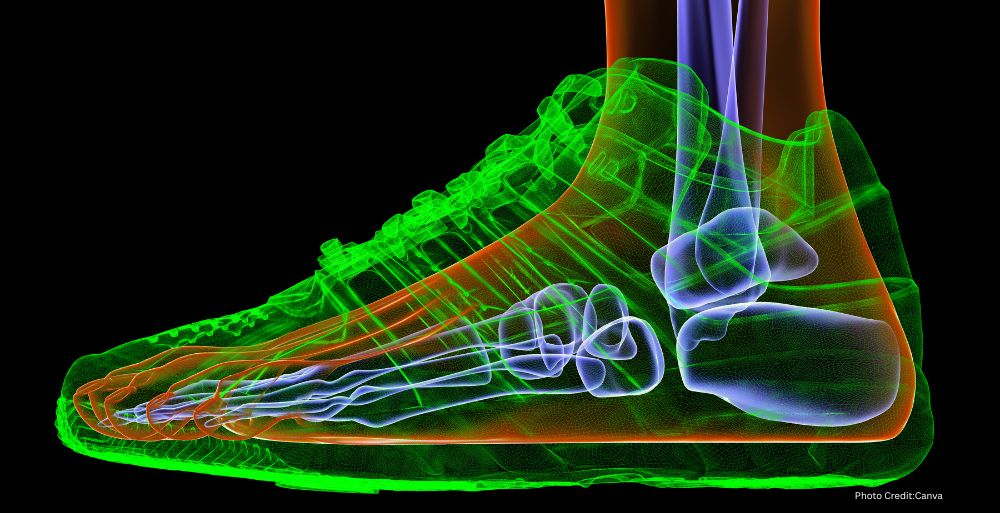
A recent study from the University of Chicago reveals significant differences in ankle bone structures between shoe-wearing individuals and barefoot indigenous populations, providing new insights into the evolution of human locomotion.
Researchers at the University of Chicago have uncovered findings that challenge the longstanding view of human bones as rigid structures. A study published on September 28, 2026, in the Journal of Anatomy, highlights the adaptability of bones in response to lifestyle choices and physical activity, particularly focusing on the differences in trabecular bone structure in the ankle between modern individuals who wear shoes and those from indigenous communities who live barefoot.
Research Methodology
The study, led by Hannah Farrell, a former postdoctoral fellow at UChicago now on faculty at the University of North Texas Health, employed high-resolution micro-computed tomography (CT) scanning to analyze the talus bone. This bone, which plays a crucial role in weight bearing by connecting the foot to the lower leg, was examined in two distinct groups: 40 individuals from modern, post-industrial societies who regularly wear shoes and 13 skeletons of habitually unshod indigenous people from regions including the Andaman Islands, southern Africa, and Central Africa, with specimens provided by the Natural History Museum in London.
The findings revealed stark differences in the internal architecture of the talus bone between the two groups. The modern, shoe-wearing individuals exhibited an increased density of trabecular bone in the posterior region of the talus. This suggests that footwear, which typically elevates the heel, alters weight distribution, leading to a unique pattern of bone development. Additionally, there was a notable increase in trabecular bone on the medial side of the talus, indicating that shoes redistribute weight in ways that influence skeletal development.
Conversely, the barefoot indigenous individuals displayed greater trabecular bone density at the anterior section of the talus, which indicates a different load-bearing pattern, potentially associated with activities such as climbing or squatting.
Implications for Human Evolution
The implications of these findings extend beyond contemporary human anatomy; they provide critical reference points for paleoanthropologists studying the evolution of bipedalism. Understanding how modern human behaviors affect bone structure allows researchers to make inferences about the locomotion habits of early hominins. Zewdi Tsegai, PhD, Assistant Professor of Organismal Biology and Anatomy at UChicago and senior author of the study, emphasized this connection: “A lot of people think the skeleton is a fixed thing, but it’s constantly changing during your life in response to your behavior. So, we’re using this plasticity of the skeleton to try to understand how living people vary and then taking that back to fossils to reconstruct behavior.”
Farrell added that the study underscores the necessity of comparing modern, shoe-wearing individuals with those who do not wear shoes when examining fossilized remains. “If we can find variation within one modern species, that means that the subtle differences that we might find in fossils are meaningful,” she said. “And if we can connect behaviors in living humans with bone structure, then we can look in the past and make inferences about behavior and the evolution of bipedalism.”
Broader Context of Footwear and Human Anatomy
The findings of this research contribute to a growing body of literature on the effects of modern footwear on human anatomy and physical health. Earlier studies have indicated that footwear can alter gait patterns, contribute to various musculoskeletal disorders, and affect the overall biomechanics of walking. As the global prevalence of modern footwear continues to rise, understanding its impact on skeletal development becomes increasingly vital.
This research not only sheds light on the physical ramifications of shoe usage but also offers insights into the evolutionary adaptations of our ancestors. It highlights the intricate relationship between human behavior, environmental factors, and biological evolution. The study serves as a reminder that the way we interact with our environment—through practices as fundamental as walking—can have profound implications for our anatomical development.
Future Directions in Research
The study raises important questions for future research, particularly regarding how different lifestyles and environmental factors continue to shape human anatomy. Exploring the skeletal adaptations of various populations can yield valuable data for understanding the evolutionary trajectory of human bipedalism.
Additionally, the research team included authors from various institutions, such as Andrea Luková from the Max Planck Institute for Evolutionary Anthropology, Leipzig, Germany, and researchers from Technische Universität Wien, Austria. Their collaborative efforts reflect a multidisciplinary approach to understanding human skeletal adaptation and evolution, emphasizing the importance of integrating diverse scientific perspectives.
In conclusion, the findings from the University of Chicago study not only advance our understanding of how footwear influences human bone structure but also provide essential context for interpreting the fossil record. As researchers continue to explore the complexities of human evolution, studies like these are crucial for unraveling the intricate connections between our biology, behavior, and history.






No Comment! Be the first one.