





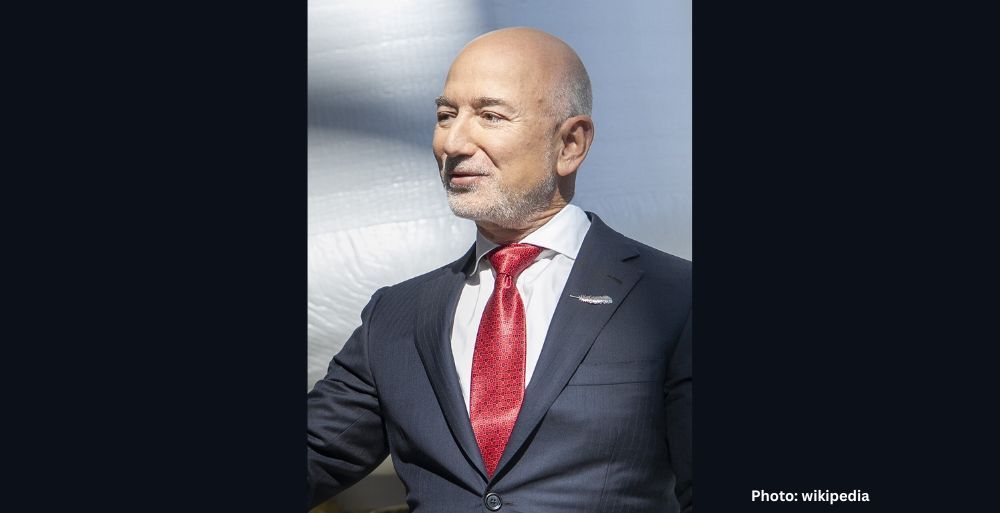
During his address at Italian Tech Week, Jeff Bezos shared a forward-looking vision of a future where millions could inhabit space by 2045, supported by advancements in AI and robotics that would enable robots to perform essential tasks on the Moon and beyond.
In a forward-thinking address at Italian Tech Week, Jeff Bezos, the founder of Amazon and aerospace company Blue Origin, articulated an ambitious vision for humanity’s future in space. He posited that technological advancements could allow for millions of people to live in space by the year 2045. Bezos emphasized the rapid evolution of artificial intelligence (AI), robotics, and space technology as key enablers of this potential future.
“In the next kind of couple of decades, I believe there will be millions of people living in space,” Bezos stated, indicating that the transition may come sooner than many expect. His remarks reflect a belief in the accelerating pace of technological innovation as a significant factor driving human expansion beyond Earth.
The Choice to Live in Space
Bezos clarified that the decision to live in space would not be driven by necessity but rather by personal choice. “They’ll mostly be living there because they want to. We don’t need people to live in space,” he said. This assertion raises important questions about the societal implications of space habitation and the motivations behind such a drastic lifestyle change.
The idea of living in space as a voluntary choice suggests a future where space travel and habitation could become as routine as international travel today. However, the practical requirements for establishing large-scale human settlements in space remain uncertain. Challenges such as transportation, life support systems, and sustainable living environments will need to be addressed before this vision can become a reality.
Historical context adds depth to Bezos’ predictions. Previous space exploration efforts, including the Apollo missions and the International Space Station (ISS), have laid the groundwork for understanding human capabilities in space. Nonetheless, the leap to millions of people living in space introduces a range of logistical, technological, and ethical challenges that must be navigated.
Robotic Labor on the Moon
In addition to human habitation, Bezos expressed strong confidence in the role of robots in performing essential tasks on the Moon and other extraterrestrial locations. He argued that utilizing machines for these responsibilities would be more economical than deploying human labor. “If you need to do some work on the surface of the moon or anywhere else, we will be able to send robots to do that work, and that will be much more cost-effective than sending humans,” he remarked.
This perspective aligns with broader trends in the space industry, where automation and robotics are increasingly viewed as practical solutions for conducting complex operations in environments that may pose risks to human health and safety. The deployment of robotic systems could streamline operations, reduce costs, and increase efficiency in space exploration and development.
However, it is important to note that Bezos’ comments reflect aspirations for future technological capabilities rather than established timelines for implementing such robotic systems on a large scale. The actual development of these technologies will require significant investment, research, and collaboration among space agencies and private companies.
AI’s Economic Potential
Bezos also shared his insights on the economic implications of AI, presenting an optimistic view that contrasts with concerns expressed by some technologists regarding the potential for AI to displace workers or create broader societal risks. He stated, “Civilizational abundance comes from our inventions,” comparing AI to transformative technologies like the plough.
According to Bezos, innovations like AI have the potential to expand resource availability and enhance productivity, suggesting that technological progress will continue to foster abundance. However, he acknowledged that the societal impact of AI will depend on how its benefits and burdens are distributed across various industries and communities.
The historical context of technological advancements also plays a role in understanding Bezos’ perspective. Throughout history, inventions have led to significant changes in societal structures and economic paradigms. The Industrial Revolution, for instance, drastically altered labor markets and productivity, leading to both economic growth and significant societal challenges. Similarly, the rise of AI could bring about profound changes that society will need to adapt to.
Implications for the Future
As the world stands on the brink of significant advancements in space exploration, Bezos’ vision serves as a reminder of the potential for innovation to reshape humanity’s future. His remarks highlight not only the promise of a future where space living may become a reality but also the ongoing debates surrounding the implications of AI and robotics in society.
Bezos’ predictions underscore the need for robust discussions about the ethical, economic, and practical ramifications of living in space and the increasing reliance on technology in everyday life. Policymakers, technologists, and society at large must engage in conversations about how to ensure that advancements in technology lead to equitable benefits for all, rather than exacerbating existing inequalities.
In conclusion, while Jeff Bezos’ predictions about living in space and the role of robotics and AI paint an optimistic picture of the future, the journey towards that reality will be complex and fraught with challenges. As society looks to the stars, it must also reflect on the profound implications of such advancements for life on Earth and beyond.





No Comment! Be the first one.