





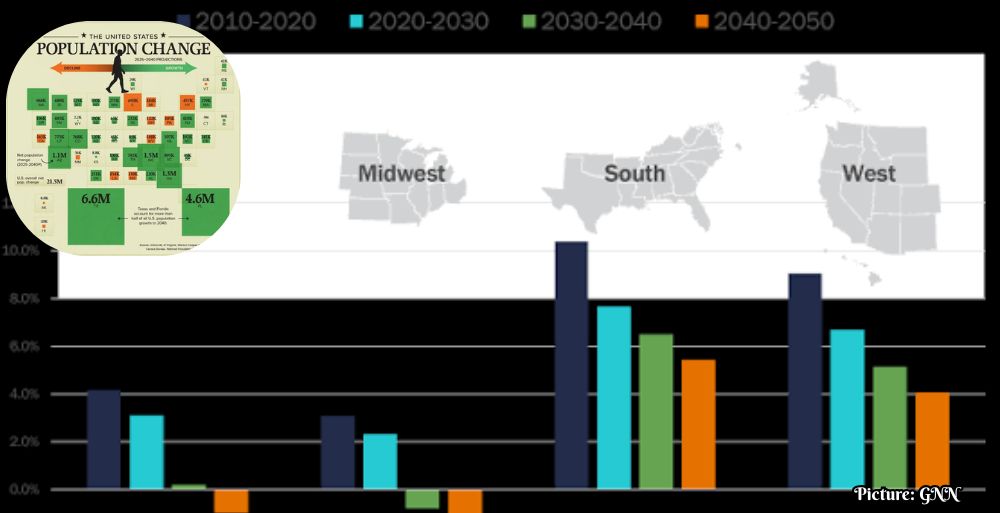
Population projections indicate that the U.S. will add approximately 21.5 million residents by 2040, with significant growth concentrated in the South and notable declines in several Northeastern and Midwestern states.
The Weldon Cooper Center for Public Service at the University of Virginia has released new projections detailing anticipated changes in the U.S. population through 2040. These projections, based on data from the 2020 Census and the U.S. Census Bureau’s 2025 estimates, suggest a significant demographic shift across the country over the next two decades.
According to the projections, the total U.S. population is expected to increase by roughly 21.5 million people, representing a growth rate of 6.3% from 2025 to 2040. This growth is not evenly distributed; the Southern region is predicted to account for about 78% of the population gains, highlighting a trend toward the Sun Belt that has been ongoing for decades.
States with the Highest Growth Rates
Among the states, Idaho and Utah are projected to experience the fastest percentage growth, with increases of 24.1% and 21.9%, respectively. Texas, with an expected increase of 6.56 million residents, will lead in absolute numbers, while Florida is anticipated to add approximately 4.62 million residents. The following states round out the top five in percentage growth:
- South Carolina: +16.1%
- Nevada: +14.7%
- Arizona: +13.9%
In total, the projections indicate that 14 states are likely to see population increases of more than 10% by 2040. The states leading this trend reflect a combination of factors, including economic opportunities, migration patterns, and favorable climates. Notably, Texas and Florida alone are projected to account for about 11.2 million of the total U.S. population growth, underscoring their status as major migration destinations.
States Facing Population Declines
Conversely, 14 states are forecasted to have smaller populations in 2040 than in 2025. Illinois is expected to see the largest decline, with an estimated loss of approximately 649,000 residents, followed by New York, which may lose around 457,000 residents. West Virginia is projected to experience the steepest percentage decline at 8.4%, followed by:
- Mississippi: -4.7%
- Louisiana: -3.3%
The Northeast and Midwest regions are particularly affected, with both regions accounting for less than 1% of the projected national population growth. This demographic trend raises questions about economic viability and the future of public services in these states, especially as they grapple with the implications of a shrinking tax base and potential reductions in federal support.
Historical Context and Implications
The historical context of U.S. population movements reveals a long-standing trend toward the South and West. Since the 1970s, the population center of the United States has shifted significantly southward and westward, driven by factors such as job availability, climate preferences, and lifestyle changes. The ongoing decline in fertility rates, which reached a record low in 2025, may further complicate the demographic landscape, particularly in states facing population losses.
Factors influencing these trends include economic opportunities, affordable housing, and retirement migration. States like Texas and Florida have thrived due to their robust job markets and warmer climates, attracting individuals and families seeking better living conditions. In contrast, states in the Northeast and Midwest are often hindered by higher costs of living and aging infrastructures, which may deter potential residents.
The projections serve as a reminder of the dynamics of migration, fertility, and mortality trends, which are subject to change due to various social and economic factors. The Cooper Center emphasizes that these projections are scenarios rather than definitive forecasts. Shifts in immigration policies, economic conditions, and public health can dramatically alter population trajectories, reflecting the fluid nature of demographic data.
Regional Variations and Future Considerations
As the United States approaches 2040, the anticipated demographic changes will carry significant implications for policymakers, local governments, and communities. Growth in certain states may lead to increased demands for infrastructure, housing, and services, while states facing declines may need to adapt to shrinking populations and potential economic challenges. Issues such as healthcare access, education funding, and transportation systems will require careful planning and investment to meet the needs of changing demographics.
Moreover, these shifts could influence political representation, as states gaining population may gain additional congressional seats and electoral votes, while states losing residents may experience the opposite effect. This dynamic could reshape the balance of power in Washington, D.C., impacting federal policy decisions.
Conclusion
In conclusion, the projected population changes paint a complex picture of the future U.S. demographic landscape, with growth concentrated in the South and West while highlighting the challenges faced by several states in the Northeast and Midwest. As these trends unfold, they will shape the economic, social, and political fabric of the nation in the years to come.
Understanding the implications of these demographic changes will be critical for stakeholders at all levels, as they navigate the intricate landscape of a rapidly evolving United States. The findings underscore the importance of planning and adaptation in response to the shifting demographics of the nation.






No Comment! Be the first one.