





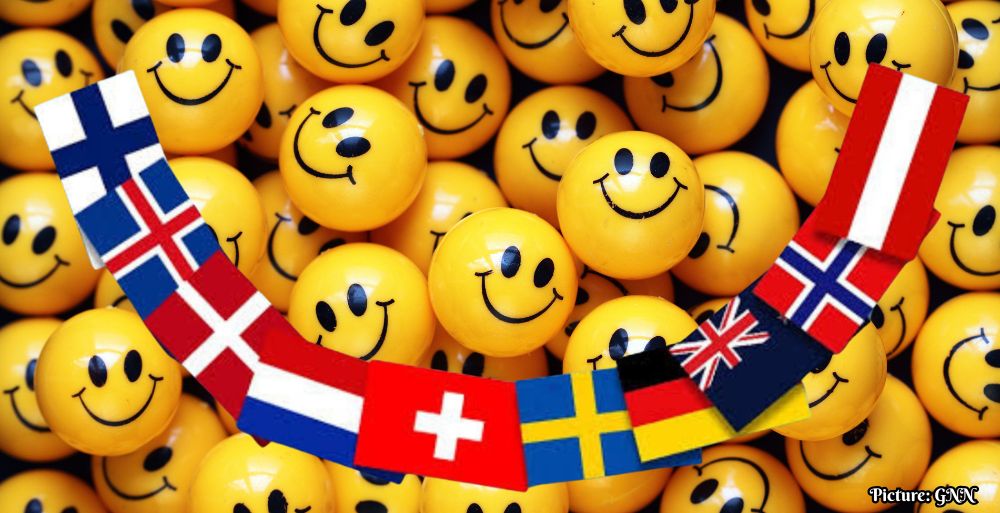
The 2025 World Happiness Report reveals that social interactions, particularly sharing meals and trusting strangers, significantly influence personal happiness more than income or physical health.
The 2025 World Happiness Report, published by the Oxford Wellbeing Research Centre in collaboration with Gallup, the UN Sustainable Development Solutions Network, and an independent editorial board, presents a compelling argument regarding the predictors of happiness. The report emphasizes the importance of social connections, particularly through shared meals and a sense of trust in strangers, over traditional indicators such as income and physical health.
One key insight from the report suggests that asking, “Who did you eat with?” may be a more revealing question about happiness than inquiring about one’s income or health status. The findings indicate that the quality of social interactions plays a crucial role in life satisfaction, with shared meals being a significant contributor.
Meal Sharing as a Predictor of Happiness
The report’s analysis of meal sharing draws from Gallup World Poll data collected in 2022 and 2023, encompassing over 150,000 respondents across 142 countries and territories. Participants reported the number of lunches and dinners they had shared with acquaintances in the previous week. The data revealed a consistent pattern: individuals who shared more meals reported higher life evaluations, a greater frequency of positive emotions, and fewer negative emotions.
After accounting for various factors such as age, gender, education, employment status, income levels, household size, and food security, the relationship between meal sharing and life satisfaction remained robust. In fact, meal sharing was found to explain as much variation in life evaluations as income and unemployment, and it accounted for even more variation in positive emotions than those economic indicators combined.
This correlation suggests that shared meals might serve as a meaningful social measure, highlighting the importance of community and interpersonal relationships in enhancing wellbeing. However, the report clarifies that while the data suggests a relationship, it does not definitively establish causation.
Trusting Strangers and Life Satisfaction
Another significant aspect of the report involves measuring people’s expectations regarding the return of lost wallets, specifically the likelihood that a stranger would return a wallet containing money. This question serves as a gauge of trust in others. Findings indicate that individuals who believe a stranger would likely return their wallet report an average life evaluation score over three-quarters of a point higher than those who do not share this belief. This difference is notably larger than the life satisfaction increase associated with doubling one’s income and nearly twice the effect linked to unemployment.
While the raw comparison is striking, the report emphasizes the importance of standardization in interpreting these findings. After adjusting for common scales, the data indicated that the coefficient for expected wallet return was 0.078, compared to 0.108 for income and 0.097 for self-assessed health. This nuance highlights that while trust plays a significant role in wellbeing, it should not be viewed as a universally superior predictor compared to income or health.
The Nordic Model of Trust
The report also touches on cultural factors, particularly in Nordic countries, where high levels of trust correlate with societal happiness. In an analysis of 40 countries, a field experiment revealed that wallets were returned 81% of the time in Sweden, Denmark, and Norway, against a mere 47% return rate in other nations. Respondents from these Nordic countries also expressed a greater expectation for wallet returns, underscoring a cultural norm of trust.
However, the report warns against oversimplifying the narrative. Trust is not merely an inherent trait but is shaped by experiences with neighbors, public services, and institutions. High levels of trust can be maintained when communities exhibit low corruption, predictable regulations, and a culture of cooperation.
Limitations of Conventional Self-Help Approaches
The findings of the 2025 World Happiness Report raise critical questions about conventional self-help practices, which often focus on individual actions such as improving sleep, journaling, or exercising. These approaches tend to emphasize personal responsibility over communal engagement. Shared meals and trusting relationships, on the other hand, require cooperation and connection with others, which can be challenging in environments marked by busy schedules, caregiving responsibilities, financial constraints, or unsafe relationships.
The report’s authors argue that the focus on individualistic well-being often overlooks the societal structures necessary for fostering connections. They stress the importance of creating conditions conducive to social interaction, such as predictable lunch breaks, affordable communal meals, and welcoming public spaces, which facilitate connections without placing the burden solely on individuals.
Conclusion: Rethinking Wellbeing Practices
Ultimately, the report suggests that enhancing wellbeing is not solely about personal habits but also involves fostering a supportive social environment. Simple acts of kindness, like returning borrowed items or making introductions, can build trust and strengthen community ties. The research underscores that happiness is not simply a private endeavor; rather, it is deeply interwoven with the social fabric of our lives. Addressing loneliness and promoting wellbeing requires collective efforts to create opportunities for genuine connection and interaction.






No Comment! Be the first one.