





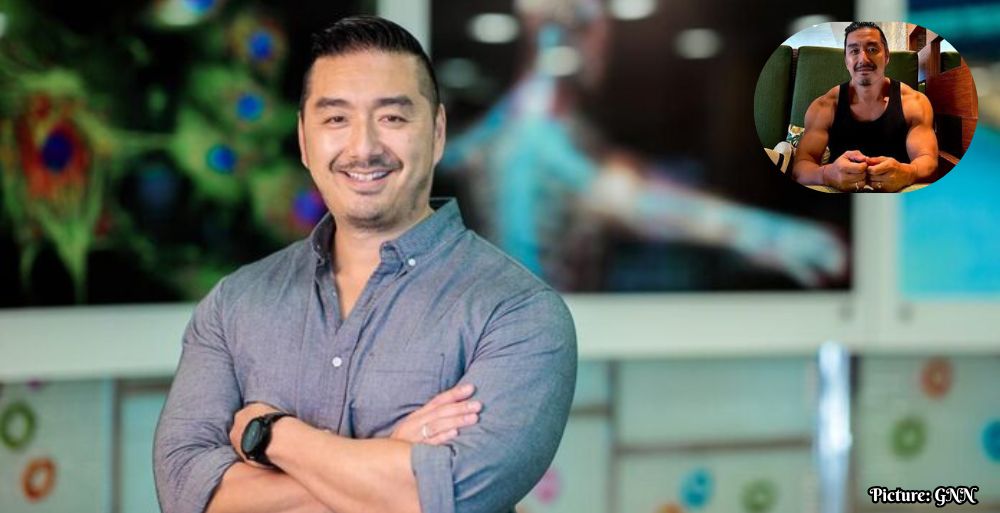
A groundbreaking study at the National University of Singapore challenges conventional health assessments by focusing on real-time physiological changes, with Professor Dean Ho becoming his own test subject in a unique exploration of longevity.
The National University of Singapore’s Yong Loo Lin School of Medicine has launched an innovative study that redefines how health and longevity are measured. Conducted under the leadership of Professor Dean Ho, director of the Institute for Digital Medicine (WisDM), the study, titled DELTA, takes an unconventional approach by utilizing Ho as the sole subject to explore the dynamics of biological health between annual screenings.
Beginning in mid-August 2024 and ongoing, the DELTA study focuses on the notion that each individual possesses a unique biological baseline, influenced by factors such as age, stress, sleep, nutrition, exercise, and illness. This baseline is not static; it evolves over time. To investigate these changes, the research team implemented a series of personalized lifestyle interventions, including varying fasting durations, exercise routines, and nutritional adjustments, while continuously monitoring Ho’s biological responses.
Study Methodology and Interventions
Professor Ho, now 47, adhered to a regimen that included approximately 20 hours of fasting daily, along with multiple 48-hour fasting periods. His physical activity consisted of 90 minutes of strength or cardiovascular training each morning. The diet was meticulously structured around Mediterranean-style foods, emphasizing leafy greens, seeds, olive oil, and lean protein, while limiting beverages to water, electrolytes, black coffee, and black tea without milk or sugar.
“We started this study to better understand what happens between annual health screenings, which most people rely on as their measure of health—to look beyond static markers and focus on how the body functions and changes in real time,” Ho explained. “We know people are different from each other, but we are also different from ourselves over time. Everyone has their own ‘DELTA’—a unique, evolving set of data that reflects the fact that health is a story, not a snapshot.”
Real-Time Monitoring and Findings
Utilizing wearables such as Whoop, Garmin, and Apple Watch over an eight-month period, the DELTA study was able to track physiological changes more effectively than traditional consumer wearables typically allow. This data collection was crucial for examining Ho’s metabolic responses to acute stressors. The findings indicate that metabolic switching—the body’s ability to alternate between burning sugar and fat—improved significantly. For Ho, the average metabolic switching time reduced from over 24 hours to 16.5 hours, a noteworthy enhancement given that metabolic efficiency often declines with age.
Moreover, the study incorporated a custom artificial intelligence (AI) copilot that assessed Ho’s biological age to be approximately 32 years, which is nearly 15 years younger than his chronological age. Biological age assessments are typically based on a limited set of physiological markers, but this new approach measures real-time responses to stress, offering deeper insights into an individual’s health and resilience.
Health Improvements Observed
The DELTA regimen has led to several significant health improvements for Ho. His resting heart rate decreased from 65 beats per minute to 46 bpm, suggesting enhanced cardiovascular efficiency and recovery. Additionally, Ho experienced notable changes in sleep patterns, shifting his sleep schedule from after midnight to around 9 p.m., which resulted in increased total sleep duration—from about five hours to nearly eight hours—along with more deep sleep and reduced nighttime awakenings.
Further analysis revealed positive shifts in his gut microbiome, with no detectable levels of Fusobacterium and indications of improved energy conservation during fasting periods. These results suggest a holistic enhancement in Ho’s health metrics, aligning with the study’s objective to foster a better understanding of personal health data.
Implications for Personalized Longevity Research
Through the DELTA study, Ho and his team aspire to empower individuals to engage more meaningfully with their health data, promoting informed lifestyle changes rather than adhering to generic health guidelines. The study represents a significant departure from traditional approaches to longevity, which often rely on static health assessments. By focusing on dynamic physiological responses, DELTA aims to redefine healthy aging and emphasize functional resilience over mere snapshot evaluations.
“DELTA represents a shift toward function-based longevity science by measuring physiological resilience instead of relying on static snapshots,” Ho remarked. “We hope this work will not only help redefine how healthy aging is understood but also showcase Singapore’s growing role in pioneering the future of personalized longevity research.”
The findings of the DELTA study were published in the journal PLOS One, contributing to the ongoing discourse in longevity research, which increasingly emphasizes individualized health management strategies.
Publication details: Peter Wang et al, DELTA: Strengthening human biological resilience with an N=1 digital health and dynamic biomarker protocol, PLOS One (2026). DOI: 10.1371/journal.pone.0354234






No Comment! Be the first one.