





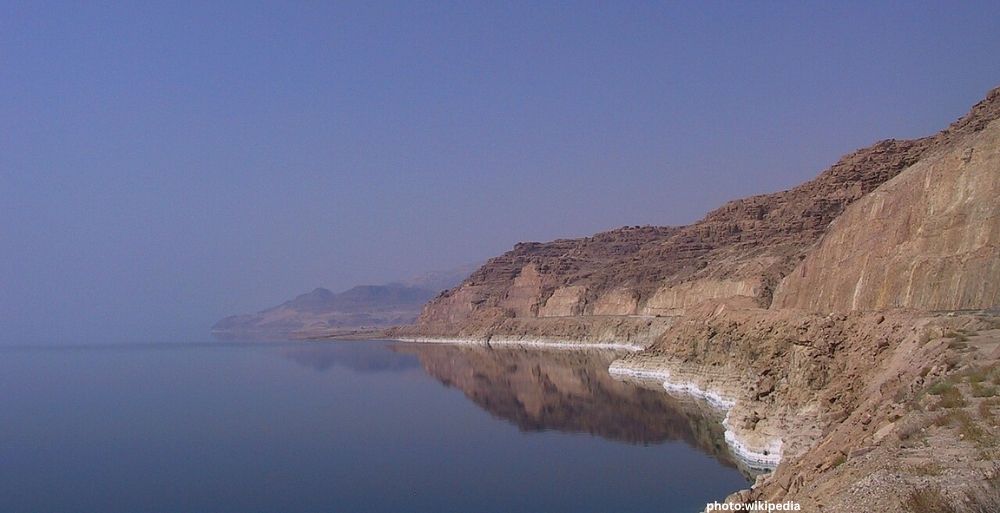
A series of newly formed freshwater pools along the shrinking Dead Sea has drawn attention from both scientists and religious groups, with some interpreting the phenomenon as a fulfillment of ancient biblical prophecies.
The Dead Sea, a landlocked saltwater lake bordered by Jordan, the West Bank, and Israel, has recently witnessed the emergence of freshwater pools, which some religious believers are linking to biblical prophecies concerning a future spiritual renewal. This phenomenon occurs as the Dead Sea, which lies approximately 1,400 feet below sea level and has a salinity level around 34 percent—nearly ten times saltier than ocean water—continues to shrink due to various environmental factors.
Despite the historical perception of the Dead Sea as a barren and lifeless landscape, the recent formation of these pools has created small ecosystems where vegetation and aquatic life can thrive. Reports indicate that the freshwater springs are revealing previously hidden underground water sources as the water levels of the Dead Sea decline.
Scientific Explanations for Freshwater Emergence
According to experts, the appearance of these freshwater habitats can be attributed to natural processes rather than supernatural occurrences. Rainwater falling on elevated areas around Jerusalem filters through porous limestone, ultimately flowing into underground aquifers. As the Dead Sea recedes, these springs are uncovered, allowing for the growth of plants and the establishment of new ecosystems. Observers have reported the presence of reeds, tamarisks, algae, insects, and even birds in these isolated environments, showcasing unexpected biodiversity adjacent to one of the saltiest bodies of water on Earth.
This shift occurs against a backdrop of environmental concern, as the declining water levels have led to the formation of over 9,000 sinkholes on the Israeli side of the Dead Sea, causing damage to infrastructure and impacting tourism. The emergence of these sinkholes has raised alarms regarding the stability of local roads and the viability of tourism-dependent communities.
Biblical Connections and Prophecies
Religious groups have drawn parallels between the emergence of freshwater and the prophecies of biblical figures such as Ezekiel and Zechariah. In the Book of Ezekiel, the prophet describes a vision of water flowing from the temple in Jerusalem into the Dead Sea, stating, “When these waters enter the sea, the waters will be healed, and everything that enters this river will live.” This imagery of transformation, including flourishing aquatic life and fruit-bearing trees, resonates with the recent ecological developments observed in the area.
Furthermore, Zechariah’s prophecy depicts “living waters” flowing from Jerusalem, with one stream heading toward the Dead Sea. For many believers, the presence of freshwater pools and the revival of vegetation closely echo the visions articulated in these ancient texts. This interpretation is especially poignant for those who view the historical context of these prophecies as having relevance in contemporary times.
The Role of Scientific Inquiry
While photographs of fish in freshwater pools have fueled speculation, scientists clarify that these creatures are not inhabiting the Dead Sea itself but rather thriving in separate freshwater environments created by underground springs. The Dead Sea remains too saline to support fish or most aquatic life forms. This distinction is crucial for understanding the ecological dynamics at play in the region.
Additionally, the revival of an ancient Judean date palm species, germinated from a nearly 2,000-year-old seed found in the Judean Desert, has further fueled discussions about biblical prophecies. Named Methuselah, the tree has successfully produced fruit, leading to connections with the prophetic visions of renewal. This revival of an extinct plant species adds another layer to the discourse between scientific discovery and religious significance.
Apocalyptic Interpretations and Current Realities
Some believers view the changes at the Dead Sea as indicators of impending apocalyptic events described in scripture. However, these interpretations require a series of complex developments that have yet to unfold, including conflicts involving Israel and significant transformations in Jerusalem. Current observations do not align with prophetic timelines, as the Mount of Olives remains unchanged and the Dead Sea has not transformed into the thriving ecosystem depicted in biblical visions.
From a scientific perspective, experts attribute the emergence of freshwater pools to the interaction of groundwater and geological formations within a rapidly changing Dead Sea landscape. This process, characterized by the erosion of salt deposits and the formation of sinkholes, reflects ongoing environmental changes rather than any divine intervention. The interplay of hydrology and geology is crucial to understanding the mechanisms behind these new ecological formations.
Conclusion: The Intersection of Faith and Science
In conclusion, while the appearance of life alongside the Dead Sea is a remarkable natural phenomenon, scientists maintain that it does not signify the onset of biblical apocalyptic scenarios. The intersection of environmental science and religious belief continues to foster dialogue around the implications of these changes, highlighting the complex relationship between faith and the natural world. As scientists continue to study these transformative conditions, the discussion surrounding the Dead Sea illustrates a broader narrative about humanity’s connection to nature and the interpretations of ancient texts in a modern context.






No Comment! Be the first one.