





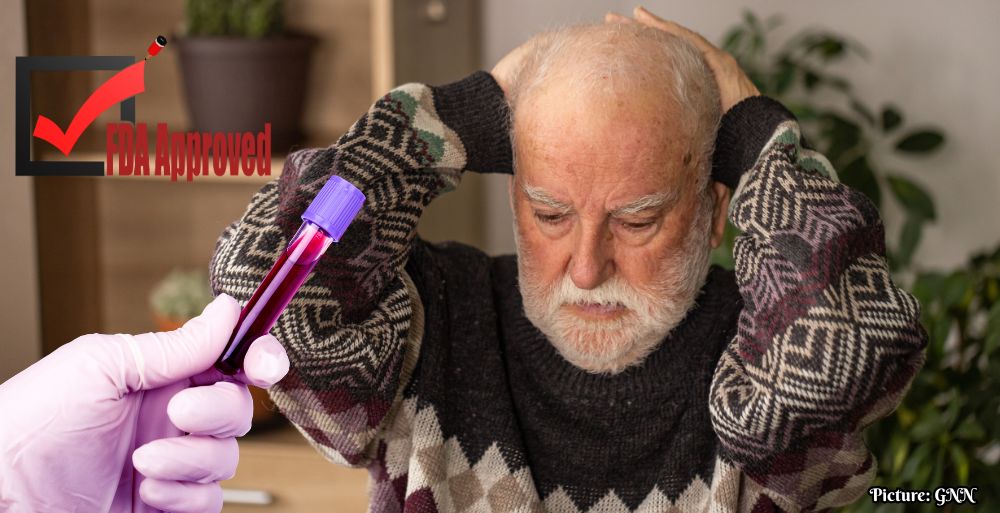
A recent FDA-approved blood test has the potential to detect Alzheimer’s disease up to a decade before the onset of symptoms, marking a significant shift in early intervention strategies for millions of Americans.
The U.S. Food and Drug Administration (FDA) has approved a groundbreaking blood test that can identify early signs of Alzheimer’s disease, potentially up to ten years before physical symptoms appear, a development that could significantly alter the landscape of Alzheimer’s diagnosis and treatment. With over 7 million Americans currently living with the neurodegenerative condition, and projections from the Alzheimer’s Association suggesting that this number could nearly double by 2050, the test provides an unprecedented opportunity for early intervention.
Dr. Robert Redfield, former director of the Centers for Disease Control and Prevention (CDC), emphasized the importance of this diagnostic breakthrough during a recent appearance on EWTN News Nightly. He described the approval of the blood test as a transformative advancement in modern medicine, stating, “The FDA has approved, actually, a blood test that can give you high suspicion that you have Alzheimer’s.” This innovation allows for proactive treatment options, enabling healthcare providers to act before irreversible cognitive decline sets in.
Understanding Alzheimer’s Disease
Traditionally, Alzheimer’s has been diagnosed only after a patient exhibits clinical dementia, which is the final stage of the disease. However, medical experts now recognize three distinct stages of Alzheimer’s: preclinical, mild cognitive impairment, and clinical dementia. The new blood test detects subtle brain changes and neuronal damage before symptoms such as memory loss and language difficulties manifest, allowing for interventions during a critical window when therapies are most effective.
Dr. Redfield has long advocated for early diagnosis, asserting that patients benefit from being diagnosed before they experience clinical symptoms. “I’ve been a big advocate of trying to get people to realize it’s to their advantage to get diagnosed early before they have clinical disease,” he explained, highlighting the advantages offered by the new blood test. This proactive approach can lead to better management of the disease and improved outcomes for patients.
A Call for Universal Screening
In light of this breakthrough, Dr. Redfield is calling on federal health officials to incorporate routine blood screenings for Alzheimer’s into standard adult healthcare practices. He argues that patients should not have to wait for symptoms to emerge before seeking a diagnosis. “I think they should be much more proactive,” he stated, proposing that all Americans over the age of 50 should undergo this blood test to assess for preclinical Alzheimer’s.
Dr. Redfield has made recommendations to key health officials, including Secretary Robert F. Kennedy and Dr. Mehmet Oz at the Centers for Medicare & Medicaid Services (CMS), suggesting that cognitive assessments through blood work should become as routine as checks for vital organs during annual Medicare wellness visits. “For those of us over 50 that begin to assess our mental function, we do everything to assess whether our heart is working and if our lungs are working, if our kidneys are working: We need to do the same thing in terms of Alzheimer’s,” he emphasized.
Bridging the Gap Between Innovation and Patient Care
Dr. Redfield’s advocacy for routine blood testing is informed by his recent return to clinical practice, which has revealed a gap between medical advancements and their application in patient care. While evaluating patients with cognitive dysfunction related to long COVID, he discovered cases of undiagnosed Alzheimer’s disease. “And one of the hallmarks in those patients is they have significant cognitive dysfunction. … Occasionally, I find that the patients not only have long COVID, but, lo and behold, when I worked them up, I find out they also have Alzheimer’s,” he shared. This experience has fueled his frustration regarding the slow adoption of new medical technologies in clinical settings.
The introduction of simple blood testing, coupled with new FDA-approved treatments and evidence-backed lifestyle modifications aimed at slowing disease progression, shifts Alzheimer’s from a condition previously viewed as untreatable to one that can be managed effectively. “Alzheimer’s is a very difficult disease. It’s a huge economic burden in the United States, not only for the patients but also for the caregivers,” Dr. Redfield noted. He emphasized the need for patients to confront the disease with courage and to seek effective management strategies.
The implications of this blood test extend beyond individual patients; they could reshape the healthcare system’s approach to Alzheimer’s, enabling earlier interventions and potentially improving the quality of life for millions of Americans affected by this devastating disease. Early detection could lead to more timely and effective treatments, reducing the long-term emotional and financial burden on families and the healthcare system.
As the healthcare community grapples with an aging population and the increasing prevalence of Alzheimer’s, the urgency for innovative approaches to diagnosis and treatment has never been greater. The FDA’s approval of this blood test represents a critical step forward in the fight against Alzheimer’s disease, heralding a new era in which proactive, preventive healthcare becomes the norm rather than the exception.






No Comment! Be the first one.