





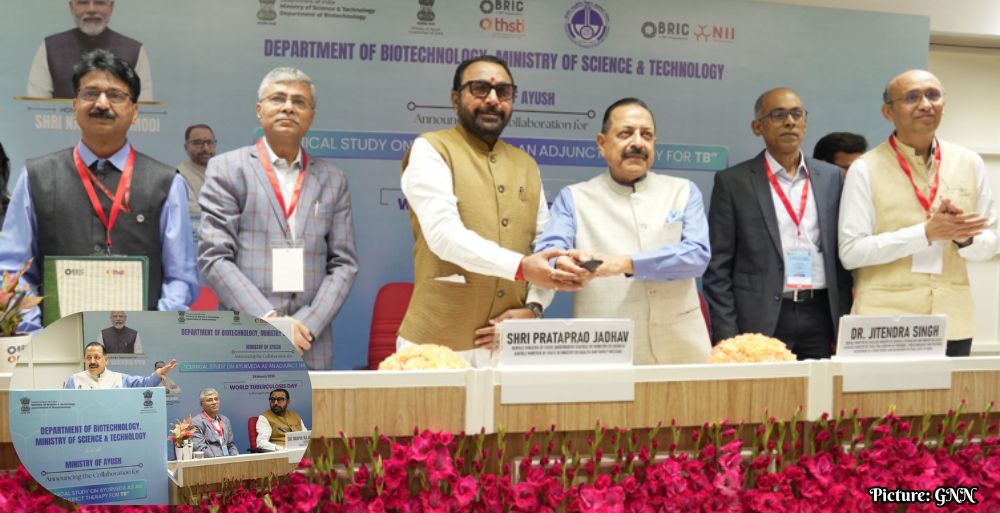
A groundbreaking clinical study has been initiated in India to evaluate Ayurveda as a complementary treatment for tuberculosis, involving 1,250 patients across eight institutions.
New Delhi: On March 25, 2026, India launched a pioneering global clinical study aimed at scientifically assessing the efficacy of Ayurveda as an adjunct to conventional treatments for tuberculosis (TB). This innovative study will involve the enrollment of 1,250 newly diagnosed TB patients across eight prominent institutions, focusing on various factors including body weight, nutritional outcomes, disease progression, quality of life, safety, and tolerability.
Minister’s Remarks on TB Treatment
During the launch event, Union Minister for Science and Technology Jitendra Singh emphasized the importance of comprehensive care for TB patients, stating, “Even after successful treatment, many TB patients continue to experience weakness, weight loss, and compromised quality of life, underlining the need for supportive and host-directed therapies.” He pointed out that India’s rich heritage of Ayurveda presents unique opportunities for enhancing patient recovery, particularly in areas related to nutrition, immunity, and overall health.
Current TB Landscape in India
According to the minister, India is home to nearly 25 percent of the global TB burden. However, the country has made significant strides in combating the disease, evidenced by a notable decline in TB incidence to approximately 187 cases per 100,000 population in 2024. This marks a 21 percent reduction since 2015, reflecting the effectiveness of ongoing public health initiatives.
Singh attributed these advancements to the ambitious strategies outlined in India’s National TB Elimination Programme, which focuses on strengthening early diagnosis, universal drug susceptibility testing, digital adherence technologies, and patient-centric care. The integration of Ayurveda into this framework represents a novel approach to enhance treatment outcomes for TB patients.
Collaboration and Development of the Study
The clinical study has been developed under a Memorandum of Understanding (MoU) signed between the Ministry of Ayush and the Department of Biotechnology on May 25, 2022. This collaboration signifies a concerted effort towards integrating traditional medicine with modern healthcare practices, ensuring a comprehensive approach to disease management.
The study’s protocol has progressed through various stages of consultation and approval, highlighting the commitment of both ministries to explore innovative solutions in public health. By combining the principles of Ayurveda with contemporary medical practices, the study aims to provide empirical evidence on the benefits of Ayurveda in the management of tuberculosis.
Historical Context of Tuberculosis in India
Tuberculosis has historically been a significant public health challenge in India, with the country accounting for a substantial proportion of global TB cases. The disease has affected millions, leading to a multifaceted response from the government and health sectors. Since the establishment of the Revised National Tuberculosis Control Programme in 1997, India has made considerable progress, with the introduction of Directly Observed Treatment, Short-course (DOTS) and subsequent enhancements in treatment protocols.
The latest figures indicate that India’s incidence rates are on a declining trend, thanks to the concerted efforts of healthcare providers and the government. The recent focus on integrating traditional treatments like Ayurveda into TB management could be pivotal in maintaining this trend and further reducing the disease burden.
Potential Impact on Health Policy
The implications of this study extend beyond individual patient care, potentially influencing broader public health policies. Should the findings support the efficacy of Ayurveda alongside conventional TB treatments, it may prompt health authorities to consider more integrative approaches in their future strategies. This could lead to the development of guidelines that encompass both modern and traditional medicine, promoting a more holistic approach to health care.
Furthermore, successful integration may provide a framework for similar studies in other areas of medicine, where traditional practices could complement modern treatments. This could foster a paradigm shift in how health care is approached in India, paving the way for more inclusive and diverse treatment options.
Future Directions and Research Opportunities
As the clinical study progresses, it will not only contribute to the understanding of TB treatment but also open avenues for further research into other diseases where Ayurveda may play a supportive role. The intersection of traditional and modern medical practices has the potential to enrich the healthcare landscape, providing innovative solutions to long-standing health challenges.
The significance of this study is also underscored by the global context of TB as a public health issue. The World Health Organization (WHO) has set ambitious targets for TB elimination, and India’s efforts in this direction will be closely watched by the international community. The outcomes of this research may not only impact local practices but could also serve as a model for other countries grappling with similar health issues.
Conclusion
In conclusion, India’s initiative to evaluate Ayurveda as a complementary treatment for tuberculosis represents a significant step towards integrating traditional medicine with modern healthcare. The outcomes of this study could reshape treatment protocols and health policies, enhancing the overall quality of care for TB patients. As the country seeks to eliminate TB by 2025, the commitment to exploring diverse treatment modalities reflects a progressive approach to health management in India.





No Comment! Be the first one.