





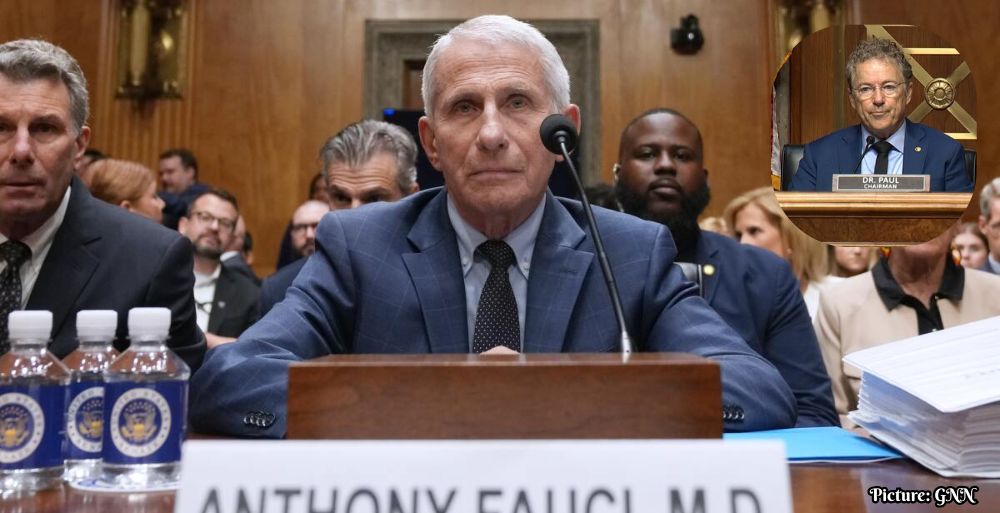
The Senate Homeland Security and Governmental Affairs Committee has voted to refer former chief White House medical adviser Anthony Fauci for contempt of Congress after he invoked his Fifth Amendment rights during a recent hearing focused on the COVID-19 pandemic.
On October 26, 2023, the Senate Homeland Security and Governmental Affairs Committee, chaired by Senator Rand Paul (R-Ky.), voted 8-5 along party lines in favor of a resolution to hold Anthony Fauci in contempt of Congress. This decision comes after Fauci invoked his Fifth Amendment rights 111 times during a hearing where he declined to answer questions regarding his role in the federal response to the COVID-19 pandemic.
Senator Paul emphasized the weight of the committee’s decision, stating, “Holding a witness in contempt is a serious thing, and it should be rare. But the contempt power exists for precisely this circumstance. Oversight is not a courtesy this committee extends or a favor a former official grants us. It is a constitutional obligation.” His remarks underline the contentious nature of the hearing and the broader narrative surrounding accountability in the federal response to the pandemic.
Details of the Hearing
The hearing, which was viewed by many as a pivotal moment in the ongoing investigation into Fauci’s actions, revolved around allegations of misleading statements made by Fauci regarding the origins of the COVID-19 virus and the funding associated with gain-of-function research. These accusations have gained traction among critics of Fauci, who argue that his guidance during the pandemic was not only misleading but potentially harmful.
Throughout the hearing, Fauci’s repeated invocation of the Fifth Amendment frustrated committee members who sought clarity on his roles and responsibilities during the pandemic. The refusal to answer questions has been interpreted by some as an indication of potential wrongdoing, while others view it as a necessary legal protection. It is important to note that invoking the Fifth Amendment is a constitutional right that protects individuals from self-incrimination.
Next Steps and Legal Implications
Following the committee’s vote, Senator Paul indicated his intention to forward the contempt referral directly to the Department of Justice (DOJ), bypassing the traditional step of seeking approval from the full Senate. Paul expressed his desire to expedite the process, stating, “I don’t want to waste time.” While the referral represents a significant escalation, it is ultimately up to the DOJ to determine whether to pursue charges against Fauci, as the referral does not constitute a legal mandate.
The contempt resolution’s timing and nature have raised questions about its constitutional implications, particularly in light of a pardon issued by President Biden that covers any offenses Fauci may have committed between January 1, 2014, and January 19, 2025. This pardon complicates the legal landscape, as it raises questions about whether Fauci retains his Fifth Amendment protections in this context.
Concerns Among Committee Members
Senator Gary Peters (D-Mich.), the ranking member of the committee, criticized the proceedings in a letter to his colleagues, arguing that a federal pardon does not eliminate an individual’s Fifth Amendment protections if they face a “real and appreciable” risk of prosecution. Peters condemned the committee’s actions as detrimental to future investigations, stating, “Following a one-sided investigation and a rushed process that has repeatedly excluded the minority and other members of this committee, the chairman is now asking the committee to take a vote that could harm our ability to conduct future investigations and disregards constitutional protections long recognized by the U.S. Senate.”
Democratic members of the committee, including Peters, Senators Richard Blumenthal (D-Conn.) and Maggie Hassan (D-N.H.), attempted to introduce motions to table the resolution, which were all defeated by the Republican majority. This party-line division highlights the broader polarization surrounding COVID-19 policy discussions and the scrutiny faced by public health officials.
Reactions from Fauci’s Legal Team and Broader Implications
In response to the contempt resolution, Fauci’s legal team has raised concerns about the implications of the charge, arguing that Senator Paul’s stated goal of imprisoning Fauci contradicts the assertion that he should be able to speak freely without fear of legal repercussions. In previous remarks, Paul had called for Fauci to be indicted for allegedly lying under oath regarding gain-of-function research, further complicating the situation in light of the pardon’s provisions.
This ongoing saga reflects broader tensions within Congress regarding accountability and oversight in the federal response to the pandemic. As lawmakers continue to navigate the implications of this vote, the situation remains fluid, with potential repercussions for both Fauci and the committee’s future investigations. The decision to hold Fauci in contempt has ignited a debate not only about his conduct but also about the standards of accountability that public officials should be held to, particularly in times of national crisis.
As this situation unfolds, it remains to be seen how the DOJ will respond to the committee’s referral and what further implications this may have for Fauci, the Senate committee, and the ongoing investigations into the federal response to the COVID-19 pandemic.






No Comment! Be the first one.