





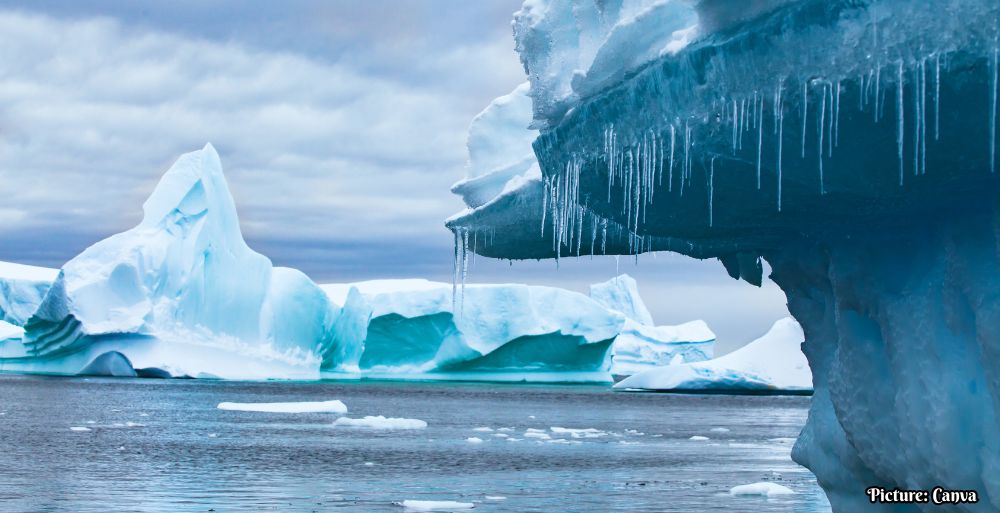
Antarctica’s Concordia research station recently recorded a chilling minus 119.4 degrees Fahrenheit, the lowest temperature documented on Earth since 2012, highlighting the continent’s extreme climate variability in the face of global warming.
CONCORDIA, ANTARCTICA — On July 18, 2026, the Concordia research station, located atop the Antarctic Plateau, registered a bone-chilling minus 119.4 degrees Fahrenheit, marking the lowest recorded temperature on Earth in more than a decade. This striking data point was logged twice in the early morning, at 6:25 a.m. and again at 6:34 a.m., as reported by Patrick Pester for Live Science.
Managed by Italy’s National Antarctic Research Program and the French Polar Institute Paul-Émile Victor, Concordia is perched on a 10,800-foot-thick ice cap, situated over 600 miles from the nearest coastline. The station previously recorded its all-time low of minus 120.5 degrees Fahrenheit in 2010, underscoring its reputation as one of the coldest inhabited places on the planet.
Understanding Antarctic Weather Patterns
Scientists stationed at Concordia are well-acquainted with extreme cold, often experiencing temperatures that plummet to minus 112 degrees Fahrenheit. However, the recent readings have drawn attention for their “remarkable” nature, according to Gabriele Carugati, an atmospheric chemist and glaciologist who oversees operations at the station. Carugati noted that the recent temperature extremes underscore the variability of weather conditions on the continent.
“Even in Antarctica, where temperatures regularly plunge to bitter depths, rising global temperatures—mainly spurred by human activity—are taking their toll,” Carugati stated. He further clarified that while climate change describes long-term global trends, individual weather events can still lead to exceptional cold. He emphasized that extreme temperatures recorded in one location do not contradict the broader narrative of global warming, as Antarctica’s weather is influenced by complex atmospheric dynamics.
Contrasting Temperature Extremes in Antarctica
The chilling cold at Concordia sharply contrasts with a significant temperature spike recorded just weeks earlier. On June 6, 2026, Argentina’s Esperanza base, located on the Trinity Peninsula at the northern tip of the Antarctic Peninsula, reported an unprecedented winter high of 59.7 degrees Fahrenheit. This temperature was part of an extraordinary heatwave that allowed temperatures to rise above freezing for three consecutive weeks. Raúl Cordero, a climatologist at the University of Groningen, described this phenomenon as “absolutely crazy,” noting it represented a staggering 36 degrees Fahrenheit above seasonal norms.
The juxtaposition of extreme cold and heat within a short timeframe exemplifies the unpredictable and varied climate of Antarctica. Such weather extremes are occurring alongside intense heat waves, droughts, and wildfires affecting parts of North America and Europe, conditions that are increasingly linked to human-induced climate change. Johan Rockström, director of the Potsdam Institute for Climate Impact Research, remarked on the broader implications of these changes, asserting, “2026 is just the beginning. It will inevitably get worse. We will reach a point where we’ll be passing the limits of adaptation.”
Historical Context of Temperature Records
The record for the lowest temperature ever recorded on Earth remains at minus 128.6 degrees Fahrenheit, documented at Russia’s Vostok Station in East Antarctica on July 21, 1983. This historical benchmark highlights the extreme climatic conditions that can be found in this remote and inhospitable region.
As the climate continues to shift, the consequences for the Antarctic ecosystem are severe. The warming of the surrounding Southern Ocean and the ongoing loss of ice in Antarctica pose significant risks to various species, including Antarctic krill, penguins, and Antarctic fur seals, all of which play crucial roles in the ecological balance of the region. The decline in sea ice affects the breeding and feeding habits of these species, threatening their survival.
The Broader Implications of Climate Change
The recent temperature extremes observed in Antarctica serve as a stark reminder of the continent’s climatic volatility and the broader implications of climate change. The interplay between record cold and unprecedented warmth within a relatively short period illustrates the complexity of global weather patterns, prompting urgent calls for continued scientific investigation into the impacts of human activity on the environment.
Experts stress that understanding these extremes is essential for developing effective climate policies and adaptation strategies. The variability in Antarctic temperatures not only impacts the local environment but also has far-reaching consequences for global weather systems and climate patterns. As such, ongoing research and monitoring efforts are critical to informing public policy and enhancing our understanding of climate dynamics.
In summary, the recent record-setting cold at the Concordia research station is a significant event that underscores the complexities of Antarctic weather and the urgent need for global attention to climate change. The stark contrast between this extreme cold and the earlier heatwaves exemplifies the unpredictable nature of climate phenomena, reinforcing the necessity for comprehensive climate action and research.






No Comment! Be the first one.