





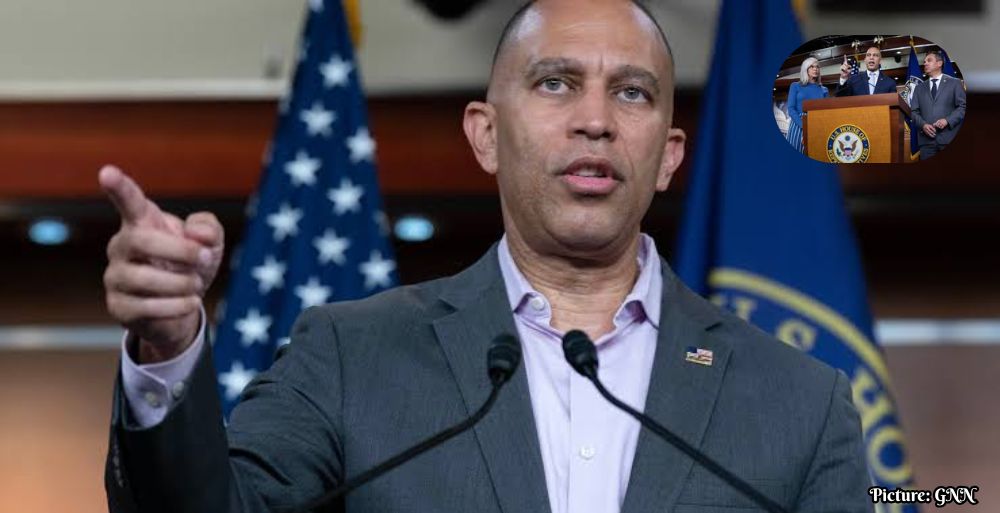
A recent vote in the House of Representatives revealed a significant divide among Democrats regarding U.S. support for Israel, as over 100 members backed a GOP-led amendment aimed at cutting aid to the country.
In a notable development highlighting the evolving dynamics within the Democratic Party, Rep. Brad Schneider of Illinois, a leader of the House’s centrist New Democrat Coalition, expressed his concerns over the growing division within his party regarding its stance on Israel. This shift was underscored earlier this week when more than 100 House Democrats supported a Republican-authored amendment to a State Department funding bill that proposed cutting U.S. aid to Israel. Despite the amendment ultimately failing amid near-unified opposition from Republican lawmakers, its backing by a substantial number of Democrats has sparked significant discussions about the future of the party’s foreign policy.
Schneider described the amendment as “hastily crafted” and “cynically introduced,” yet he acknowledged the support it garnered from his colleagues, many of whom have historically maintained a strong pro-Israel stance. The vote has been interpreted by some progressives as a landmark moment, indicative of a broader break with traditional Democratic support for Israel, which stems from long-standing frustrations over Israel’s treatment of Palestinians and its recent actions during the ongoing conflict in Gaza.
Context of the Vote
The vote to support the amendment occurred in a climate of heightened tensions surrounding the Israeli-Palestinian conflict. Progressives within the Democratic Party have increasingly voiced their discontent with U.S. policy towards Israel, particularly in light of the humanitarian crisis in Gaza. Many party members view the conflict as a significant moral issue, prompting them to re-evaluate their support for a nation that has historically been viewed as a key ally.
In response to the vote, Schneider emphasized the importance of unity within the Democratic Party, particularly as it relates to foreign policy and the Israeli-Palestinian conflict. “The goal in the Middle East in the Israeli-Palestinian conflict is to get security, stability, dignity, and a holy peace for the people in Israel, in Gaza, the West Bank, and the whole Middle East,” he stated in an interview. He further articulated a vision of finding common ground that recognizes both Israel’s security needs and Palestinian aspirations for sovereignty.
Leadership Dynamics
Schneider also addressed the leadership dynamics within the Democratic Party, particularly in relation to Minority Leader Hakeem Jeffries and Minority Whip Katherine Clark. Jeffries voted against the amendment, while Clark supported it, reflecting the varied perspectives within the caucus. Schneider expressed confidence in the party’s ability to navigate these differences, noting that Jeffries has managed to maintain cohesion among Democrats despite their differing views. “I think next year [if Democrats win the House] you’ll see that leadership take a step up to the next level,” he said, highlighting the challenges that lie ahead in fostering a unified approach to foreign policy.
Future Consensus Challenges
Looking ahead, Schneider acknowledged that while achieving consensus may be difficult, he believes that there is a shared commitment among Democrats to enhance safety and security for both Americans and allies worldwide. He remarked, “I suspect we will not get unanimity. … I think where Democrats almost universally come down is how do we make the world safer, more secure for Americans and for our allies around the world.” This statement reflects the growing complexity of aligning the party’s diverse ideologies, especially with the influx of more progressive members who may advocate for a more critical stance on Israel.
Impact of Netanyahu’s Leadership
Another factor contributing to the shift among Democrats is the unpopularity of Israeli Prime Minister Benjamin Netanyahu. Schneider noted that while he personally does not support Netanyahu, the issues at hand extend beyond the prime minister’s leadership, calling attention to the need for addressing settler violence in the West Bank. He emphasized that “addressing settler violence is critical” for ensuring Israel’s security and maintaining international support.
Disavowal of AIPAC Funding
The conversation around Israel and Palestine has also included discussions about campaign financing, particularly the influence of the American Israel Public Affairs Committee (AIPAC). Schneider remarked that individual members will ultimately make their own decisions regarding contributions from AIPAC, but he hopes to see more legislators focus on advancing peace rather than personal political ambitions. This reflects a broader trend among some Democrats to distance themselves from traditional funding sources that may conflict with their progressive values.
As the Democratic Party navigates this complex landscape, the implications for U.S. foreign policy and party unity remain uncertain. The recent vote signifies not only a pivotal moment in the party’s history but also an ongoing evolution of its stance on Israel, which could have lasting repercussions in the 2024 elections and beyond.





No Comment! Be the first one.