





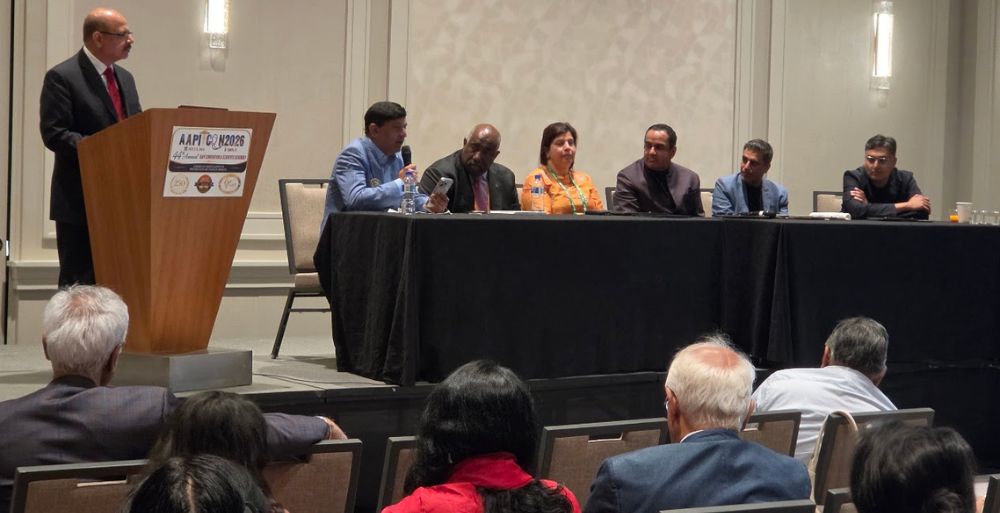
The 2026 AAPI Convention delivered one of its most comprehensive and future‑focused Continuing Medical Education (CME) programs, reflecting the organization’s commitment to elevating clinical excellence and strengthening the physician community. Spanning July 2–5, the CME tracks showcased emerging evidence, technological innovation, and culturally responsive care — all underscored by strong leadership guidance from AAPI’s national team.
Immediate past President of AAPI, Dr. Amit Chakrabarty highlighted the program’s breadth: “CME is the backbone of our convention. We wanted every session to offer practical takeaways that physicians can apply immediately in their practice,” he said. “From AI to lifestyle medicine to cardiology, we curated sessions that reflect where medicine is headed. AAPI continues to raise the bar for national medical education.”
AAPI President Dr. Meher Medavaram emphasized the centrality of CME to AAPI’s mission, noting, “Our physicians look to AAPI not just for community, but for cutting‑edge education. This year’s CME program demonstrates our promise to deliver knowledge that is timely, relevant, and transformative.”
Dr. Sagar Galwankar, Chair of AAPICON 2026, framed the CME agenda as part of AAPI’s long‑term vision: “Our goal is to prepare physicians for the next decade of healthcare. These sessions reflect the future — precision medicine, digital health, and physician wellbeing.”
Lifestyle Medicine: Prevention, Precision, and Physician Identity
Moderated by Dr. Pavan Panchavati, the Lifestyle Medicine track opened the convention with a forward‑looking focus on prevention and personalized care. Drs. BK Kishore, Murthy Gokula, and Panchavati explored AI‑based precision lifestyle medicine, signaling a shift toward data‑driven metabolic health interventions.
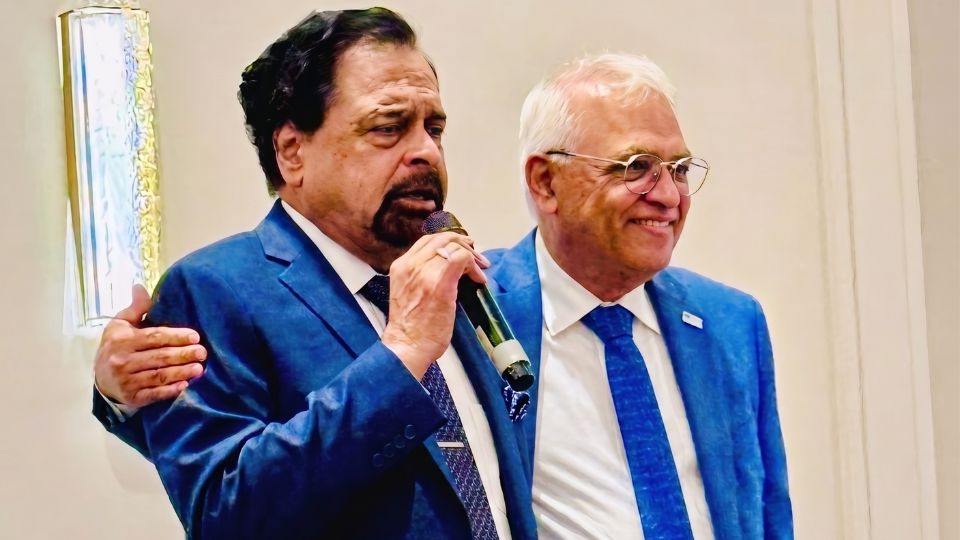
Dr. Hetal Gor’s session on perimenopause and menopause transitions addressed a critical gap in women’s health education, while Dr. Amit Shah introduced an Ayurvedic lens to chronic inflammation management.
Dr. Sashi Kuppala’s discussion on biological age reversal and Dr. Saravadamn Pathak’s talk on physician resilience and identity resonated deeply with attendees navigating post‑pandemic professional challenges.
Primary Care: Diagnostics, Pain, and Genomic Screening
Under the leadership of Dr. Kavita Jyotula, the Primary Care track examined diagnostic complexity and evolving screening strategies. Dr. Rajan Subbiah highlighted the rise of wearable‑based sleep diagnostics, while Dr. Sadhana Basin provided a global perspective on celiac disease in India.
Dr. Raj Pandya reinforced evidence‑based approaches to acute pain management, and Dr. Arthi Sanjeevi closed with a compelling session on inherited cancers and precision screening, aligning with national trends in genomics‑driven preventive care.
President’s Invited Session: High‑Impact Clinical Updates
The President’s Invited Session delivered concise, high‑yield updates across cardiology, ophthalmology, pediatrics, and physician wellbeing. Dr. Rakesh Sharma presented two rapidly evolving cardiology topics — renal denervation and mechanical circulatory support — while Dr. Vivek Lal emphasized early recognition of acute vision loss.
Dr. Sanjay Aurora’s session on physician wellbeing reinforced AAPI’s holistic approach to clinician health, and Dr. Praful Bhatt provided a timely pediatric update on vaccine‑preventable diseases.
Young Physicians Section: Leadership, Media, and Regenerative Medicine
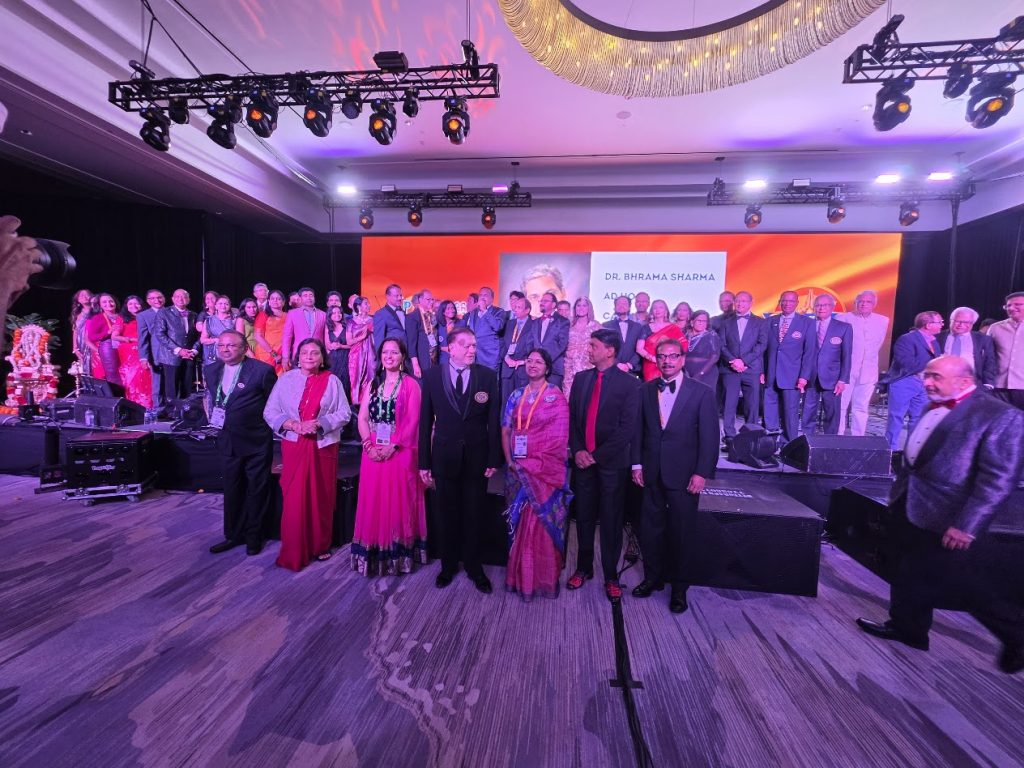
Moderated by Drs. Gautham Kamthan and Sonia Samtani, the Young Physicians Section blended professional development with emerging clinical innovation. Dr. Agam Dhawan’s session on personal branding and Dr. Purvi Parikh’s media training workshop reflected the growing importance of public communication in healthcare leadership.
Clinical innovation took center stage with Dr. Amar Shere’s heart health strategies, Dr. Devdutta Sangvai’s insights on public service roles, and Dr. Shivani Amin’s forward‑looking lecture on stem cell and peptide‑based regenerative medicine.
Artificial Intelligence in Medicine: Ethics, Deployment, and Autonomous Care
The AI in Medicine track, led by Drs. Vikas Khurana and Suresh Reddy, showcased AAPI’s strongest alignment with future‑ready healthcare. Dr. Vidur Mahajan outlined a platform‑based approach to clinical AI deployment, while Dr. Ritu Khurana addressed ethical and practical considerations in responsible AI. Dr. Ashish Atreja concluded with a visionary session on autonomous care models.
Cardiology Update: Risk, Technology, and Transplant Advances
Moderated by Drs. Navin Nanda and Vemuri Murthy, the cardiology track delivered a comprehensive update on cardiovascular risk and intervention. Dr. Nanda’s lecture on non‑traditional risk factors in Asian Indians provided culturally relevant insights for AAPI clinicians.
Dr. Koushik Reddy’s “Confessions of a Cardiac Stent Man” offered a candid look at interventional practice, while Dr. Atul Prakash highlighted breakthroughs in electrical disorder management. Updates on out‑of‑hospital cardiac arrest and transplant medicine rounded out the session.
Substance Abuse & Human Microbiome: Clinical Challenges and New Frontiers
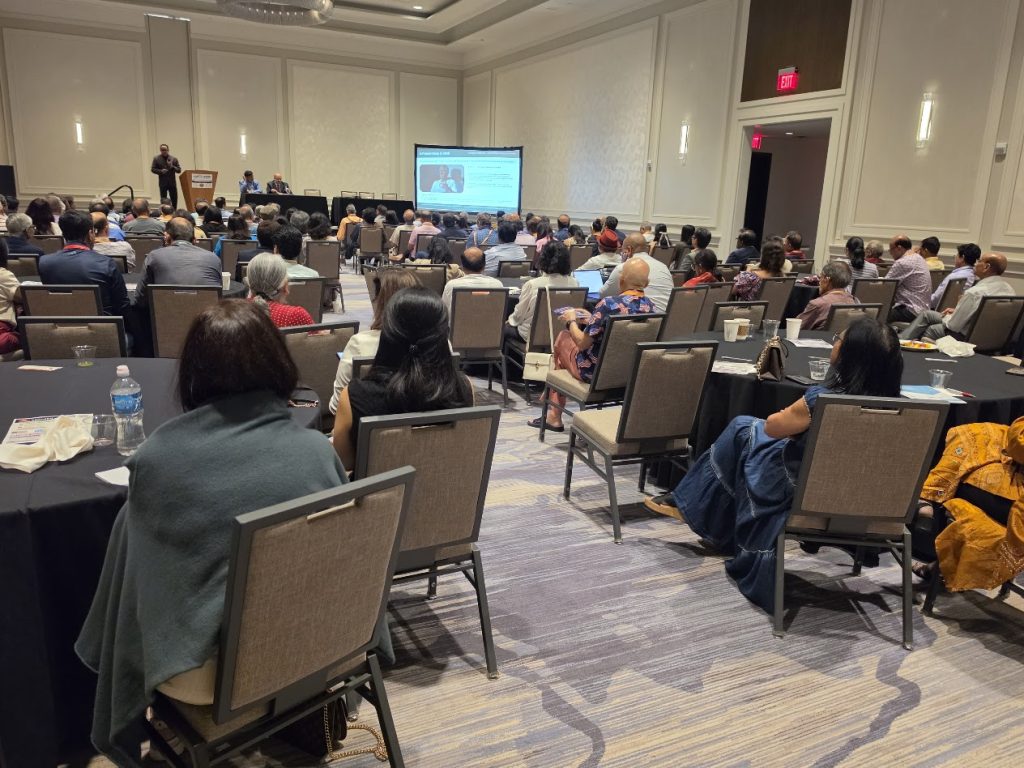
The final CME track, moderated by Dr. Tarak Vasavada, addressed two rapidly evolving areas. Dr. Srinivasa Gokarakonda clarified misconceptions surrounding medical marijuana, while Dr. Seema Arora provided practical frameworks for office‑based treatment of substance use disorders.
Dr. Vasavada’s own session on benzodiazepine management offered guidance on safe prescribing and tapering, and Dr. Sripathi Kethu concluded with an accessible overview of the human microbiome.
Continuing Medical Education remains one of the most vital commitments a physician can make — a deliberate investment in staying current, staying skilled, and staying connected to the evolving science of care. CMEs at AAPICON 2026 ensured that doctors are not only keeping pace with medical innovation but leading it, translating new knowledge into better outcomes for every patient they serve.
For more details, please visit: www.aapiusa.org





No Comment! Be the first one.