





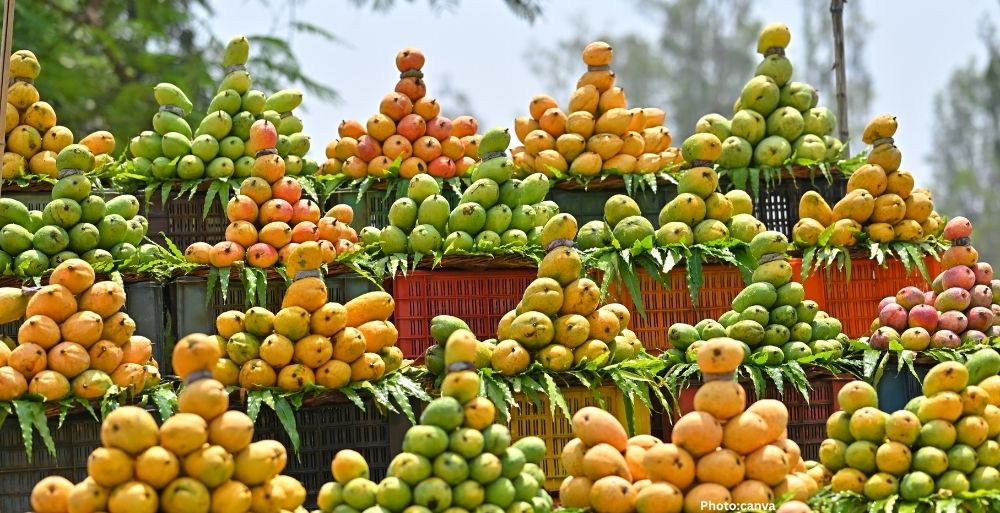
Hundreds flocked to Dupont Circle for the annual Mango Festival, showcasing India’s rich horticultural offerings and highlighting the growing demand for Indian mango varieties in the U.S.
On Saturday, Dupont Circle in Washington, D.C., transformed into a vibrant celebration of Indian culture as hundreds of visitors gathered to sample a wide array of Indian mangoes during the annual Mango Festival. This event, organized by the Embassy of India in Washington in collaboration with the Agricultural and Processed Food Products Export Development Authority (APEDA), the Department of Commerce, and the Dupont Circle Business Improvement District, aims to promote India’s rich agricultural heritage and foster cultural exchange.
The festival featured several renowned Indian mango varieties, including Alphonso, Kesar, Dasheri, Langra, Banganapalli, Chausa, Malda, and Rajapuri. These premium fruits are celebrated not only for their unique flavors and textures but also for their cultural significance within Indian cuisine. Indian Ambassador to the United States, Vinay Mohan Kwatra, noted that the festival has seen substantial growth and has become a highly anticipated annual event. He emphasized the festival’s role in bringing people together to enjoy Indian cuisine and culture.
“If you go around Dupont Circle… you will find multiple… queues of people essentially wanting to taste the Indian mango,” said Kwatra, highlighting the enthusiastic turnout. He expressed joy at seeing people engage with Indian culinary traditions, stating, “People are joyful. People are enjoying, we feel happy about it.”
Growing Demand for Indian Mangoes
The demand for Indian mangoes has surged, with Kwatra noting that they often sell out before they even reach store shelves. “We need to have more quantities of mango coming in, but invariably they come, and they are sold even before they find shelf space,” he remarked, indicating a significant opportunity for increased importation of these beloved varieties.
Festival attendees echoed the ambassador’s sentiments, many expressing their delight after sampling the exotic fruits. One visitor, Crystal, passionately described her favorite, the Rajapuri variety: “I’ve heard a lot of fantastic stories about Indian mangoes… this is so different, and it’s like sweet and soft, and it’s great. I love it.”
Another attendee, David Woodhead, shared how the taste of the mangoes transported him back to India. “These mangoes, as soon as I tasted them, it’s just like I sat on a time machine and went back to India,” he said, emphasizing the rich flavor that distinguishes them from commonly available mangoes in the U.S. “We can’t get this in the US, and these mangoes are just different,” he added.
Radha, another visitor, compared Indian mangoes to their Mexican counterparts, noting the distinct flavor profiles. “We do take the Mexican mangoes from the Indian store. But… they don’t have the same flavor I just had… it’d be good if we had more of those. The flavors are really very distinct,” she explained, underscoring the unique cultural and culinary experience offered by Indian mangoes.
Market Expansion Initiatives
The enthusiastic response from festival-goers has prompted Indian exporters to consider expanding their offerings in the U.S. market. Ravi Soni, an exporter participating in the festival, shared insights about his company’s growth plans. “We’ve been supplying various varieties from India, trying to increase the number of varieties from just four to five to almost 15 to 20 next year,” he stated. Soni also mentioned that visitors can expect “much more affordable” Indian mangoes and a wider selection in the coming year, indicating a proactive approach to meet the growing demand.
India is recognized as the world’s largest producer of mangoes, cultivating hundreds of varieties across its diverse agricultural regions. However, only a limited number of these varieties are exported due to stringent phytosanitary regulations and the specialized treatments required for shipment. Premium mango varieties such as Alphonso, Kesar, and Banganapalli have developed a loyal following among the Indian diaspora and an increasingly curious American consumer base.
In recent years, exports of Indian mangoes to the United States have steadily increased, facilitated by APEDA and approved irradiation facilities, which ensure compliance with U.S. import regulations. Events like the annual Mango Festival play an essential role in promoting awareness of Indian agricultural products, strengthening agricultural trade, and fostering deeper connections between the people of India and the United States.
Broader Implications for Agricultural Trade
The Mango Festival not only highlights the culinary significance of Indian mangoes but also illustrates the potential for expanding agricultural trade between the two countries. By increasing the visibility and availability of Indian mangoes in the U.S. market, organizers hope to enhance consumer awareness and appreciation of Indian agricultural products.
As U.S. consumers become more interested in diverse food options, the festival serves as a platform to educate the public about the benefits of Indian mangoes. This initiative aligns with broader trends in the food industry, where there is a growing demand for unique and high-quality produce. The success of the festival could encourage more Indian exporters to enter the U.S. market, thereby enriching the variety of fruits available to American consumers.
In conclusion, the annual Mango Festival in Washington not only celebrates the rich flavors of Indian mangoes but also highlights the growing cultural and economic ties between India and the United States. As the demand for these premium varieties continues to rise, both exporters and consumers stand to benefit from the expanding presence of Indian mangoes in the U.S. market.





No Comment! Be the first one.