





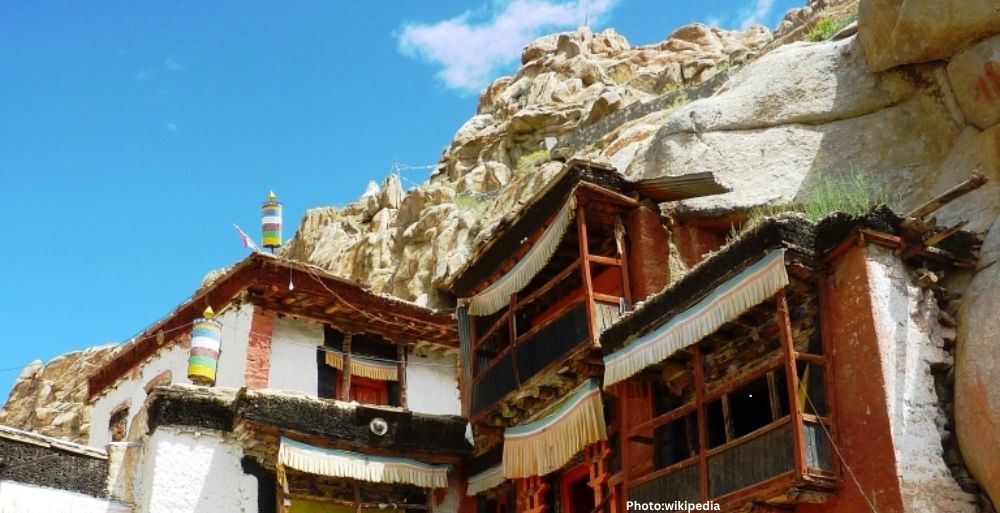
In response to increasing water scarcity due to climate change, Himalayan villages in Ladakh have implemented innovative ice reservoir systems to ensure crop irrigation during the short growing season.
At an altitude of nearly 4,000 meters (13,000 feet), the village of Sakti in Ladakh faces severe challenges for agricultural sustainability due to climate change. Farmers like Gelak Gutme, who has cultivated crops such as wheat, peas, and potatoes for over 65 years, are grappling with diminishing water resources as local glaciers retreat. Gutme notes, “Now there is scarcity of water. Last year I lost everything – my entire field got dried due to lack of water.”
The region, characterized by extreme weather conditions and a short growing season, has seen significant changes in its hydrology over the past decades. According to Lobzang Fardod, a member of the local water management committee, the glaciers that once served as reliable water sources have largely disappeared. “For generations, small glaciers sitting right above the valleys acted like frozen water towers,” he explains. The loss of these glaciers has left farmers without a reliable water supply, which is critical for planting crops by May, the onset of the short summer.
Developing Ice Reservoirs
To address this pressing issue, several villages in Ladakh have turned to an innovative approach by creating artificial glaciers, or ice stupas. This method involves piping water from higher altitudes during winter and spraying it into the air to form large towers of ice. While the initial attempts at constructing ice stupas provided some relief, they were challenging to manage due to extremely low winter temperatures that often caused pipes to freeze and break.
“The system was a nightmare to manage under harsh winter conditions,” Fardod recalls. Farmers would camp near water sources to monitor and manage the systems, often working through the night to prevent blockages. However, the emergence of new technology has revolutionized this method. Murtaza Ali, an executive engineer with the Irrigation and Flood Control Division at the Ladakh Autonomous Hill Development Council, notes that traditional water systems have become increasingly ineffective, prompting local communities to innovate in hydraulic engineering.
Automated Ice Reservoirs
In recent years, a partnership with the private company Acres of Ice has led to the development of the Automated Ice Reservoir (AIR) system. This upgraded method improves efficiency by using vertical jets of water to create ice more effectively. Dr. Suryanarayanan Balasubramanian, the founder of Acres of Ice, explains that the system operates under precise conditions, utilizing a weatherproof control box powered by solar energy. This system is equipped with sensors that monitor environmental conditions and can automatically adjust operations to prevent freezing and cracking of pipes.
The AIR system significantly enhances the process of ice formation by utilizing bursts of mist rather than a continuous stream of water. Balasubramanian states, “The system waits precisely long enough for that layer of water droplets to freeze solid based on current wind and humidity, then fires the spray again.” This method allows for nearly all diverted water to be converted into ice, providing a reliable source of meltwater during the spring months.
Impact on Local Agriculture
As of the winter of 2025, ten AIR projects have been implemented across Ladakh, indicating a growing commitment to combat water scarcity in the region. According to Ali, these systems have begun to show positive effects on local water supplies. “When we speak to the villagers, they are saying the groundwater is getting recharged and spring sources are getting revived. They are getting water in time,” he reports.
Farmers like Gutme are optimistic about the potential of these systems to improve their agricultural prospects. He expresses hope that his village will implement additional AIR systems to further enhance water availability. “I am a farmer, land is all that I have to survive on. I don’t know the technology, all that I know today is that I have water to grow my crops,” he explains. The success of these systems is critical not only for agricultural sustainability but also for retaining local populations. Gutme notes that the lack of water had previously driven many youths to seek opportunities in urban areas, which could have detrimental effects on rural community life.
As Ladakh continues to face the challenges posed by climate change, the innovative approaches taken by its communities highlight the potential for grassroots solutions to environmental crises. With ongoing support and advancements in technology, the future of agriculture in this remote region may be more secure than it once seemed.





No Comment! Be the first one.