





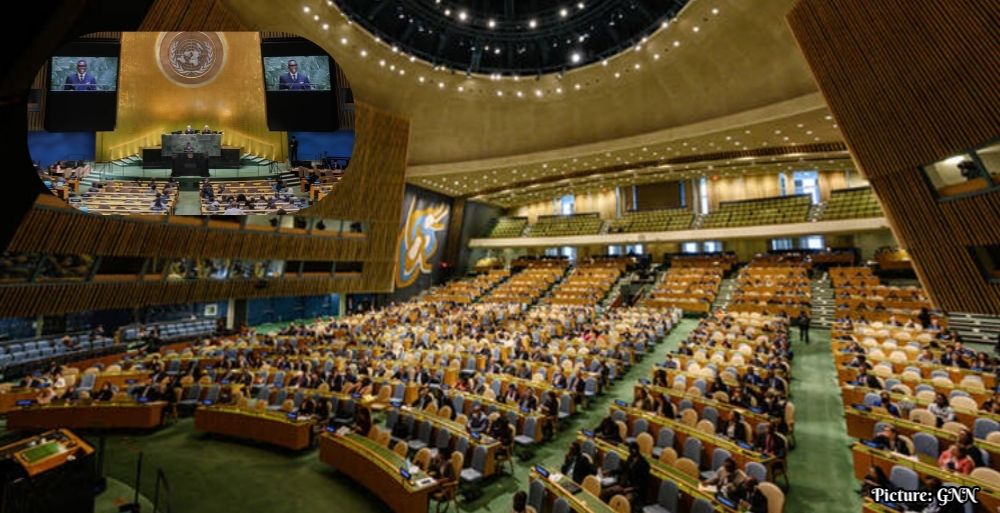
The UN General Assembly has passed a significant climate resolution, reflecting a growing political momentum for climate action, despite notable opposition from major fossil fuel-producing nations.
The United Nations General Assembly voted on Wednesday to adopt a landmark resolution aimed at bolstering international climate action, marking a pivotal moment in global efforts to combat climate change. The resolution, spearheaded by Vanuatu, received overwhelming support, with 141 nations voting in favor, while eight countries, including the United States and several major oil producers, opposed it.
Prime Minister Jotham Napat of Vanuatu described the outcome as the beginning of a “new chapter” in climate action, emphasizing the need for legal clarity to translate into meaningful efforts to curb greenhouse gas emissions. “The task before all of us now is to translate legal clarity into meaningful action, stronger cooperation, and greater protection for present and future generations,” he stated.
Resolution Details and Context
The resolution builds upon the advisory opinion issued by the International Court of Justice (ICJ) in 2025, which recognized the legal responsibilities of states to address climate breakdown. While the opinion was initially seen as a historic victory for vulnerable small island nations, its impact as a diplomatic tool has been limited thus far.
Vanuatu’s successful negotiations for the new resolution involved extensive discussions and compromises. Co-sponsored by 90 countries, the resolution calls for a transition away from fossil fuels in a “just, orderly, and equitable manner” to achieve net-zero emissions by 2050. It also urges the phased elimination of “inefficient fossil fuel subsidies that do not address energy poverty or just transitions as soon as possible.” However, the resolution notably refrains from attributing responsibility to any specific nation.
Political Dynamics
The resolution’s passage did not achieve the unanimous support that Vanuatu had hoped for, with 28 nations abstaining from the vote and eight voting against it. Among those opposing the resolution were some of the world’s largest oil and gas producers, including the US, Saudi Arabia, Russia, Belarus, Iran, Israel, Yemen, and Liberia.
The vote’s timing follows the inaugural fossil fuel phaseout conference held last month in Santa Marta, Colombia, and reflects increasing pressure on governments to address the climate crisis amid an evolving energy landscape. Rebecca Newsom, the global political lead at Greenpeace International, noted that the momentum for political action is clearly growing. “Governments must now translate this resolution into tangible roadmaps to equitably phase out fossil fuel exploitation, production, and consumption,” she emphasized.
Domestic and International Implications
Experts suggest that the resolution may serve as a catalyst for domestic litigation and legislative action concerning climate goals. Harj Narulla, a barrister at Doughty Street Chambers in London, pointed out that while the resolution may not directly alter current legal frameworks, it adds significant political weight to the ICJ’s opinion, which judges are likely to consider. Narulla remarked, “This resolution won’t change that, but it does add great political weight behind the opinion which judges take notice of, even if they won’t say it publicly.”
Joie Chowdhury, climate justice and accountability manager at the Center for International Environmental Law, noted that the ICJ’s findings have already influenced nationally determined contributions (NDCs), with the resolution potentially encouraging nations to align their climate plans with the advisory opinion. However, Narulla cautioned that the resolution’s influence on climate diplomacy might be more significant, suggesting that the UN General Assembly could emerge as a critical forum for climate discussions if progress stalls in other venues.
Opposition and Future Outlook
Despite the overwhelming support for the resolution, significant opposition remains from major fossil fuel producers, who contest any legal obligations to reduce greenhouse gas emissions. US Ambassador Tammy Bruce criticized the resolution prior to the vote, claiming it unfairly targeted certain groups and made alarmist assertions about the severity of climate change.
Narulla argued that the votes against the resolution do not diminish its impact. He stated, “At this point, we expect large fossil fuel producers like the US and Saudi Arabia to oppose any meaningful diplomatic progress on climate change. What’s impressive is that beyond this small group, such an overwhelming majority was secured – including many states wholly dependent on fossil fuels.”
As nations prepare for upcoming climate discussions, including a meeting of world leaders in Tuvalu in October and the COP31 global climate talks in Turkey, the focus will likely remain on how to effectively implement the resolution’s directives in the face of ongoing resistance from major economies.






No Comment! Be the first one.