




University of Hong Kong Researchers Develop Innovative Stainless Steel for Green Hydrogen Production

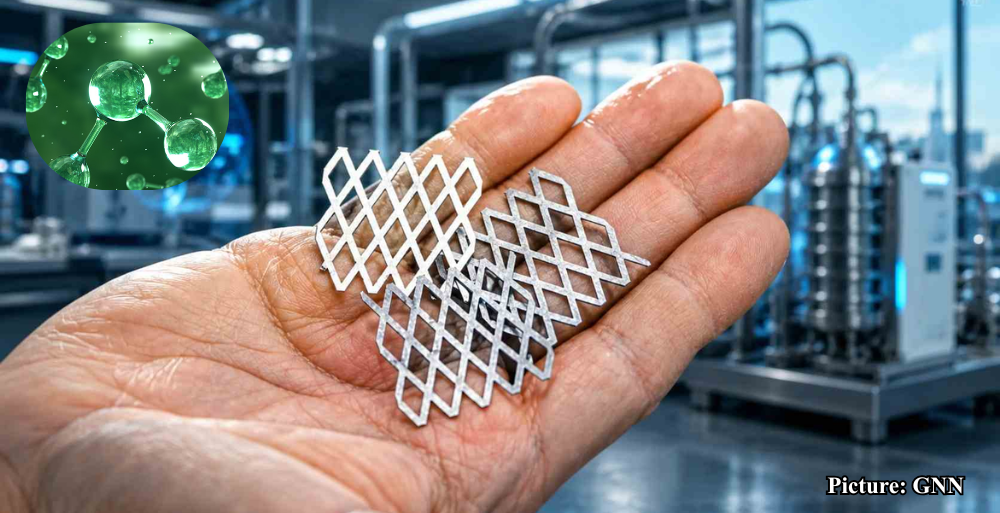
A new type of stainless steel developed by researchers at the University of Hong Kong aims to address significant challenges in the production of green hydrogen from seawater, offering a cost-effective solution to enhance durability and efficiency in electrolyzers.
A research team led by Professor Mingxin Huang at the University of Hong Kong (HKU) has made a groundbreaking advancement in stainless steel technology, which could play a pivotal role in the production of green hydrogen. The newly developed material, referred to as special stainless steel for hydrogen production (SS-H2), demonstrates remarkable resistance to corrosion in environments that typically challenge conventional stainless steel, making it a potential game-changer for large-scale clean energy production.
The findings of this research were published in the journal Materials Today as part of a study titled “A sequential dual-passivation strategy for designing stainless steel used above water oxidation.” This work builds on Huang’s ongoing “Super Steel” Project, which has previously yielded innovations, including anti-COVID-19 stainless steel in 2021 and ultra-tough Super Steel variants in 2017 and 2020.
A Cheaper Path Toward Green Hydrogen
Green hydrogen is produced by utilizing electricity, ideally sourced from renewable resources, to electrolyze water into hydrogen and oxygen. Seawater, due to its abundance, presents an attractive feedstock for this process. However, the presence of salt, chloride ions, and other corrosive elements poses a significant challenge to the longevity and effectiveness of electrolyzer components.
Recent literature surrounding direct seawater electrolysis has consistently highlighted corrosion, catalyst degradation, and the effects of chlorine-related side reactions as critical barriers to commercial viability. These challenges have hampered the development of sustainable hydrogen production methods, necessitating innovative solutions.
The HKU team’s SS-H2 stainless steel has shown performance levels comparable to titanium-based materials currently utilized in industrial practices for hydrogen production from desalted seawater or acidic environments. The substantial difference lies in cost; while titanium components, often coated with precious metals like gold or platinum, are prohibitively expensive, stainless steel offers a far more economical alternative.
According to estimates provided at the time of the HKU report, the cost of a 10-megawatt polymer electrolyte membrane (PEM) electrolysis system was projected to be approximately HK$17.8 million, with structural components accounting for up to 53% of total expenses. The HKU team suggested that substituting expensive structural materials with their SS-H2 could potentially reduce costs by about 40 times.
Why Ordinary Stainless Steel Fails
Stainless steel has long been favored for use in corrosive environments due to its self-protecting properties. The primary element responsible for this is chromium, which, upon oxidation, forms a thin passive film that shields the steel from damage. However, this protective mechanism has limitations; conventional stainless steel experiences breakdown of the chromium oxide layer at high electrical potentials, leading to transpassive corrosion at approximately 1000 mV, well below the 1600 mV required for effective water oxidation.
Even advanced alloys like 254SMO, known for their resistance to pitting in seawater, cannot withstand the extreme electrochemical conditions present in hydrogen production. This limitation has necessitated the search for materials that can perform reliably in such harsh environments.
The Steel That Builds a Second Shield
The innovative approach taken by the HKU research team involved a novel strategy known as “sequential dual-passivation.” Rather than relying solely on the conventional chromium oxide barrier, SS-H2 establishes a secondary protective layer. Initially, a chromium oxide layer forms, followed by the development of a manganese-based layer at approximately 720 mV. This dual-layer system enhances protection against chloride-rich environments, allowing the steel to endure ultra-high potentials of up to 1700 mV.
Dr. Kaiping Yu, the lead author of the study, expressed surprise at the effectiveness of the manganese-based passivation, stating, “Initially, we did not believe it because the prevailing view is that manganese impairs the corrosion resistance of stainless steel. However, when numerous atomic-level results were presented, we were convinced.” This unexpected finding challenges existing knowledge in corrosion science and opens new avenues for further research.
A Six Year Push From Surprise to Application
The journey from the initial discovery of the unique stainless steel to publication was extensive, spanning nearly six years. Professor Huang remarked on the distinct focus of their research group, stating, “Different from the current corrosion community, which mainly focuses on the resistance at natural potentials, we specialize in developing high-potential-resistant alloys.” This innovative strategy aims to overcome the fundamental limitations associated with traditional stainless steel, paving the way for new alloy development paradigms.
The research has progressed beyond theoretical frameworks, with patent applications filed in multiple countries and two patents already granted at the time of the announcement. The team has also reported the production of tons of SS-H2-based wire in collaboration with a manufacturing facility in Mainland China.
Why the Timing Still Matters
With the publication of the SS-H2 study in 2023, the relevance of its findings has only intensified. Ongoing research in seawater electrolysis continues to grapple with similar challenges related to corrosion-resistant materials and electrode longevity. A 2025 review in Nature Reviews Materials echoed the potential of direct seawater electrolysis while acknowledging persistent obstacles, including corrosion and metal precipitates.
Recent studies have also explored the use of stainless steel electrodes with protective catalytic layers and corrosion-resistant anode strategies as part of efforts to make seawater electrolysis more practical. The continued focus on stainless steel highlights its significance in the pursuit of viable solutions for hydrogen production.
A Steel Breakthrough With Clean Energy Potential
While the SS-H2 material is not yet a fully developed solution for the hydrogen economy, its potential is evident. The ability of this stainless steel to withstand high-voltage seawater conditions while providing a cost-effective alternative to titanium components could significantly enhance the feasibility of hydrogen production from renewable sources.
In a sector where cost-effectiveness and durability are crucial for technology deployment, the development of a steel that can create its own protective shield represents not just a scientific breakthrough but a promising step toward achieving cleaner hydrogen production at an industrial scale.






No Comment! Be the first one.