New Research Identifies Universal Thermal Performance Curve Limiting Evolutionary Adaptation
This article discusses groundbreaking research that reveals a Universal Thermal Performance Curve (UTPC), indicating limits to evolutionary adaptability in organisms as temperatures rise due to climate change.
An international team of researchers has introduced a significant advancement in the understanding of how temperature influences biological performance across diverse life forms. Their study, published in the Proceedings of the National Academy of Sciences, proposes a Universal Thermal Performance Curve (UTPC) that serves as a mathematical model for evaluating how various organisms adapt to temperature changes. This research challenges long-held assumptions in evolutionary biology and carries critical implications for the future of ecosystems as global temperatures continue to rise.
Historical Context of Evolutionary Adaptability
Historically, biologists have operated under the premise that evolution allows species to adapt effectively to environmental changes over extended periods. This perspective has been particularly prevalent in discussions surrounding climate change, where the belief was that species could adjust to increasing temperatures. However, recent findings indicate that there are inherent limits to this adaptability, especially as global temperatures escalate due to anthropogenic climate change.
The research team, led by Ignacio Peralta-Maraver from the University of Granada in Spain, analyzed performance data encompassing over 2,700 species and more than 30,000 individual measurements to formulate the UTPC. This comprehensive analysis provides a new lens through which to view the relationship between temperature and biological performance.
Developing the Universal Thermal Performance Curve
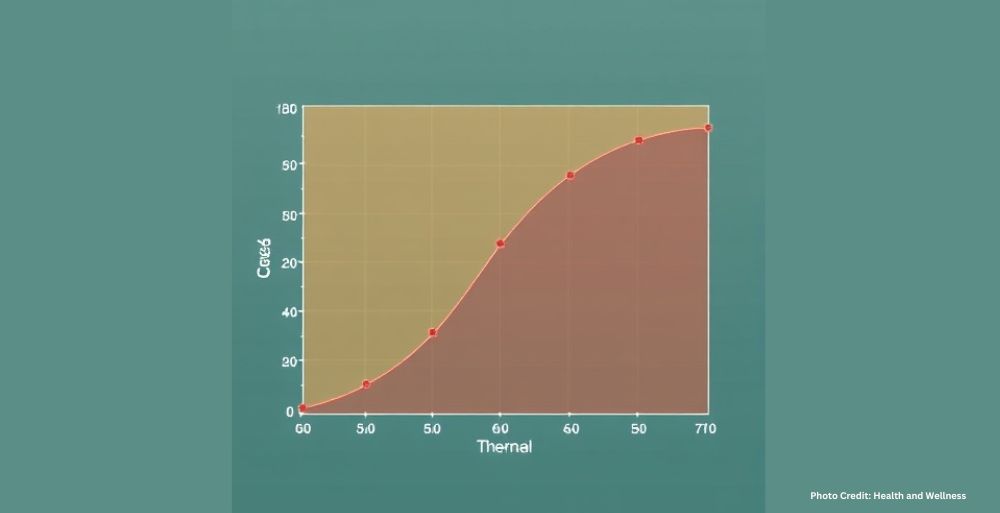
The UTPC proposes that various thermal performance curves, which were previously considered unique to individual species, can be rescaled to conform to a single universal shape. This curve illustrates how biological performance parameters—such as growth rates, metabolic functions, and reproductive success—respond to temperature changes, revealing a consistent pattern across life forms.
Peralta-Maraver emphasized the significance of the UTPC, stating, “This model could become a new standard in the ecology and physiology of global warming.” The implications extend beyond theoretical biology, suggesting a framework for assessing how different species respond to thermal stress, which is increasingly relevant as climate change accelerates.
Key Findings on Biological Performance and Temperature
The study elucidates that as temperatures rise, biological performance generally increases up to an optimal threshold. Beyond this point, even slight increases in temperature can lead to a rapid decline in performance, potentially resulting in mortality or reproductive failure. This pattern poses particular risks for organisms that are already adapted to warmer climates, such as those found in tropical regions, where their optimal temperature thresholds may be perilously close to current conditions.
Recent assessments indicate that global temperatures have already increased by approximately 2 degrees Fahrenheit since the late 19th century, leading to stress in various species that may push them beyond their performance limits. The research highlights that organisms residing in regions with low natural temperature variability tend to exhibit narrower heat tolerance ranges, making them especially vulnerable to climatic shifts. Tropical species, in particular, may operate near their upper thermal thresholds, leaving them exposed as climate conditions continue to fluctuate.
Implications for Conservation and Resource Management
The UTPC provides a valuable tool for conservation efforts and resource management strategies. By integrating this model into predictive frameworks, researchers and conservationists can identify species and ecosystems at elevated risk due to rising temperatures. With sufficient trait data, it becomes possible to pinpoint which organisms are most susceptible to even minor increases in temperature, thereby facilitating proactive measures to protect vulnerable ecosystems.
This research also raises further questions about whether any species might deviate from this universal pattern. By identifying outliers—species that consistently perform well beyond expected thermal limits—scientists can investigate unique biological traits or adaptations that enable them to thrive under extreme conditions.
Future Research Directions and Broader Implications
The findings of this study lay a foundation for a deeper examination of the interactions between climate change and evolutionary biology. Establishing a common mathematical model allows researchers to explore the limits of life on Earth amid ongoing environmental changes. The UTPC not only clarifies complex biological processes but also enhances understanding concerning the potential impacts of climate change on global biodiversity.
As the scientific community and policymakers confront the realities of a warming planet, this research underscores the urgency of addressing climate change’s effects on ecosystems. The findings serve as a stark reminder that while life has demonstrated remarkable resilience, there are thresholds beyond which this resilience may falter. The study highlights the need for immediate action to mitigate climate change and protect the intricate web of life that sustains our planet.


No Comment! Be the first one.