





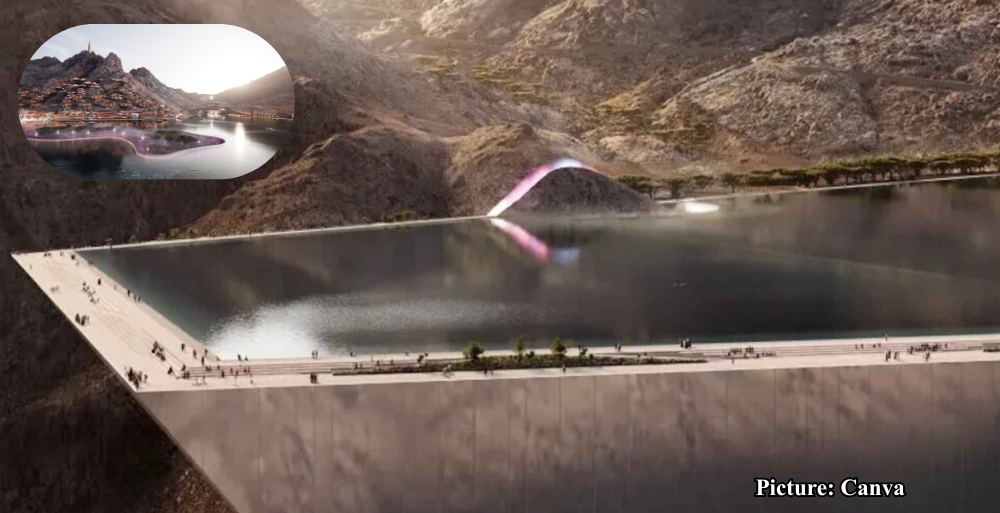
A significant transformation is underway in northwestern Saudi Arabia, where a massive artificial lake is being constructed as part of the NEOM project, aimed at creating a year-round resort destination that combines water activities with winter sports.
Convoys of heavy machinery are currently moving through a rugged mountain valley near Jebel al Lawz in northwestern Saudi Arabia, situated approximately 2,600 meters above sea level. This site is the focal point of a transformative initiative centered on the NEOM project, a cornerstone of the Saudi Vision 2030 plan designed to diversify the kingdom’s economy and bolster tourism.
NEOM is more than just a development; it represents an ambitious vision to position Saudi Arabia as a global leader in innovation and tourism. The specific area under development, known as Trojena, is set to feature a large freshwater lake, a striking addition to the traditionally arid landscape of the region. Engineers are engaged in extensive civil works, which include the construction of three major dams designed to create and sustain this artificial lake.
Engineering Overview
According to technical documentation provided by Studio Pietrangeli, an engineering firm involved in the project, Trojena will be anchored by a 2.8-kilometer-long artificial lake, intended to serve as the core of this multifaceted resort area. The engineering details highlight the significant scale of the dams: the primary roller-compacted concrete dam will reach a height of 145 meters and span 475 meters in length. A secondary rockfill dam is planned to stand 84 meters high and extend 490 meters, while a third concrete dam, located in an area dubbed the Enchanted Forest, will be 38 meters tall with a crest length of 700 meters.
The lake itself is projected to cover about 1.55 square kilometers, with a lakebed liner and a planned tunnel connection to a development known as Lake Village. Additionally, project documentation outlines the inclusion of an island for botanical exploration and walking trails, enhancing the lake’s appeal as a leisure destination. This combination of engineering and ecological planning illustrates the project’s dual focus on infrastructure and tourism.
Innovative Architectural Features
One of the most striking components of the Trojena project is The Bow, an innovative structure designed to extend over the lake. The Italian construction firm Webuild, awarded the contract for this component, describes The Bow as a hotel and residential complex featuring a large central atrium. This architectural design aims to integrate seamlessly with the surrounding mountainous terrain, creating an immersive experience for visitors that emphasizes interaction with the environment.
The contract for The Bow, announced in January 2024, is valued at approximately $4.7 billion. This investment is expected to involve over 10,000 workers, including both direct employees and subcontractors, reflecting a high level of international interest and commitment to the NEOM initiative. This scale of investment not only highlights the project’s significance but also its potential to create thousands of jobs in the region.
Alignment with National Goals
The Trojena project is part of the broader narrative of Saudi Vision 2030, a national reform plan that seeks to reduce the kingdom’s reliance on oil revenues by promoting economic diversification through tourism, entertainment, and technology. The NEOM initiative, including the development of Trojena, is expected to play a critical role in this strategic vision. Notably, the area is scheduled to host the 2029 Asian Winter Games, further emphasizing its importance as a premier destination for both sports and tourism.
Promotional materials from NEOM elaborate on the array of recreational activities that Trojena will offer, including paddleboarding, kayaking, and water biking. In addition, the development includes plans for a high-altitude ski village, hiking trails, and a golf course. Trojena aims to introduce the Gulf’s first outdoor ski experience, with projections for three months of winter snowfall and over 30 kilometers of ski slopes. This combination of summer and winter activities positions Trojena as an innovative year-round destination.
Environmental and Economic Implications
The development of an artificial lake in a mountainous desert environment raises important questions regarding environmental sustainability and resource management. The region, characterized by its harsh terrain and limited natural water resources, presents significant challenges for such an ambitious project. As construction progresses, stakeholders will need to address concerns related to water usage, ecological impact, and the long-term viability of maintaining a large freshwater lake in a desert climate.
Furthermore, the economic implications of the Trojena project extend beyond immediate job creation. By attracting international tourists and investors, the project is poised to stimulate economic growth in the region, potentially transforming the local economy. The development aligns with global trends in sustainable tourism, where destinations increasingly seek to balance ecological integrity with economic benefits.
Conclusion
The construction of a massive artificial lake in the mountainous desert of northwestern Saudi Arabia exemplifies the ambitious scope of the NEOM project and its goal to reshape the region into a hub for tourism and recreational activities. By merging water-based recreation with winter sports, Trojena aspires to deliver an unprecedented blend of experiences in an area where natural water resources are scarce. As the project evolves, it will be closely monitored for its implications on regional development, environmental sustainability, and the broader objectives of Saudi Vision 2030.





No Comment! Be the first one.