





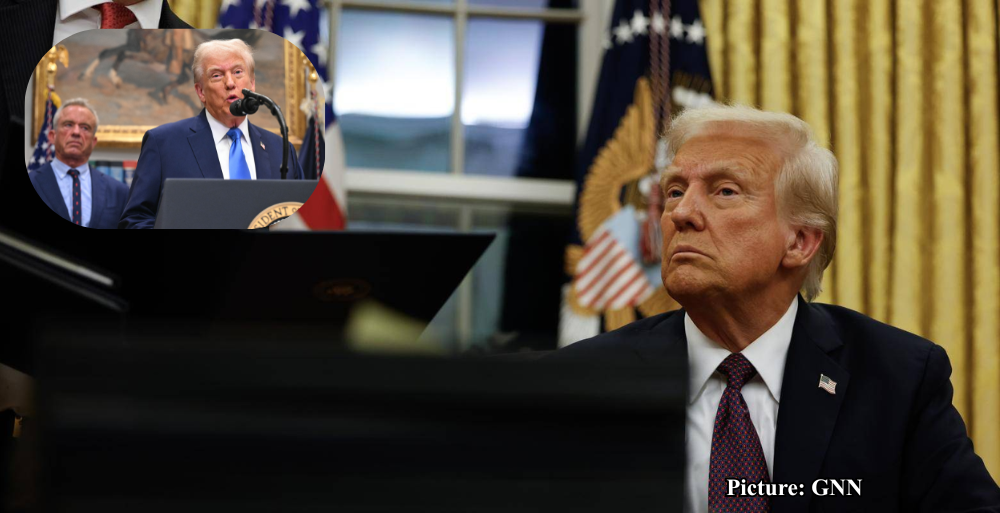
The Trump administration’s recent amendments to the Advisory Committee on Immunization Practices (ACIP) charter are seen as a potential empowerment of anti-vaccine advocates, prompting fears of diminishing public trust in vaccinations.
WASHINGTON (AP) — The Trump administration has enacted significant changes to the governing charter of the Advisory Committee on Immunization Practices (ACIP), a critical federal advisory body responsible for vaccine recommendations. These revisions may enhance the representation of anti-vaccine perspectives within the committee, a move that critics argue could further erode public confidence in vaccination efforts across the nation.
The alterations, which were made public on April 9, 2026, come in the wake of a recent legal setback that has temporarily halted ACIP meetings. This development adds a layer of uncertainty to national vaccination policies at a time when public health officials are striving to combat misinformation surrounding vaccines.
Leadership Changes and Policy Implications
Health Secretary Robert F. Kennedy Jr., a prominent advocate of vaccine skepticism, initiated a sweeping overhaul of ACIP shortly after assuming office. Upon his appointment, Kennedy dismissed all existing committee members, replacing them with individuals aligned with his views on vaccines. Under this new leadership, the committee notably refrained from endorsing COVID-19 vaccines for high-risk populations and voted against recommending routine hepatitis B vaccinations for newborns. Additionally, the childhood vaccination schedule has been significantly narrowed, further raising concerns among public health advocates.
In response to these controversial policy shifts, the American Academy of Pediatrics (AAP), along with various health organizations, filed a legal challenge against the revised recommendations. Last month, a federal judge sided with the plaintiffs, issuing a temporary injunction against the new directives. While the administration has indicated intentions to appeal this ruling, no formal appeal has yet been submitted.
Role of the ACIP and Historical Context
The ACIP serves as a crucial advisory body for the Centers for Disease Control and Prevention (CDC), providing recommendations that influence state vaccination mandates and health insurance coverage for immunizations. Historically, the committee has played a vital role in shaping public health policy and maintaining vaccination standards across the United States. Its recommendations are generally accepted and implemented by state health departments, making its role in public health particularly significant.
The recent charter revisions, which occur every two years as part of routine governance practices, have raised alarms among public health experts. The updated charter expands the qualifications for committee members, potentially allowing for greater representation of individuals sympathetic to Kennedy’s views. Traditionally, ACIP has prioritized vaccine safety in its recommendations; however, the new charter introduces language that echoes sentiments from vaccine skeptics, emphasizing the need to explore “gaps in vaccine safety research” and the “cumulative effects” of vaccinations. These topics are widely regarded as settled science within the medical community.
Responses from Public Health Advocates
Richard H. Hughes IV, an attorney representing the AAP, expressed deep concern regarding the implications of these changes, stating that they reflect a systematic effort to “undermine ACIP, undermine vaccine policy” and ultimately erode public confidence in immunization practices. The introduction of language that aligns with vaccine skepticism into the charter could further polarize the already contentious debate surrounding vaccination in the United States.
Despite the timing of the charter renewal coinciding with ongoing legal challenges, Hughes clarified that it does not resolve the substantive legal issues at hand regarding the administration’s revised vaccine policies. The court’s temporary injunction highlights the contentious nature of the current administration’s approach to vaccination recommendations.
Official Rebuttals and Ongoing Concerns
In defense of the charter revisions, Andrew Nixon, a spokesman for the Department of Health and Human Services, asserted that the renewal of the ACIP charter and its publication are standard statutory requirements and should not be interpreted as a signal of a broader policy shift. The administration maintains that the changes aim to enhance the rigor of vaccine safety investigations, although this assertion has been met with skepticism from health experts and advocates.
The implications of these developments for public health are profound. The ongoing discourse regarding vaccine safety and efficacy is already a divisive issue among the American populace. The modifications to ACIP’s charter, particularly the inclusion of language that aligns with vaccine skepticism, may exacerbate existing divisions and lead to further polarization on vaccination issues. As the administration proceeds with its plans to appeal the court ruling, the uncertainty surrounding national vaccination policies is likely to persist.
The traditional role of ACIP as a trusted advisor in public health is now under scrutiny, raising questions about how these changes will influence vaccination rates and overall public confidence in vaccines moving forward. As the situation develops, stakeholders across the healthcare spectrum are closely monitoring the implications for public health and vaccine policy in the United States.




No Comment! Be the first one.