







While back pain is one of the most common physical ailments globally, its origins are deeply individual, stemming from a complex interplay of biological, biomechanical, and psychological factors. Clinical experts suggest that the most effective path to relief involves gentle, exploratory movement that builds both spinal mobility and patient confidence.
Back pain—whether localized in the upper, mid, or lower regions—remains the primary driver for patients seeking physical therapy. According to William Klein, a physical therapist, yoga instructor, and clinical director at the Spear Center in New York, the condition is rarely the result of a single physical “glitch.” Instead, Klein asserts that back pain is a multifaceted phenomenon influenced by biological predispositions, biomechanical strain, and even social or psychological stressors.
Because of this complexity, there is no “magic bullet” posture. However, clinical research consistently highlights the benefits of goal-specific exercise programs and low-impact movements like walking. For those turning to yoga, the objective is not to execute a perfect pose, but to utilize the practice as a diagnostic tool—feeling out the body’s specific needs and identifying where tension resides.
Exploratory Movement and Capacity Building
The transition from chronic pain to mobility requires a cautious, “bottom-up” approach. Klein emphasizes that encouraging gentle movement to the edge of tolerance is the most sustainable way to progress. In a yoga context, this means favoring poses that offer high degrees of adjustability.
1. Cat-Cow (Marjaryasana-Bitilasana)
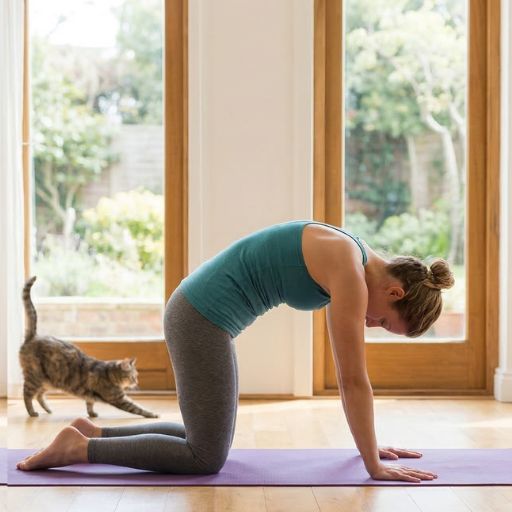
For those struggling with general stiffness, Cat-Cow serves as a foundational “mobilizer.” Moving between an arched and rounded spine in coordination with the breath helps the nervous system feel safe during movement. This pose is particularly effective at helping practitioners intuitively map their pain, identifying exactly where the spine feels “stuck” before moving into more demanding postures.
2. Half Lord of the Fishes (Ardha Matsyendrasana)
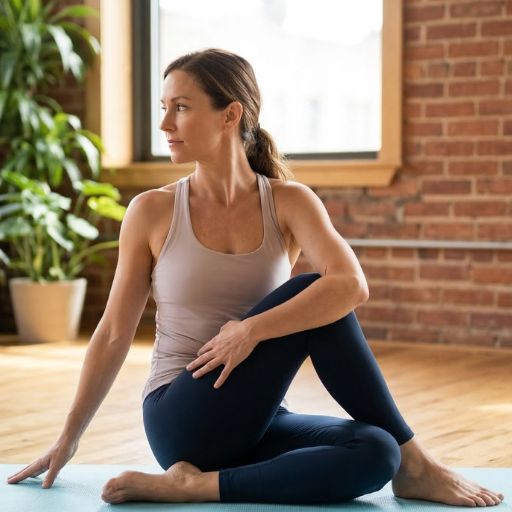
Spinal rotation is essential for maintaining the health of the intervertebral discs and improving circulation throughout the back body. As a gentle spinal twist, this pose allows for granular control; the practitioner only twists to the degree they can tolerate. This builds body awareness—a critical psychological component in managing long-term pain.
3. Head-to-Knee Pose (Janu Sirsasana)

The relationship between the hamstrings and the lower back is often overlooked. “Some people feel good after a simple, boring hamstring stretch,” Klein notes. Tightness in the backs of the legs can pull on the pelvis, creating a secondary strain on the lumbar spine. Holding this stretch for at least 30 seconds allows the connective tissue to release, though Klein advises using props—like straps or blocks—to avoid forcing the stretch.
Strength as a Shield
While stretching provides immediate relief, long-term prevention requires structural support. Strengthening the posterior chain—the muscles running along the back of the body—is vital for stabilizing the spine.
4. Standing Forward Bend (Uttanasana)
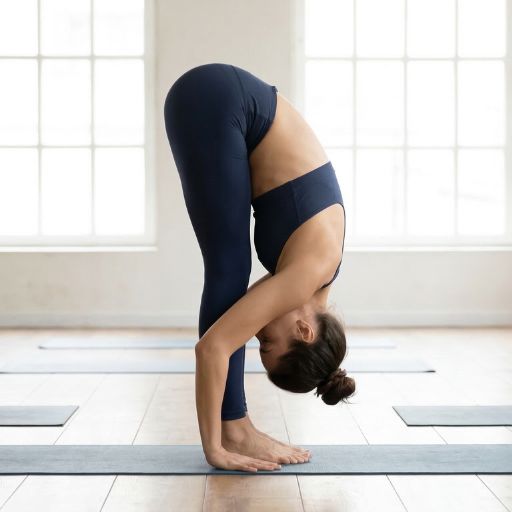
This foundational pose acts as a “release valve” for the spine, allowing gravity to decompress the vertebrae. However, Klein offers a significant caveat: this pose is not universal. For individuals with specific disc issues, forward folding can exacerbate pain. The key is to move slowly and avoid the “rag doll” approach if it creates a sharp or radiating sensation.
5. Chair Pose (Utkatasana)
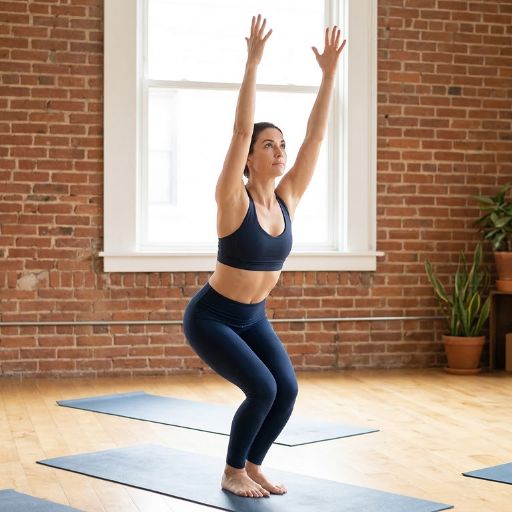
Essentially a static squat, Chair Pose shifts the focus from flexibility to functional strength. By engaging the core and the erector spinae (the muscles that keep the spine upright), practitioners build the “muscular armor” necessary to support the torso. Beyond the physical benefits, Klein points out that building this strength fosters psychological confidence, reducing the fear of movement that often traps back pain sufferers in a sedentary cycle.
Ultimately, the most successful yoga practice for back pain is one led by curiosity and patience. By viewing each session as a conversation with the body rather than a task to be completed, individuals can move beyond temporary relief and toward a more resilient, mobile spine.






No Comment! Be the first one.