




The Equalizing Room: A Socio-Political Analysis of the Intensive Care Unit as a Neutral Human Space

By Sarah Jenkins and Marcus Thorne, National Integrity News Service | March 31, 2026
The Intensive Care Unit (ICU) serves as a unique sociological and biological environment where the traditional markers of human identity—including wealth, political power, religious affiliation, and social status—are effectively neutralized. Within the clinical confines of critical care, the complexities of the outside world are replaced by a singular focus on physiological survival. This environment offers a profound lens through which to examine the reduction of human life to its most fundamental state, challenging the artificial hierarchies that dictate modern social and political discourse. By stripping away the external signifiers of class and caste, the ICU functions as a somber but definitive space of human equality.
DATELINE: GENEVA — In an era defined by increasing social stratification and political polarization, the Intensive Care Unit (ICU) remains one of the few remaining spaces where the human experience is stripped of its extrinsic labels. From the metropolitan medical centers of the United States to the public health facilities of South Asia, the ICU acts as a functional “great equalizer.” When a patient crosses the threshold of these glass doors, the socioeconomic metrics that define their life—credit scores, political influence, and religious pedigree—are left at the entrance. What remains is the “human body,” a biological entity requiring standardized medical intervention. This phenomenon highlights a stark contrast to the world outside, where identity politics and resource disparity govern the majority of human interactions.
The Erasure of Socioeconomic Hierarchies
In the professional observation of critical care experts and sociologists, the ICU represents a rare suspension of the “social contract” based on meritocracy or inheritance. In the outside world, individuals are often valued by their net worth or the professional titles they carry. Data from global health organizations suggests that while access to healthcare remains highly unequal, the internal operations of a critical care environment prioritize triage and acuity over identity.
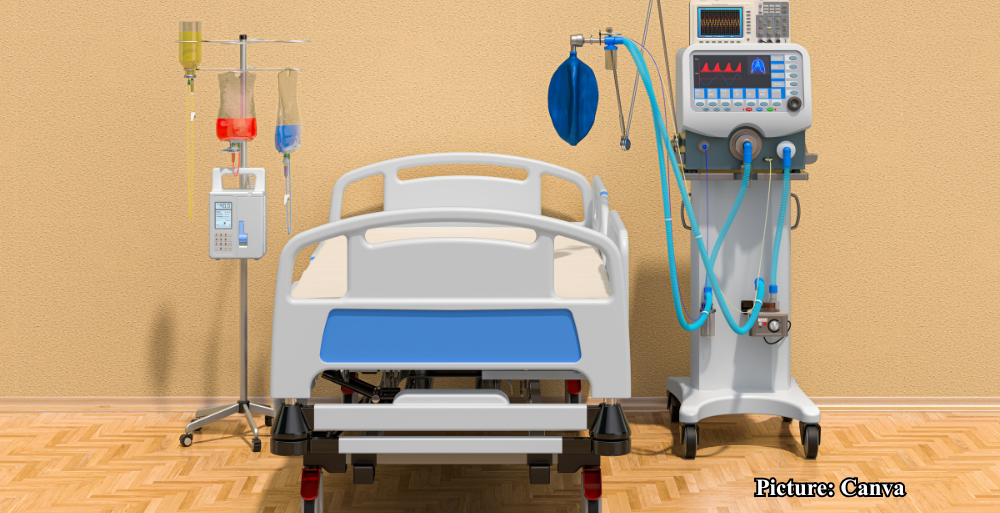
Inside the unit, the distinction between the wealthy executive and the manual laborer vanishes. The oxygen supplied to a Hindu, a Muslim, or an atheist is delivered by the same pneumatic systems and regulated by the same mechanical ventilators. There is no “premium air” or “status-based” heartbeat. This clinical neutrality serves as a silent rebuke to the arrogance of status. When the human body enters a state of crisis, the vanity of fashion, the nuance of dialect, and the weight of one’s reputation become irrelevant variables. The medical equipment—monitors, IV pumps, and dialysis machines—does not calibrate its sensitivity based on the patient’s political leanings or their contributions to society.
The Philosophical Infrastructure of Critical Care
The ICU provides a lesson in human philosophy that many scholars argue is absent from modern education. While textbooks and scriptures offer theoretical frameworks for humility and the value of life, the ICU provides an empirical demonstration. It is a place where the concept of “time” shifts from a commodity to be spent or invested into a desperate plea for a few more minutes of consciousness.
Medical staff often describe the atmosphere as one of profound clarity. “Outside these walls, people are consumed by the optics of their lives—how they are perceived, what they own, and who they are competing against,” says Dr. Elena Rossi, a veteran intensivist. “Inside, the only expectation is the hope that a loved one’s eyes might open one more time. It is the most honest version of humanity we ever see.”
This honesty is rooted in the commonality of death. Unlike “haunted houses” or locations steeped in superstition, the ICU is a place where death is a frequent, documented reality. Yet, there is no room for the rumors or fears that haunt the outside world. The cycle is systematic: a life departs, the linens are laundered, and the bed is prepared for the next occupant. This efficiency highlights the transient nature of the human condition, suggesting that the “importance” individuals attribute to themselves is often a social construct that does not survive biological failure.
The “I See You” Phenomenon: A Political Perspective
The acronym “ICU” can be reinterpreted as “I See You”—a recognition of the raw human form. In a political landscape often divided by caste, language, and gender, the ICU offers a model of what a truly post-identity world might look like. In this space, modesty loses its traditional social utility; the physical body is exposed for the purpose of healing, and the gendered expectations of the public square are discarded.
From a policy perspective, the ICU serves as a reminder of the “sacred human form” that universal human rights are intended to protect. When political leaders argue over borders or budget allocations, they are often disconnected from the reality of the human body’s fragility. The ICU demands a recognition of the “other” not as a competitor for resources, but as a fellow traveler in the cycle of life and death. For those who feel they have nothing, the ICU reveals that they still possess the most valuable asset: life. Conversely, for those intoxicated by power, the unit provides a necessary grounding, proving that no amount of influence can bypass the fundamental laws of biology.
Conclusion: The Beauty of Neutrality
To call an ICU “the most beautiful place in the world” may seem counterintuitive given the suffering contained within its walls. However, from a nonpartisan, humanitarian viewpoint, its beauty lies in its radical impartiality. It is a sanctuary from the noise of the world—a place where the artificial barriers we build between ourselves are rendered invisible. In the silence of the monitors and the steady hum of the machines, we find a rare, unvarnished truth: that at our core, we are more alike than we are different.
Tags: Intensive Care Unit, Social Equality, Healthcare Philosophy, Human Rights, Socioeconomic Status, Medical Ethics, Critical Care, Human Biology, Universal Equality, Nonpartisan Analysis



No Comment! Be the first one.